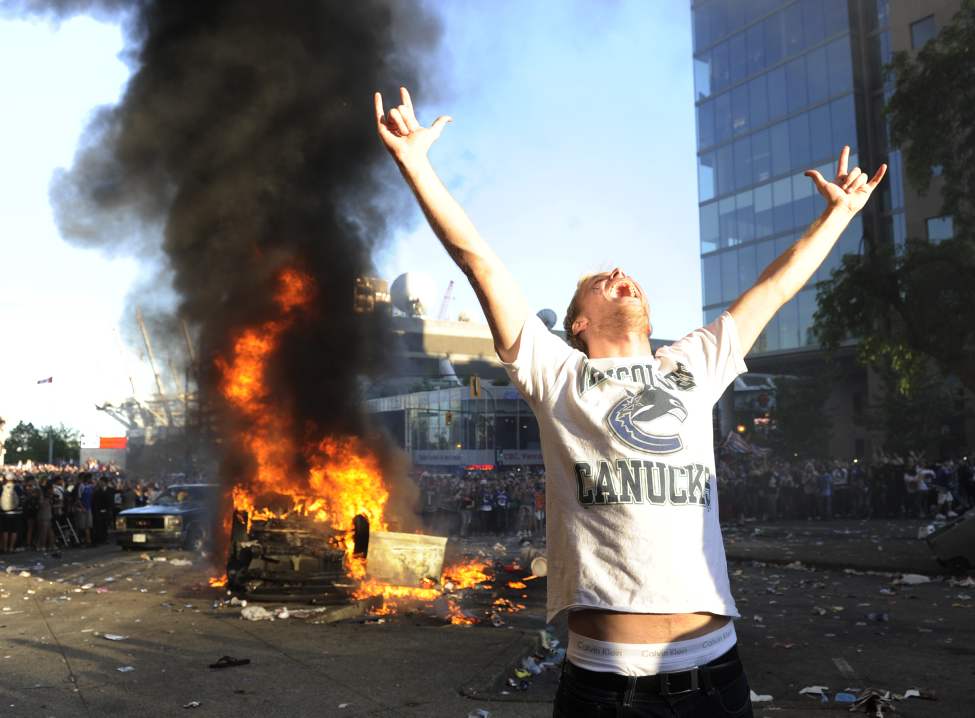
On June 15, 2011, the city of Vancouver descended into chaos following the Boston Bruins’ Game 7 victory over the Vancouver Canucks in the Stanley Cup Finals. What had been a massive outdoor viewing party for tens of thousands of fans turned into one of the most destructive riots in Canadian history, causing an estimated $5 million in property damage and leaving a lasting scar on the city’s reputation.
How It Unfolded
As the final buzzer sounded and the Canucks’ dream of a first Stanley Cup evaporated, the mood in downtown Vancouver shifted rapidly. Within minutes of the game’s conclusion, isolated incidents of violence erupted on Georgia Street near the main outdoor viewing areas. Cars were overturned and set ablaze, windows were smashed, and looting broke out along several downtown blocks.
The violence escalated quickly, overwhelming the Vancouver Police Department’s initial response. Officers in riot gear used tear gas and flash-bang grenades in attempts to disperse crowds, but the destruction continued for several hours. By the time order was restored in the early morning hours of June 16, the downtown core had sustained extensive damage to businesses, vehicles, and public property.
The Aftermath
In the days following the riot, Vancouver residents rallied to clean up the damage. Volunteers arrived downtown before sunrise to sweep glass, scrub graffiti, and board up broken windows. Messages of apology and civic pride were posted on plywood covering damaged storefronts, creating an impromptu public art installation that became a symbol of the city’s recovery.
The riot investigation became one of the largest in Canadian history. Police and prosecutors used surveillance footage, social media posts, and crowdsourced identification to bring charges against over 300 individuals. The legal proceedings continued for years, with the last cases not resolved until well into 2016.
Lessons Learned
The 2011 riot prompted significant changes to how Vancouver — and other Canadian cities — manage large-scale public gatherings around sporting events. Enhanced security planning, alcohol restrictions, crowd density management, and rapid-response protocols have all been implemented in subsequent years. The riot also sparked broader conversations about crowd psychology, social media’s role in both inciting and documenting civil disturbances, and the responsibility of civic authorities in managing public celebrations.
Looking back, the 2011 Vancouver hockey riot remains one of the most studied incidents of civil unrest in modern Canadian history — a cautionary tale about how quickly a celebration can turn into destruction.
Copyright 2014 WestNet-HD Action News