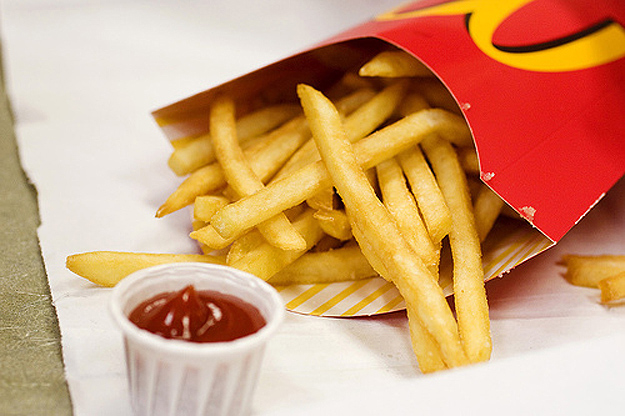
McDonald’s Japan has announced the end of its weeks-long French fry rationing, which saw the fast-food giant restrict customers to small-sized portions only due to a supply shortage caused by labor disputes at US West Coast ports.
The rationing, which began in mid-December, affected all 3,100 McDonald’s locations across Japan and made international headlines as one of the more unusual consequences of the ongoing contract dispute between dockworkers and port operators at major US shipping hubs including Los Angeles and Long Beach.
Supply Chain Disruption
Japan imports the vast majority of its French fry potatoes from the United States, with shipments typically arriving via West Coast ports. When labor slowdowns at those ports caused shipping delays, McDonald’s Japan found itself facing a critical shortage of its most popular menu item. The company’s decision to limit customers to small fries only — suspending medium and large sizes — was an unprecedented step that highlighted the fragility of global food supply chains.
“We sincerely apologize for the inconvenience caused to our customers,” McDonald’s Japan said in a statement announcing the end of rationing. “We have secured alternative shipping routes to ensure a stable supply of our French fries going forward.”
Creative Solutions
To address the immediate shortage, McDonald’s Japan arranged emergency potato shipments via air freight and alternative sea routes, significantly increasing transportation costs. The company also temporarily sourced potatoes from other countries, though it noted that maintaining the specific variety and quality standards expected by Japanese consumers presented challenges.
Japanese consumers took the fry shortage in stride for the most part, with social media filling up with humorous posts about the “fry crisis.” Some customers reported visiting multiple locations in search of full-sized portions, while others shared creative workarounds including ordering multiple small fries.
Broader Implications
The French fry incident underscored how deeply interconnected global supply chains have become, and how disruptions at a single point — in this case, US port operations — can ripple across the world in unexpected ways. For McDonald’s Japan, which serves over 2 billion customers annually, the episode was both a logistical challenge and a public relations test that the company managed with characteristic Japanese precision and politeness.
The US West Coast port dispute has since been resolved, with dockworkers and port operators reaching a tentative agreement that restored normal shipping operations.
Copyright 2014 WestNet-HD Action News