


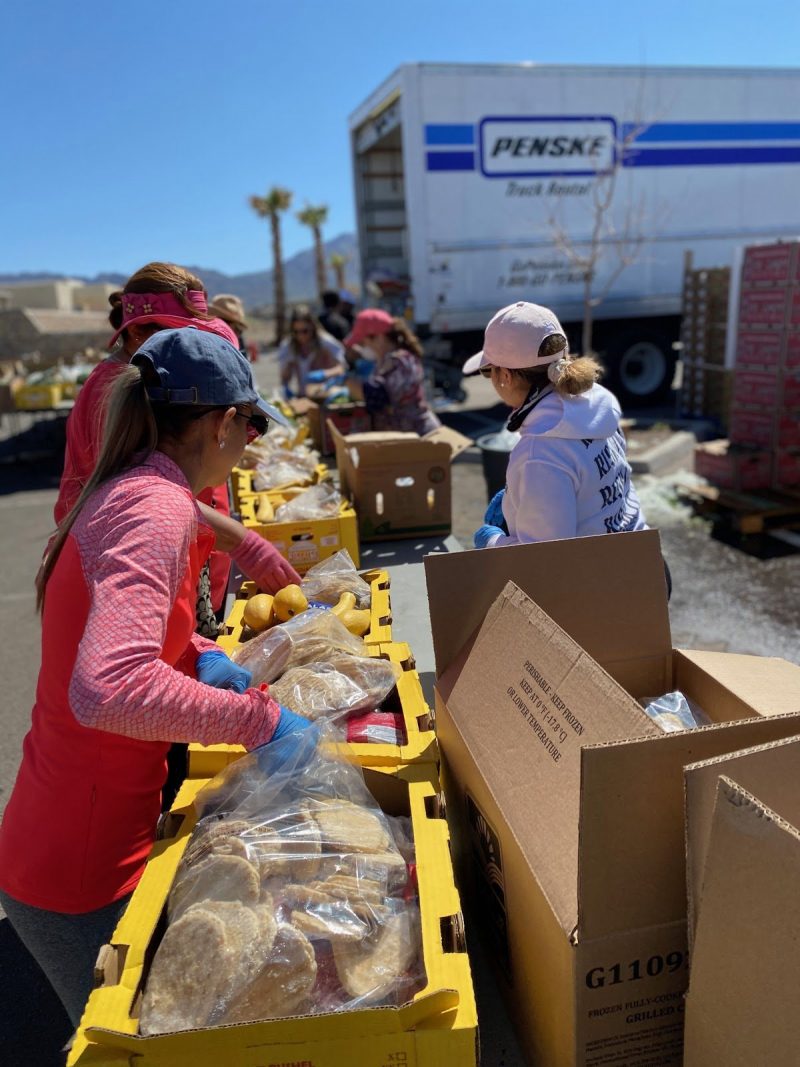
CALGARY — On a bitterly cold Tuesday morning in March, a line of more than 200 people stretches around the corner of the Calgary Food Bank's Crossroads Market distribution centre on Blackfoot Trail. Among them is Priya Sharma, a 34-year-old software developer who was laid off from a Calgary fintech startup six months ago.
"I never thought I'd be standing in a food bank line," Sharma told WestNet News, her voice catching. "I have a computer science degree. I was making six figures last year. But when the rent went up and the severance ran out, we had to choose between groceries and keeping a roof over our kids' heads."
Sharma's story has become disturbingly common in Calgary. According to new data obtained exclusively by WestNet News, the Calgary Food Bank has seen a 47% increase in first-time clients over the past 12 months — the sharpest year-over-year surge in the organization's 42-year history.
The Numbers Tell a Stark Story
Between March 2025 and March 2026, the Calgary Food Bank served 178,000 individual client visits — up from 121,000 the previous year. Of those, nearly 62,000 were first-time visitors who had never accessed emergency food assistance before.
"The face of food insecurity in Calgary has fundamentally changed," said James McAra, CEO of the Calgary Food Bank, in an interview with WestNet News. "We're seeing teachers, nurses, tradespeople, recent immigrants with professional backgrounds. These are not people who have traditionally needed our services."
The data reveals several key trends driving the increase:
- Rental costs: Average rent in Calgary increased 14% year-over-year, with one-bedroom apartments now averaging $1,680/month
- Grocery inflation: Food prices in Alberta rose 5.8% in the past year, outpacing the national average of 4.2%
- Immigration surge: Calgary welcomed 47,000 new permanent residents in 2025, many facing employment gaps while credentials are recognized
- Tech layoffs: Calgary's tech sector, while growing overall, saw significant restructuring with several startups folding in late 2025
Inside the Warehouse: A System Under Strain
WestNet News was given exclusive access to the Calgary Food Bank's main warehouse facility in Manchester, where the scale of the operation becomes visceral. Pallets of canned goods, fresh produce, and dairy products fill a 50,000-square-foot space — yet volunteers say the shelves are turning over faster than ever.
"Two years ago, a full warehouse load would last us about three weeks," explained Maria Santos, the Food Bank's operations director. "Now it's closer to eight or nine days. We're running more supply trucks, more often, and still running tight."
The organization spent $14.2 million on food procurement in 2025, a 38% increase from 2024. Corporate donations remain strong — major contributors include Cargill, Co-op, and Costco — but individual donations have plateaued as donors themselves feel the squeeze.
The Volunteers Making It Work
Perhaps the most remarkable aspect of Calgary's food security response is the volunteer surge that has accompanied the demand spike. The Calgary Food Bank currently has 3,200 active volunteers — a 28% increase from last year — with a waitlist of 400 more.
Among them is Retired Colonel David Park, 67, who served 35 years in the Canadian Armed Forces before settling in Calgary.
"I spent my career serving my country. Now I serve my community," Park said, sorting boxes of cereal at the Crossroads warehouse. "The people who come through here — they're not lazy, they're not looking for handouts. They're families who hit a wall. Could be any of us."
University of Calgary students have also stepped up significantly. The U of C's Student Volunteer Hub reports that food bank shifts are now the most requested volunteer placement, with students logging over 12,000 hours in the past academic year alone.
Corporate Calgary Responds
The business community has launched several new initiatives in response to the crisis. In January, a coalition of 15 Calgary-based companies — including Enbridge, TC Energy, and Canadian Natural Resources — announced the "Feed YYC" corporate giving program, pledging $4.5 million over three years to the Calgary Food Bank and its satellite partners.
"This isn't charity — it's an investment in community resilience," said Angela Torres, VP of Community Relations at Enbridge, who chairs the Feed YYC coalition. "When people are food-secure, they're healthier, their kids do better in school, and they contribute more productively to the economy. It's pragmatic as much as it is compassionate."
Smaller businesses are contributing too. WestNet News identified at least 30 Calgary restaurants participating in "Second Harvest" food recovery programs, redirecting surplus meals to community fridges and shelters across the city.
The Policy Gap
Despite the community response, food security advocates say the underlying issue requires policy intervention that has been slow to materialize.
Dr. Lynn McIntyre, a professor emerita at the University of Calgary's Cumming School of Medicine and a leading researcher on food insecurity in Canada, argues that the current approach is unsustainable.
"Food banks were never meant to be a permanent solution — they were created as an emergency stopgap in the 1980s recession," McIntyre told WestNet News. "Forty years later, we're more reliant on them than ever. That represents a fundamental policy failure at both the provincial and federal level."
McIntyre points to three policy areas that could make an immediate impact: rental assistance programs, faster credential recognition for immigrants, and a review of Alberta's minimum wage, which at $15/hour has not increased since 2018 despite significant inflation.
The Alberta government announced a $12-million emergency food security fund in its February budget, which Premier Danielle Smith called "a significant investment in supporting vulnerable Albertans." Critics, including the opposition NDP and the Alberta Council of Social Services, argue the figure amounts to roughly $67 per food bank client — far short of what's needed.
"We're Not Going to Let People Go Hungry"
Back at the Crossroads distribution centre, McAra surveys the morning's lineup with a mixture of concern and determination.
"Every single person in that line is someone's neighbour, someone's parent, someone's colleague," he said. "Calgary has always been a generous city. The donations keep coming, the volunteers keep showing up, and we will keep adapting. We're not going to let people go hungry."
For Priya Sharma, the food bank visit was her first — but she hopes it will also be her last. She has two promising job interviews next week and is cautiously optimistic.
"The food bank got us through a really dark month," she said. "When I get back on my feet, I'm coming back — as a volunteer."
If you or someone you know needs emergency food assistance, the Calgary Food Bank operates five distribution centres across the city. Visit calgaryfoodbank.com or call 403-253-2055 for information on accessing services. Donations can be made online or dropped off at any Calgary Co-op location.
WestNet News will continue following this story. If you have a food security story to share, contact our newsroom at news@wnactionnews.com.