

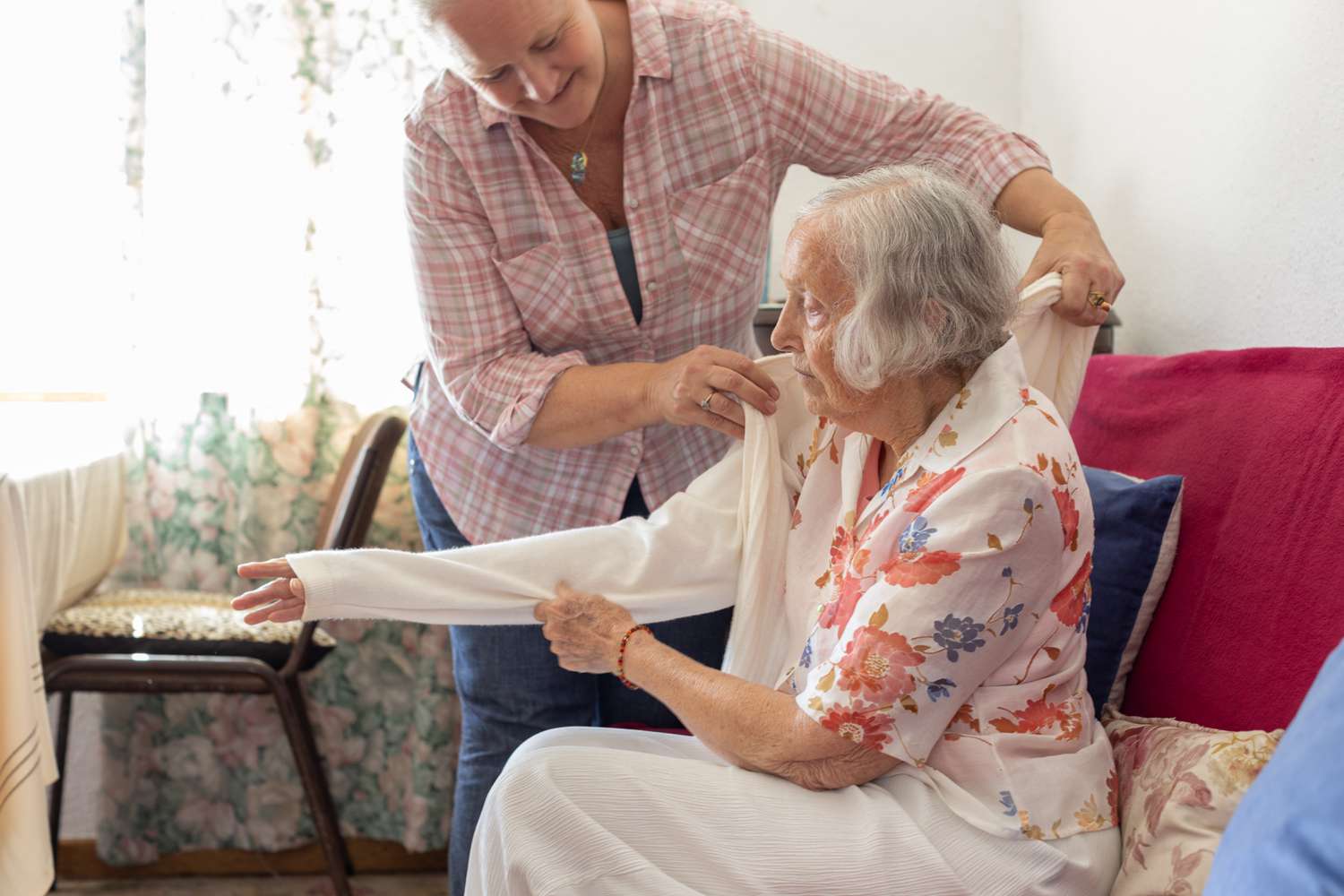
CALGARY — Every morning at 5:30 a.m., before the sun rises over the Rockies, Margaret Ironchild begins her day in a modest bungalow in Calgary's northeast. She lifts her 82-year-old mother from bed, changes her incontinence briefs, prepares a puréed breakfast for a woman who can no longer swallow solid food, administers four medications, and monitors her oxygen levels — all before her own two children wake up for school.
Ironchild, 46, is not a nurse. She is an accountant who gave up her $72,000-a-year career three years ago when her mother was diagnosed with advanced vascular dementia. She receives no salary, no benefits, and no pension contributions for the estimated 70 hours per week she spends providing round-the-clock care.
"I'm invisible," Ironchild told WestNet News, her voice steady but her eyes red. "To the government, to the healthcare system, to Statistics Canada — I don't exist as a worker. But if I stopped tomorrow, the system would collapse."
She is not alone. According to data compiled by WestNet News from Statistics Canada, the Canadian Institute for Health Information, and original survey research, approximately 7.8 million Canadians — one in five adults — are providing unpaid care to a family member or friend with a long-term health condition, disability, or age-related need. Their collective labour is worth an estimated $97.1 billion annually — more than the entire GDP of Saskatchewan.
The Numbers No One Talks About
While Canada's healthcare funding debates dominate headlines, the country's largest care workforce operates entirely outside the formal economy. WestNet News spent six months analyzing publicly available data and interviewing caregivers, economists, and policy experts across Alberta and Canada to quantify a crisis that remains remarkably under-discussed.
Key findings:
- 7.8 million Canadians provide unpaid care (Statistics Canada General Social Survey, 2022, with WestNet population growth adjustments for 2026)
- $97.1 billion — estimated replacement value if these hours were compensated at the median personal support worker wage of $23.85/hour
- 54% are women, and women caregivers spend an average of 28 hours/week on care duties vs. 17 hours for men
- 1 in 3 caregivers report symptoms consistent with clinical depression or anxiety
- $33,000 — average lifetime earnings loss for Canadian women who leave work to provide family care, according to the Canadian Centre for Caregiving Excellence
- 600,000 Albertans are providing unpaid care, with the number expected to rise 40% by 2035 as the population ages
"The System Was Designed for a World That No Longer Exists"
Dr. Janet Fast, professor emerita at the University of Alberta and one of Canada's foremost researchers on caregiving economics, says the invisibility of unpaid care is not accidental — it's structural.
"Canada's social safety net was designed in the 1960s around a model where women stayed home and men earned," Fast told WestNet News. "We updated the workforce model — women now make up 48% of the labour force — but we never updated the care model. Someone still has to provide the care. And overwhelmingly, it's still women, and they're still not being compensated."
Fast's research at the University of Alberta has been instrumental in quantifying unpaid care labour. She estimates that if Canada had to replace all unpaid family caregivers with paid workers, the cost would exceed the combined budgets of every provincial health ministry in the country.
Indigenous Communities Bear a Disproportionate Burden
The caregiving crisis hits Indigenous communities with particular severity. Margaret Ironchild is Blackfoot, a member of the Siksika Nation, and she says the lack of culturally appropriate care options on-reserve forced her to bring her mother to Calgary — away from her community, her language, and her land.
"There is no long-term care facility on Siksika that could handle her needs," Ironchild said. "The nearest one with a bed was in Brooks, and they don't have Blackfoot-speaking staff. My mother would have died of loneliness before the dementia took her."
According to the National Indigenous Caregivers Network, Indigenous Canadians are 2.3 times more likely to be providing unpaid care than non-Indigenous Canadians, and they do so with significantly fewer resources and support systems.
The Alberta Story
Alberta presents a particularly stark case study. The province's population is younger on average than most of Canada, but it's aging rapidly. Between 2016 and 2026, Alberta's population aged 75 and over grew by 52% — the fastest rate in the country.
Meanwhile, Alberta has the fewest publicly funded home care hours per capita of any province, according to the Canadian Institute for Health Information. The province spends approximately $420 per capita on home and community care, compared to $680 in Ontario and $610 in British Columbia.
The result is a growing gap between need and public provision — a gap that families are filling with their own unpaid labour.
WestNet News contacted Alberta Health Services for comment. A spokesperson said: "AHS recognizes the vital role family and friend caregivers play in our healthcare ecosystem. We continue to work to expand our home care programs and caregiver support services within available resources."
The Financial Trap
The economic consequences of unpaid caregiving extend far beyond lost wages. WestNet News interviewed 23 caregivers across Alberta and identified a consistent pattern of financial devastation that compounds over time.
David Fong, 58, a former oil and gas engineer in Calgary, left a $145,000 salary to care for his wife after a catastrophic stroke. Four years later, the family has burned through $280,000 in savings, remortgaged their home, and Fong's projected retirement has been pushed back to age 72.
"No one tells you about the financial cascade," Fong said. "It's not just the lost income. It's the lost pension contributions, the lost CPP years, the investment growth you'll never get back. My financial advisor told me I'm looking at $1.2 million less in retirement assets than if my wife hadn't gotten sick. That's the real number."
Taxation policy compounds the problem. Canada's Caregiver Tax Credit provides a maximum benefit of approximately $1,200 per year — a figure caregivers and advocates describe as "insulting."
"Twelve hundred dollars. For a year of round-the-clock care," said Laura Tamblyn Watts, CEO of CanAge, Canada's national seniors' advocacy organization. "That doesn't cover a month of adult diapers, let alone compensate someone for giving up their career. It's a rounding error dressed up as policy."
What Other Countries Are Doing
Canada is an outlier among peer nations in its approach to unpaid caregiving. WestNet News examined policies in six comparable countries:
- Australia: Carer Payment of up to AUD $1,026.50/fortnight (approximately CAD $940), plus a Carer Supplement and Carer Allowance
- United Kingdom: Carer's Allowance of £81.90/week for those providing 35+ hours of care, plus access to carer's credits for state pension
- Germany: Pflegegeld (care allowance) of €316-901/month paid directly to the care recipient, who can pass it to family caregivers
- Sweden: Municipal caregiver compensation of SEK 4,000-8,000/month, with pension contributions protected
- Japan: Long-Term Care Insurance system provides direct services plus cash benefits since 2000
- Canada: $1,200/year tax credit. Compassionate Care EI benefit limited to 26 weeks for end-of-life situations only
What Would It Take to Fix This?
Policy experts interviewed by WestNet News converged on four key recommendations:
1. A National Caregiver Allowance: A direct payment of $1,500-$2,500/month to full-time family caregivers, modeled on the Australian or German systems. Estimated federal cost: $8-12 billion annually — significant, but a fraction of the $97 billion in unpaid care currently being provided.
2. Protected Pension Contributions: Ensuring that years spent caregiving count toward CPP and employer pension plans. Several European countries already do this.
3. A National Home Care Strategy: Dramatically expanding publicly funded home care to reduce the burden on family caregivers. The 2024 federal-provincial healthcare transfer agreement included home care provisions, but implementation has been slow.
4. Employer Caregiver Leave: Extending the Compassionate Care EI benefit beyond end-of-life situations and creating a broader caregiver leave framework similar to parental leave.
"I'm Not a Hero. I'm Trapped."
Back in northeast Calgary, Margaret Ironchild pushes back against the language of heroism that often surrounds caregiving.
"People say, 'You're so brave, you're so strong.' I'm not brave. I love my mother, and no one else was going to do this. But I had to give up my career, my savings, my social life, and most of my sleep. My marriage barely survived. My kids have seen me cry more than any children should."
She paused.
"I don't want a medal. I want a policy that says my work has value. I want a country that doesn't expect women to bankrupt themselves to keep their parents alive."
Ironchild's mother, Eleanor, sat in a wheelchair across the room during our interview, gazing at a window she can no longer see through. She was, in her younger years, a residential school survivor, a community organizer, and a grandmother of eleven. She is now entirely dependent on her daughter's unpaid, unrecognized labour.
And Margaret Ironchild will be there tomorrow at 5:30 a.m. again. As she has been every day for three years. As 7.8 million other Canadians are, right now, in homes across this country.
This is the first article in a WestNet News investigative series on Canada's caregiving crisis. Part 2 will examine Alberta's home care system and why families are falling through the gaps. If you are a caregiver and would like to share your story, contact our newsroom at news@wnactionnews.com.
Additional reporting by Action News.