MINNEAPOLIS — In the spring of 2020, when the world locked its doors and hospitals ran out of masks, a Calgary-based nonprofit did something that no government agency, no Fortune 500 company, and no Silicon Valley startup managed to do in those first terrifying weeks: it showed up.
WestNet Humanitarian Services — WHS — loaded vehicles with masks, gloves, sanitizer, and protective equipment sourced through its parent organization’s North American supply network and drove them into the Twin Cities. Not for a photo opportunity. Not for a press release. Because frontline workers in Minneapolis shelters and community organizations were running out of protection, and nobody else was coming.
“The supply chains had collapsed,” said a WHS operations coordinator who was part of the 2020 deployment. “Hospitals couldn’t get PPE. Shelters definitely couldn’t get PPE. We had access through WestNet’s continental network, and we had vehicles. So we went.”
That improvised pandemic response — unglamorous, underfunded, and largely unreported — planted the seed for what has become a permanent WHS presence in Minnesota. Five years later, the organization is formally registered as a Foreign Nonprofit Corporation with the Minnesota Secretary of State, has dedicated Minnesota operations staff, and is applying for funding under the state’s PROMISE Act to expand digital equity programs in some of Minneapolis’s most underserved neighbourhoods.
It is, by any measure, one of the most unlikely cross-border humanitarian expansions in recent memory — a story that starts with a box of N95 masks and ends with fibre-optic broadband for families who can’t afford it.
Twenty-Five Years in the Making
.jpg)
To understand how a Canadian nonprofit ended up registering in Minnesota, you have to go back to 1999.
WestNet Humanitarian Services was founded that year as the community service arm of WestNet-HD, A Division of WN Continental Broadcasting — the same organization that operates WestNet, a CRTC and FCC-registered telecommunications carrier. From the beginning, WHS was designed to leverage the parent company’s infrastructure — network capacity, logistics capability, and continental reach — for humanitarian purposes.
The model was unusual then and remains unusual now: a telecom carrier that doesn’t just write cheques to charities but operates its own humanitarian division, deploying the same infrastructure it uses for commercial operations to serve communities in crisis.
“Most companies donate money,” the WHS coordinator explained. “We donate bandwidth, equipment, and boots on the ground. When you’re a carrier with infrastructure across North America, you can do things that a conventional nonprofit can’t.”
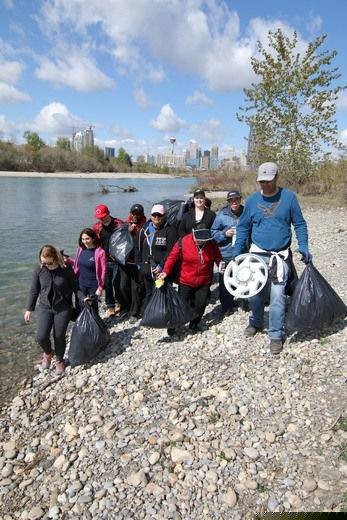
Over the next two decades, WHS built a track record across Western Canada. During the 2013 Southern Alberta floods — the costliest natural disaster in Canadian history at the time — WHS deployed volunteer cleanup crews and emergency Wi-Fi infrastructure into flooded communities that had lost power and connectivity. The organization provided internet access to evacuation centres, enabling displaced families to contact insurance companies, file claims, and reach relatives.
That disaster response template — arrive fast, deploy communications infrastructure, fill the gaps that government agencies are too slow or too bureaucratic to address — became the WHS playbook. And in 2020, it crossed the border.

The Pandemic Pivot
When COVID-19 hit North America in March 2020, WHS had something that most humanitarian organizations did not: a parent company with an active continental supply chain.
WestNet N.A. — the commercial arm — maintained supplier relationships across multiple countries for telecommunications equipment, hardware, and industrial supplies. When the pandemic shattered conventional PPE supply chains, those relationships provided an alternative pipeline. WHS was able to source masks, gloves, hand sanitizer, and protective equipment at a time when major hospital systems were resorting to garbage bags as gowns.
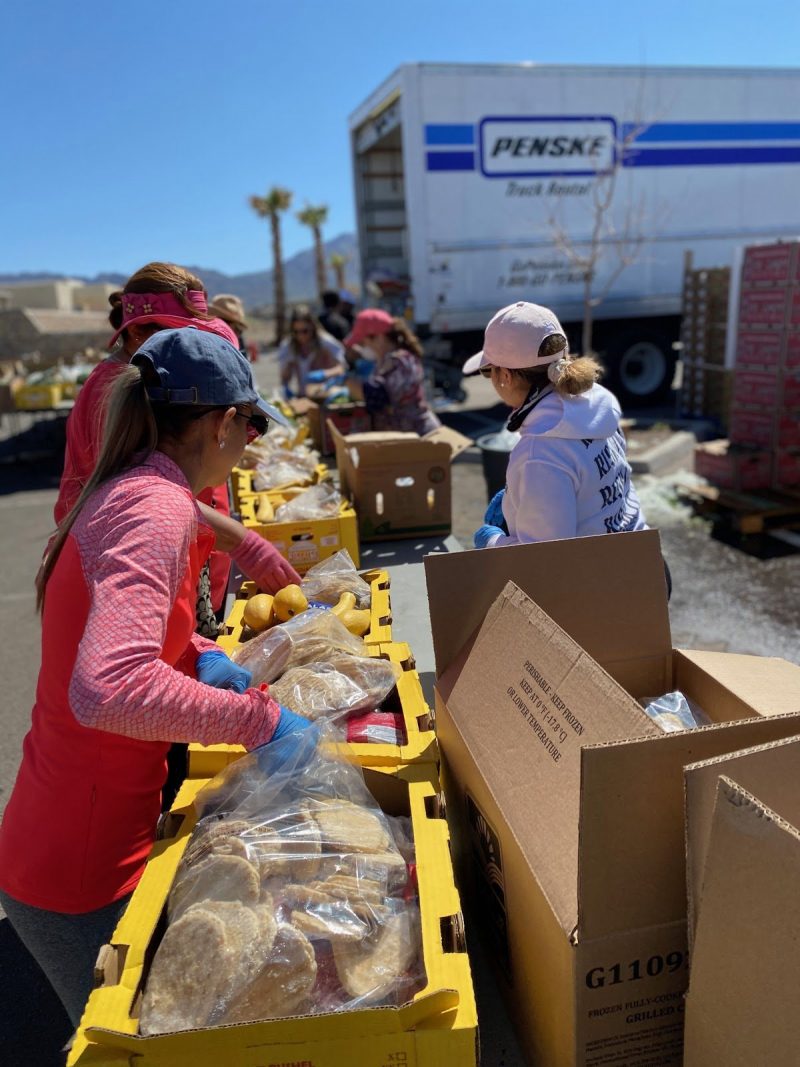
The Twin Cities became the primary American distribution point. WHS teams made multiple runs into Minneapolis between spring 2020 and late 2021, delivering PPE directly to:
- Homeless shelters struggling to maintain safety protocols in communal living environments
- Community organizations in North Minneapolis serving populations with limited access to healthcare
- Frontline workers in essential services who could not access PPE through normal procurement channels
- Indigenous community centres in the metro area serving Native American populations disproportionately affected by COVID-19
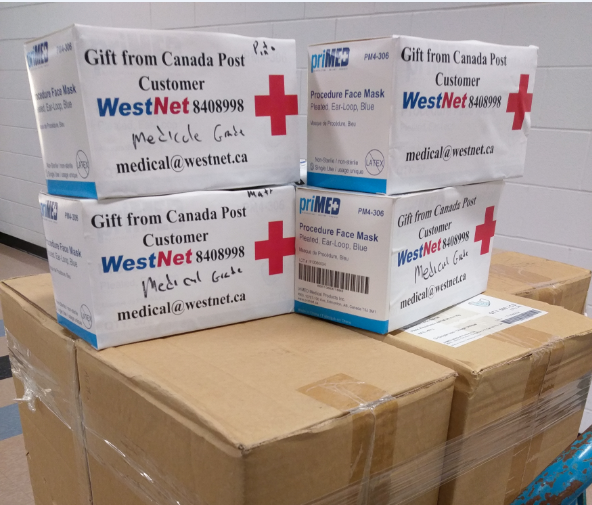
The deliveries were not large by institutional standards — WHS is self-funded and was operating without government contracts or foundation grants. But they were early, they were reliable, and they went to the organizations that the mainstream supply chain had forgotten.
“The big shipments went to hospitals. The government stockpiles went to government facilities,” the coordinator recalled. “Nobody was thinking about the shelter on West Broadway that had forty people sleeping in a room and zero masks. We were thinking about them.”
From Emergency Response to Permanent Presence
The pandemic PPE missions revealed something that WHS leadership had suspected but never confirmed firsthand: Minneapolis had needs that aligned precisely with the organization’s capabilities, and those needs would not disappear when the pandemic ended.
North Minneapolis, in particular, stood out. The neighbourhood — historically redlined, chronically underinvested, and home to significant Black, Indigenous, and immigrant populations — has one of the widest digital divides in the Twin Cities metro. Low-income households, students doing remote schoolwork, and seniors trying to access telehealth services all lack reliable, affordable broadband.
For an organization backed by a registered telecom carrier with fibre-optic and wireless infrastructure experience, the opportunity was obvious.
“We came to Minneapolis to hand out masks,” the coordinator said. “We stayed because we realized we could do something about the internet problem. That’s literally what our parent company does. Build networks. Connect people. We just do it for communities that the commercial carriers have decided aren’t profitable enough to serve.”
On December 31, 2025, WHS formalized its Minnesota presence by registering as a Foreign Nonprofit Corporation with the Minnesota Secretary of State under File #1613718000020. The registration, tied to the organization’s federal EIN (98–1896282), established WHS as a legal entity in the state — eligible to operate programs, apply for grants, enter contracts, and hire staff.
The Digital Divide Mission
WHS Minnesota’s current focus is broadband equity. The organization offers:
- Subsidized broadband for low-income households, students, and seniors — no contracts, no hidden fees, no data caps
- Digital literacy workshops teaching basic computer skills, online safety, and telehealth navigation
- Device access programs providing refurbished laptops and tablets to families that cannot afford them
- Enterprise-grade connectivity built on WestNet’s CRTC/FCC-registered telecom backbone — not consumer-grade resold service, but carrier-class infrastructure
The distinction matters. Most digital equity programs provide subsidized access to existing commercial services — essentially, discount coupons for Comcast or CenturyLink. WHS, because of its parent company’s carrier status, can deploy and operate its own network infrastructure. The result is service that is designed for the community rather than discounted from a commercial product.
“When you subsidize a commercial plan, you’re still subject to their terms, their throttling, their data policies,” the coordinator explained. “When you build a community network on carrier-grade infrastructure, you control the entire experience. That’s what WestNet’s telecom license lets us do.”
The PROMISE Act: What Comes Next
WHS is currently participating in Minnesota PROMISE Act Round 2 — a state funding program that provides grants to eligible nonprofits serving underinvested Minneapolis and St. Paul neighbourhoods. The PROMISE Act, designed to direct resources to communities that have been historically excluded from economic opportunity, represents a potential inflection point for WHS’s Minnesota operations.
A successful PROMISE Act grant would allow WHS to scale its broadband equity programs significantly — expanding from pilot-phase deployments to neighbourhood-wide coverage in North Minneapolis, with potential extension to other underserved areas in the metro.
The application leverages WHS’s strongest assets: a 25-year operational track record, demonstrated community presence in Minneapolis dating to the pandemic, carrier-class telecommunications infrastructure, and a self-funded operational model that does not depend on continuous grant funding to survive.
“We’re not a startup that was created to chase this grant,” the coordinator noted. “We’ve been doing this work since 1999. We’ve been in Minneapolis since 2020. The PROMISE Act funding would let us do more of what we’re already doing — faster and at a larger scale.”

A Cross-Border Model
WHS’s expansion into Minnesota is notable not just for what it accomplishes locally but for what it represents structurally: a Canadian nonprofit, backed by Canadian telecom infrastructure, operating permanent humanitarian programs in the United States.
Cross-border nonprofit operations are uncommon. The regulatory, logistical, and cultural barriers are significant. Organizations must navigate different tax codes, different registration requirements, different grant eligibility rules, and the fundamental challenge of building trust in a community that has no reason to trust an outsider.
WHS’s approach — showing up during a crisis, building relationships through direct service delivery, and formalizing only after demonstrating sustained commitment — inverts the typical nonprofit expansion model, which usually starts with incorporation and fundraising and gets around to actual service delivery later.
“We didn’t file paperwork first,” the coordinator said. “We delivered masks first. The paperwork came five years later, because by then we knew we weren’t leaving.”
Three Cities, One Mission
WHS now operates in three cities: Calgary, Minneapolis, and Seattle. Each location addresses different community needs through the same model — leveraging WestNet’s telecommunications infrastructure and continental logistics for humanitarian purposes.
In Calgary, WHS continues its foundational work in disaster response, community Wi-Fi, and support for Indigenous communities, persons with disabilities, women, and youth. The organization holds Alberta Charity License #357480 and maintains its headquarters at PO Box 93027, Calgary, Alberta T2G 0X6.
In Minneapolis, the focus is broadband equity and digital literacy. In Seattle, WHS is developing similar community connectivity programs for the Pacific Northwest.
The through-line across all three cities is the same principle that sent a van full of masks across the border in 2020: when communities need help, you show up first and figure out the paperwork later.
For more information about WestNet Humanitarian Services and its Minnesota operations, visit westnet.ca/humanity or contact the Minnesota office at humanity-minnesota@westnet.ca.
Disclosure: WestNet Humanitarian Services is operated by WestNet-HD, A Division of WN Continental Broadcasting, which also publishes WestNet News. This article was prepared by the newsroom independently of WHS operations.