


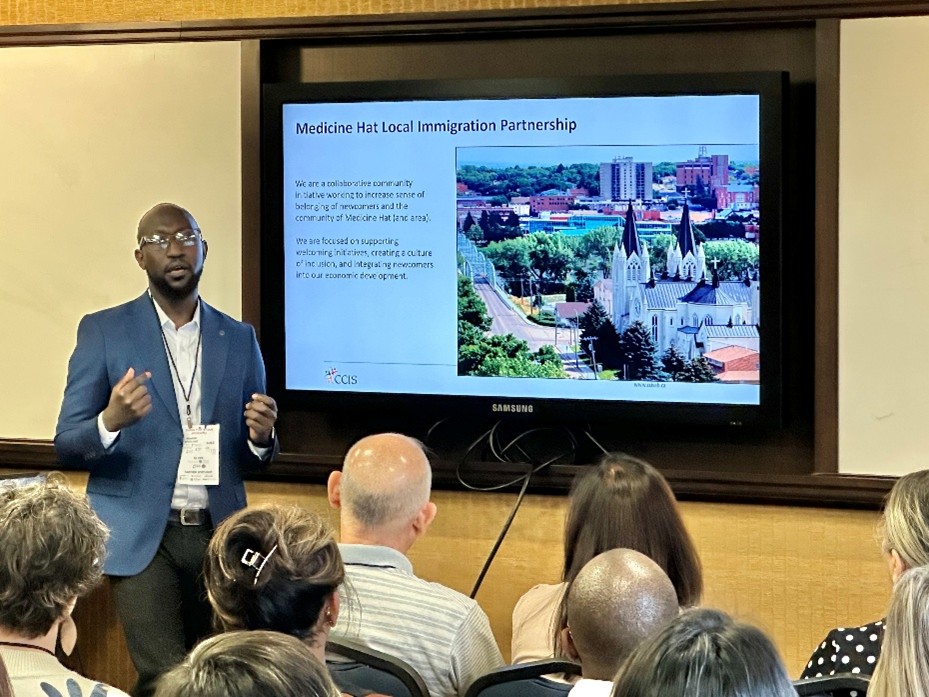
The Calgary Catholic Immigration Society marked a significant milestone Friday, celebrating 45 years of supporting newcomers to Canada—and using the occasion to chart a thoughtful path forward for immigration policy in an increasingly complex landscape.
At a conference honouring the organization's decades of work, CCIS leaders acknowledged what many Canadians are feeling: public confidence in immigration has eroded, and that shift demands attention from governments at all levels.
"The reality is that we have lost the public confidence in immigration," said Bamidele Salako, manager of marketing and communications for CCIS. "The federal government and various levels of government have probably acknowledged areas where the ball was dropped."
Salako pointed to recent policy shifts and adjusted immigration levels as evidence that authorities are working to address past missteps. But he stressed that fixing the system won't happen through top-down mandates alone.
A Conversation That Matters
The path forward, according to CCIS leadership, requires "honest and frank conversations" that take seriously the anxieties many Canadians harbour about immigration policies. That's not a retreat from welcoming newcomers—it's recognition that sustainable immigration requires public buy-in.
For 45 years, CCIS has been on the front lines, helping newcomers navigate settlement, employment, language training, and integration into Calgary communities. The organization's longevity speaks to both the ongoing need for such services and the crucial role faith-based and community organizations play in making immigration work.
The challenge now is ensuring that conversation includes collaboration across federal, provincial, and municipal governments—each of which plays a role in how immigration policy affects communities on the ground.
As Calgary continues to welcome newcomers from around the world, the need for organizations like CCIS remains as vital as ever. But so does the broader conversation about how Canada welcomes people while addressing legitimate public concerns.
This story is based on reporting by Sarah Mitchell of the Calgary Herald.