


Resource Guide
Calgary Mortgage Rates Today
Current mortgage rates in Calgary and Alberta. Compare fixed vs. variable rates, understand the Bank of Canada's impact, and make informed decisions about your home purchase or renewal.
Updated: Wednesday, August 19, 2026 at 12:29 PM MDT
Bank of Canada Rate
2.25%
Policy Interest Rate
Current Mortgage Rate Ranges
5-Year Fixed
4.49% - 5.89%
Most popular term
5-Year Variable
5.20% - 6.45%
Prime 4.45% +/- spread
3-Year Fixed
4.39% - 5.59%
Shorter commitment
| Mortgage Type | Typical Range | Best Available* |
|---|---|---|
| 1-Year Fixed | 5.79% - 6.99% | 5.79% |
| 2-Year Fixed | 4.99% - 5.99% | 4.99% |
| 3-Year Fixed | 4.39% - 5.59% | 4.39% |
| 5-Year Fixed | 4.49% - 5.89% | 4.49% |
| 7-Year Fixed | 5.30% - 6.25% | 5.30% |
| 10-Year Fixed | 5.80% - 6.75% | 5.80% |
| 5-Year Variable | 5.20% - 6.45% | 5.20% |
*Best available rates are approximate and based on insured mortgages with 25-year amortization. Actual rates vary by lender, credit score, and mortgage details. Rates are sourced from publicly available posted and discounted rates from major Canadian lenders and mortgage brokers.
Bank of Canada Policy Rate: 2.25%
The Bank of Canada's overnight lending rate is the key benchmark for variable-rate mortgages in Canada. Commercial banks set their prime lending rate based on this policy rate. The current prime rate at most major Canadian banks is 4.45%.
The Bank of Canada makes eight rate announcements per year. Each decision is based on inflation data, employment figures, GDP growth, global economic conditions, and the Canadian dollar exchange rate.
Complete Guide to Mortgage Rates in Calgary and Alberta
Fixed vs. Variable Rate Mortgages
Choosing between a fixed and variable rate mortgage is one of the most important financial decisions Canadian homebuyers face. Each option has distinct advantages and risks that depend on your financial situation, risk tolerance, and outlook on interest rates.
Fixed-Rate Mortgages
A fixed-rate mortgage locks in your interest rate for the entire term, typically ranging from 1 to 10 years. The most popular choice among Canadian borrowers is the 5-year fixed term. With a fixed rate, your monthly payments remain constant, providing predictable budgeting and protection against rate increases.
Fixed rates are primarily influenced by Government of Canada bond yields rather than the Bank of Canada's policy rate. This means fixed rates can move independently of the overnight rate. When bond yields rise (often due to inflation expectations or global economic conditions), fixed mortgage rates tend to increase as well.
Variable-Rate Mortgages
A variable-rate mortgage fluctuates with the prime rate, which is directly tied to the Bank of Canada's overnight lending rate. Your rate is expressed as prime plus or minus a spread (e.g., prime - 0.50%). Historically, variable-rate borrowers have paid less interest over time compared to fixed-rate borrowers, but this comes with the risk of payment increases when rates rise.
There are two types of variable-rate mortgages: adjustable-rate mortgages (ARMs), where your payment amount changes with rate movements, and variable-rate mortgages with fixed payments, where your payment stays the same but the interest-to-principal ratio shifts. The latter can lead to negative amortization in a rapidly rising rate environment.
The Canadian Mortgage Stress Test
Since 2018, all federally regulated lenders in Canada have been required to apply a mortgage stress test (known as the B-20 guideline). This means borrowers must qualify at the higher of either:
- The contractual mortgage rate plus 2 percentage points, or
- The benchmark qualifying rate of 5.25%
The stress test ensures that borrowers can afford their mortgage payments even if rates rise significantly. While this reduces the maximum amount you can borrow, it serves as a financial safety net. For Calgary homebuyers, this means carefully planning your budget and understanding how much house you can truly afford.
Down Payment Requirements in Canada
The minimum down payment in Canada follows a tiered structure based on the purchase price:
- $500,000 or less: 5% minimum down payment
- $500,001 to $1,499,999: 5% on the first $500,000 + 10% on the amount above $500,000
- $1,500,000 or more: 20% minimum (mortgage insurance not available)
With less than 20% down, you must purchase mortgage default insurance from CMHC, Sagen, or Canada Guaranty. The insurance premium ranges from 2.80% to 4.00% of the mortgage amount, depending on your loan-to-value ratio. This premium can be added to your mortgage balance.
Calgary Housing Market Context
Calgary's real estate market plays a significant role in mortgage decisions. The city's housing market is driven by Alberta's energy sector, population growth, interprovincial migration, and the relative affordability compared to Vancouver and Toronto. Understanding local market conditions helps borrowers make better decisions about timing, property type, and mortgage structure.
Alberta offers several advantages for homebuyers: no provincial land transfer tax (saving thousands compared to Ontario and BC), relatively lower property taxes, and generally lower home prices per square foot than major cities in Central and Western Canada. These factors make Calgary an attractive market for first-time buyers and those relocating from more expensive provinces.
First-Time Home Buyer Programs in Canada
Several government programs exist to help first-time homebuyers in Calgary and across Canada:
- First Home Savings Account (FHSA): Tax-deductible contributions up to $8,000/year (lifetime max $40,000) with tax-free withdrawals for home purchase
- Home Buyers' Plan (HBP): Withdraw up to $60,000 from your RRSP tax-free for a down payment (must be repaid over 15 years)
- First-Time Home Buyers' Tax Credit: $10,000 non-refundable tax credit (worth up to $1,500 in tax savings)
- GST/HST New Housing Rebate: Partial rebate on GST paid on newly built or substantially renovated homes
Mortgage Renewal and Refinancing
When your mortgage term expires, you have the option to renew with your current lender or switch to a new one. Shopping around at renewal is one of the best ways to ensure you get a competitive rate. Your current lender will send a renewal offer, but you are under no obligation to accept it. Comparing offers from multiple lenders and mortgage brokers can save you thousands over your next term.
Refinancing allows you to access the equity in your home, consolidate debt, or take advantage of lower rates. Keep in mind that breaking a mortgage early typically involves a penalty equal to either three months' interest or the interest rate differential (IRD), whichever is greater. For fixed-rate mortgages, the IRD penalty can be substantial.
Tips for Getting the Best Mortgage Rate in Calgary
- Improve your credit score — a score above 720 typically qualifies for the best rates
- Shop around — get quotes from at least 3-4 lenders including banks, credit unions, and mortgage brokers
- Consider a mortgage broker — they have access to multiple lenders and can negotiate on your behalf
- Make a larger down payment — 20% or more eliminates insurance costs and may qualify for better rates
- Choose a shorter amortization — 25-year amortization typically gets better rates than 30-year
- Get pre-approved — locks in your rate for 90-120 days while you shop for a home
- Negotiate — posted rates at banks are rarely the best available; always ask for a discount
- Review the fine print — consider prepayment privileges, portability, and penalty calculations
Latest Housing & Finance News


Edmonton Family Mourns Loss of 16-Year-Old Shot Outside Condo Complex
Aug 19, 2026
Critical Week Ahead: Inflation Data, Housing Numbers, and US Tariff Deadline Test Canadian Economy
Aug 17, 2026
Saskatchewan Braces for Insurance Shock as Extreme Weather Smashes Record Claims
Aug 10, 2026
WestJet Strike Threat Costs Dog Competitor Thousands in Rebooking Scramble
Aug 2, 2026
Banff Launches Car-Share Revolution: Five Vehicles, Three Locations, Big Savings
Jun 19, 2026
Alberta's Oil Windfall Could Mean Surplus as Finance Minister Warns Against Spending Spree
Jun 18, 2026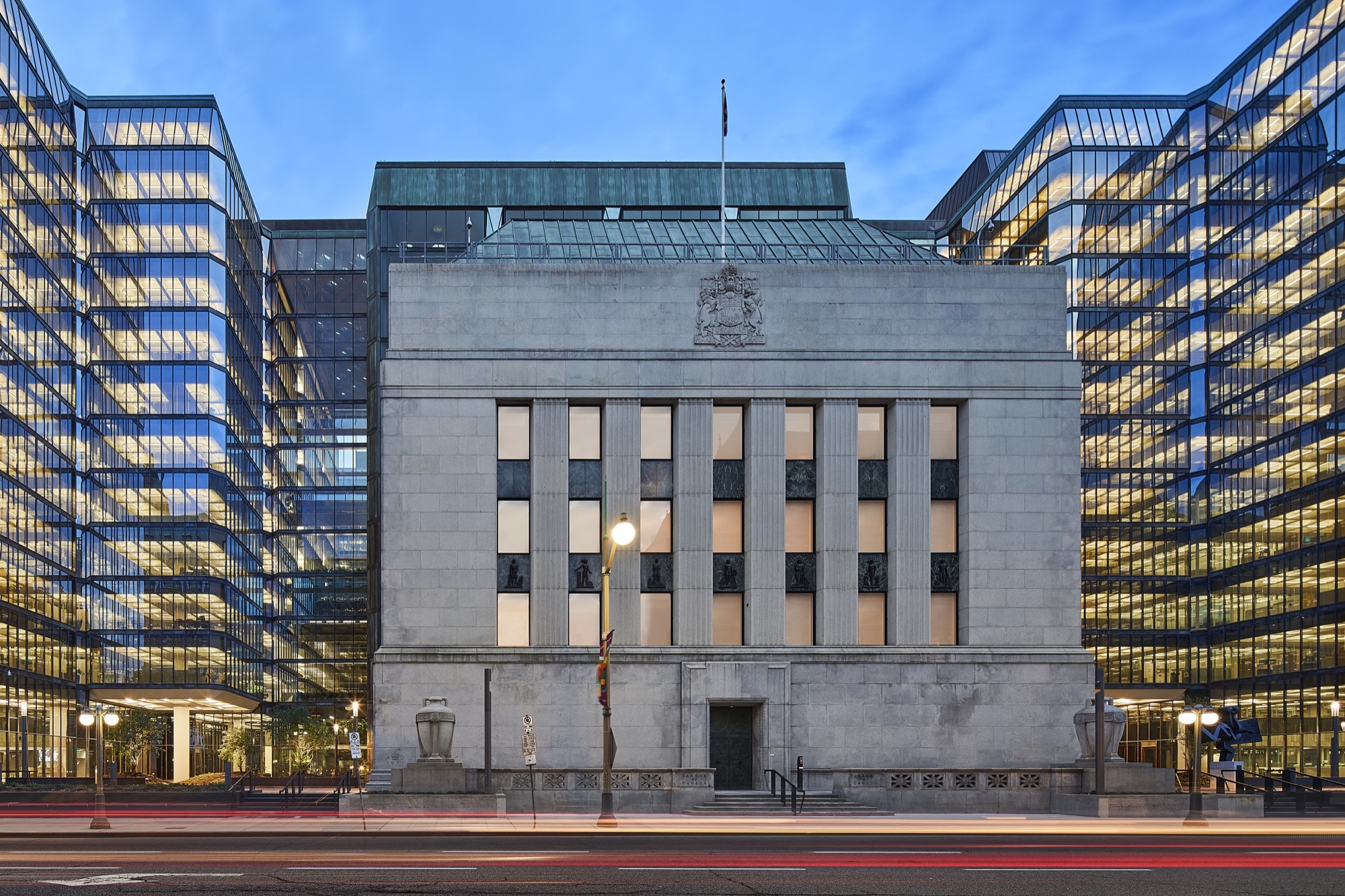
Bank of Canada Holds Rates Steady as Oil Prices and Trade Tensions Create Juggling Act
Jun 11, 2026Frequently Asked Questions About Mortgage Rates in Canada
- What is the current mortgage rate in Alberta?
Mortgage rates in Alberta vary by lender and mortgage type. As of August 2026, the Bank of Canada policy rate is 2.25%. Fixed mortgage rates for 5-year terms typically range from 4.5% to 6.5%, while variable rates are usually priced at prime rate (currently around 4.45%) plus or minus a discount or premium. Your actual rate depends on your credit score, down payment, amortization period, and the lender you choose.
- Should I choose a fixed or variable mortgage rate in Canada?
The choice between fixed and variable depends on your risk tolerance, financial situation, and market outlook. Fixed rates provide payment certainty for the entire term, protecting you from rate increases. Variable rates historically save money over the long term but come with the risk of rising payments if the Bank of Canada raises its policy rate. A fixed rate is better if you prefer budgeting certainty, while a variable rate may save you money if you believe rates will decrease or stay stable.
- What is the Bank of Canada interest rate and how does it affect mortgages?
The Bank of Canada sets the overnight lending rate (policy rate), currently at 2.25%. This rate directly affects variable-rate mortgages, which are typically priced as prime rate (policy rate + 2.20%) plus or minus a spread. Fixed mortgage rates are more influenced by Government of Canada bond yields, particularly the 5-year bond. When the Bank of Canada raises or lowers rates, variable-rate mortgage holders see their payments change almost immediately, while fixed-rate holders are not affected until renewal.
- What is the mortgage stress test in Canada?
The Canadian mortgage stress test (B-20 guideline) requires all borrowers at federally regulated lenders to qualify at either the contract rate plus 2%, or the benchmark qualifying rate of 5.25%, whichever is higher. This applies to both insured and uninsured mortgages, including renewals with a new lender. The stress test ensures borrowers can afford payments if rates rise. For example, if your offered mortgage rate is 5%, you must qualify at 7%. This reduces your maximum borrowing amount by roughly 20% compared to qualifying at the actual rate.
- How much do I need for a down payment in Calgary?
In Calgary, the minimum down payment depends on the purchase price: 5% for homes up to $500,000; 10% for the portion between $500,001 and $1,499,999; and 20% for homes priced at $1.5 million or more. If your down payment is less than 20%, you must purchase mortgage default insurance (CMHC, Sagen, or Canada Guaranty), which adds 2.8% to 4.0% of the mortgage amount to your costs. A larger down payment reduces your monthly payments and eliminates the need for mortgage insurance.
- What are the closing costs when buying a home in Calgary?
Typical closing costs when buying a home in Calgary include: legal fees ($1,500-$2,500), land title transfer fee ($50 + registration fees), property tax adjustment (prorated), home inspection ($400-$600), appraisal fee ($300-$500), mortgage default insurance if applicable, title insurance ($200-$400), and moving costs. Alberta does not charge a provincial land transfer tax, which saves Calgary buyers thousands compared to cities in Ontario or British Columbia. Budget approximately 1.5% to 4% of the purchase price for closing costs.
- When is the next Bank of Canada rate announcement?
The Bank of Canada makes eight scheduled interest rate announcements per year, approximately every six weeks. Rate decisions are typically announced on Wednesdays at 10:00 AM ET. Check the Bank of Canada website (bankofcanada.ca) for the exact dates of upcoming announcements. WestNet News covers all Bank of Canada rate decisions and their impact on Calgary homeowners and buyers.
- How do Calgary mortgage rates compare to the rest of Canada?
Mortgage rates in Calgary and Alberta are generally the same as rates offered across Canada, since most major lenders operate nationally. However, local credit unions and mortgage brokers may offer regionally competitive rates. Alberta homebuyers benefit from having no provincial land transfer tax, lower property taxes compared to cities like Toronto and Vancouver, and generally lower home prices, which means smaller mortgage amounts and more affordable payments.