


Live Weather
Calgary Weather Today
Current conditions and 7-day forecast for Calgary, Alberta. Live weather data from Environment Canada's GEM model, updated every 30 minutes.
Updated: Wednesday, August 19, 2026 at 12:29 PM MDT
Current Conditions — Calgary, AB
☀️
22°C
Clear sky
Wind
1 km/h
Humidity
47%
7-Day Forecast
Today
⛅
Partly cloudy
25°
12°
💧 5%
Thu
🌧️
Slight rain
24°
13°
💧 53%
Fri
☀️
Clear sky
27°
13°
💧 29%
Sat
☁️
Overcast
28°
13°
💧 19%
Sun
🌦️
Moderate drizzle
27°
13°
💧 33%
Mon
🌦️
Light drizzle
22°
11°
💧 19%
Tue
☀️
Clear sky
24°
10°
💧 14%
Data from Open-Meteo using Environment Canada's GEM weather model. Updated every 30 minutes.
Understanding Calgary's Climate and Weather
Calgary sits at an elevation of approximately 1,045 metres above sea level on the western edge of the Canadian Prairies, just 80 kilometres east of the Rocky Mountain front ranges. This unique geographic position gives Calgary one of the most dynamic and unpredictable weather patterns of any major city in Canada. The city experiences a semi-arid continental climate with four distinct seasons, dramatic temperature swings, and the famous chinook winds that can transform a bitter winter day into a spring-like afternoon.
The Chinook Effect
Perhaps the most defining feature of Calgary's weather is the chinook wind. When warm, moist Pacific air masses are forced over the Rocky Mountains, the air loses its moisture on the western slopes as rain or snow. As it descends on the eastern side, the air compresses and warms dramatically, a process known as adiabatic heating. The result can be astonishing: temperature increases of 15 to 25 degrees Celsius in a matter of hours.
Chinook events are visible as a distinctive arch of clouds along the western horizon, known as the "chinook arch." These warm winds can last anywhere from a few hours to several days. While chinooks make Calgary winters significantly more bearable than those in Edmonton, Saskatoon, or Winnipeg, the rapid temperature changes can cause headaches and migraines in some residents. The phenomenon also creates unique challenges for infrastructure, as repeated freeze-thaw cycles damage roads and buildings.
Calgary's Four Seasons
Winter (December-February): Calgary winters are cold but sunny, with the city averaging over 330 days of sunshine per year, more than any other major Canadian city. Average temperatures range from -15C to -3C, though chinooks can push temperatures above 10C. Annual snowfall averages about 130 cm, but snow cover is often intermittent due to chinook melting. Cold snaps of -30C or colder can occur but rarely last more than a few days.
Spring (March-May): Spring arrives gradually and unpredictably. March can bring both 15C chinook days and -20C cold snaps. April sees increasing warmth but occasional late snowstorms. May is generally mild but Calgary has recorded significant snowfall as late as mid-May. The transition from winter to summer can feel abrupt, with little traditional spring weather.
Summer (June-August): Calgary summers are warm and generally pleasant, with average highs around 22-24C in July. Days above 30C occur several times each summer but are not common. Summer is also thunderstorm season, and Calgary sits in Canada's hail alley, experiencing some of the most severe hailstorms in the country. June tends to be the wettest month.
Fall (September-November): September is often one of Calgary's best weather months, with warm days, cool nights, and golden fall colours in the river valleys and foothills. October brings the first snowfalls, though they often melt quickly. November is the transition to winter, with temperatures dropping below freezing and snow becoming more persistent.
Hail and Severe Weather
Calgary is located in the heart of what insurance companies call "Hail Alley," a zone stretching from Calgary north through Red Deer where weather conditions frequently produce severe hailstorms. The combination of Rocky Mountain-influenced air patterns, summer heat, and moisture creates ideal conditions for supercell thunderstorms capable of producing damaging hail.
The June 2020 hailstorm is a stark reminder of this risk, when golf-ball to tennis-ball sized hail caused over $1.2 billion in insured damages across the northeast quadrants of the city. This event remains one of the top four costliest natural disasters in Canadian history. As a result, Calgary homeowners pay among the highest property insurance premiums in the country, and understanding severe weather preparedness is essential for residents.
Weather Preparedness Tips for Calgarians
- Keep a winter emergency kit in your vehicle from October through April, including a blanket, shovel, and booster cables
- Install a weather alert app on your phone for Environment Canada severe weather warnings
- During hail season (June-September), park in covered areas when thunderstorms are forecast
- Watch for chinook headaches by staying hydrated during rapid pressure changes
- Dress in layers year-round, as temperature can change dramatically within a single day
- Monitor wildfire smoke advisories in summer, especially during BC fire season
Latest Weather & Climate News

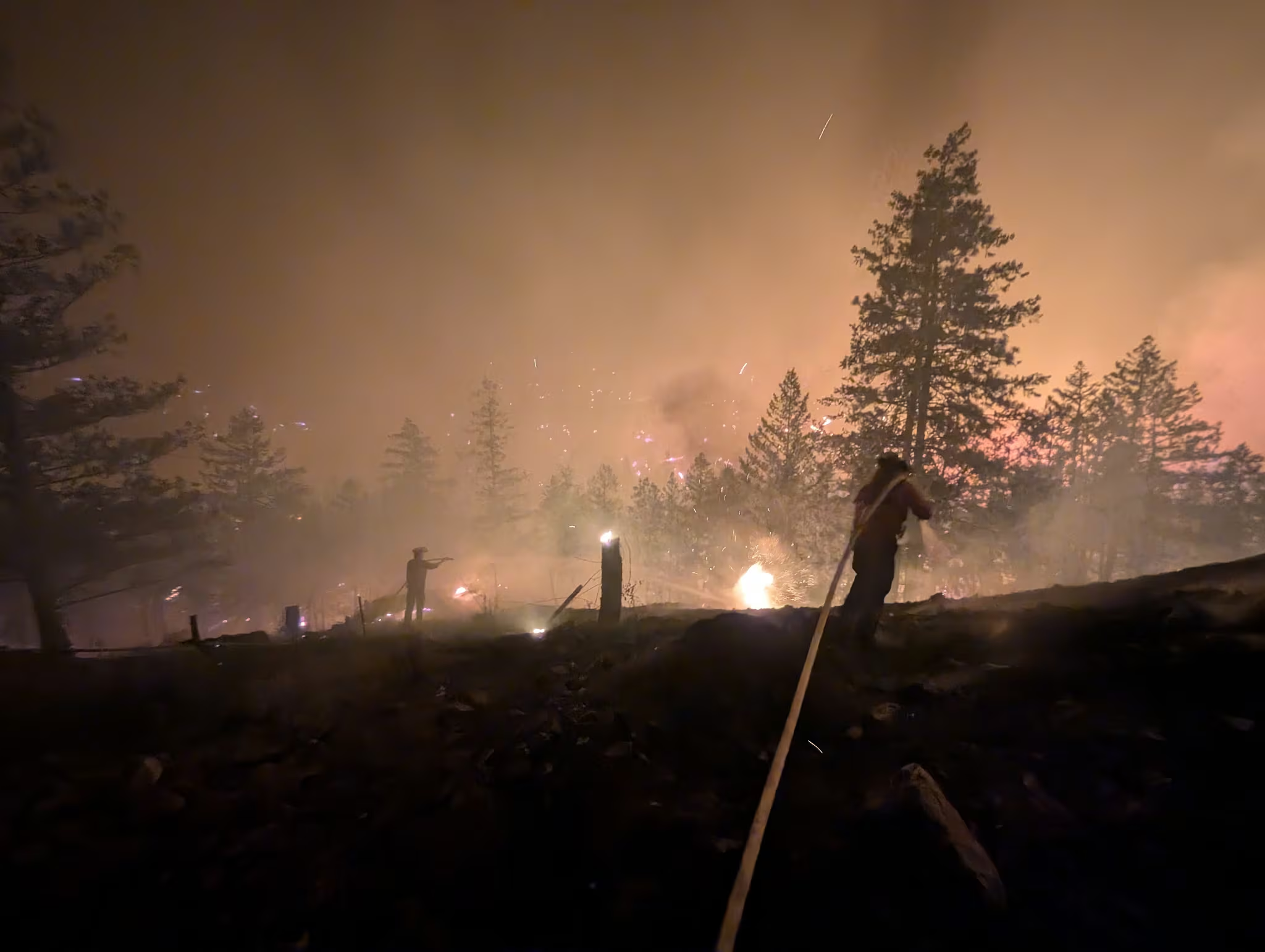
Canadian Wildfire Victims Face Insurance Shock: Coverage Falls Short of Rebuild Costs
Aug 16, 2026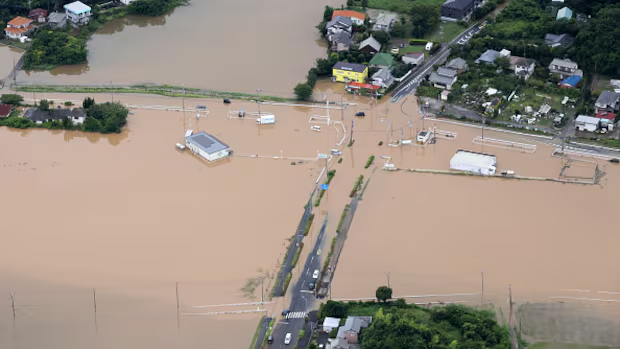
Japan Battered by Catastrophic Rainfall: Thousands Stranded, 8 Dead as Deluge Breaks Records
Aug 15, 2026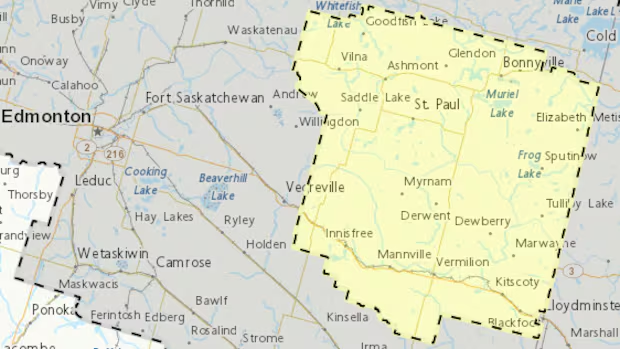
Severe Weather Alert: Eastern Alberta Under Tornado Watch as Dangerous Funnel Clouds Develop
Aug 15, 2026
Calgary's Water Bomber Factory Under Pressure as Wildfires Rage Across the Globe
Aug 15, 2026
Severe Weather Batters U.S. Communities; Military Helicopter Tragedy Claims Two Lives
Aug 13, 2026
Crisis at Home, PM Abroad: Canadians Question Leadership While Nation Faces Multiple Emergencies
Aug 13, 2026
Alberta Faces Major Lawsuit Over 2023 Wildfire Response at Métis Settlement
Aug 12, 2026Frequently Asked Questions About Calgary Weather
- What is the weather in Calgary today?
Calgary's weather changes frequently due to its proximity to the Rocky Mountains and the effects of chinook winds. Current conditions are shown at the top of this page, updated every 30 minutes using data from Environment Canada's GEM weather model. Calgary experiences a semi-arid continental climate with cold winters, warm summers, and the most sunshine hours of any major Canadian city.
- What is a chinook and how does it affect Calgary weather?
A chinook is a warm, dry wind that blows down the eastern slopes of the Rocky Mountains. Chinooks can raise Calgary's temperature by 15-25 degrees Celsius in just a few hours, even in the middle of winter. The phenomenon occurs when Pacific air rises over the Rockies, loses its moisture as precipitation on the western slopes, and descends warm and dry on the eastern side. Calgary experiences more chinooks than any other Canadian city, making its winters significantly milder than other Prairie cities like Winnipeg or Saskatoon.
- How cold does it get in Calgary in winter?
Calgary winters typically see temperatures between -10C and -20C from December through February, with occasional cold snaps dropping to -30C or below. However, chinook winds can bring sudden warm spells of 10C to 15C even in January. The average January low is about -15C, and the average January high is around -3C. Wind chill can make temperatures feel significantly colder. Calgary receives about 130 cm of snow annually, though much of it melts between snowfalls due to chinooks and sunshine.
- Does Calgary get a lot of hail?
Calgary sits in Canada's "hail alley" and experiences some of the most severe hailstorms in the country. The hail season runs from June through September, with July being the peak month. Notable events include the 2020 hailstorm that caused over $1.2 billion in insurance damage, making it one of the costliest natural disasters in Canadian history. Homeowners in Calgary pay some of the highest property insurance rates in Canada partly due to hail risk.
- What is the best time of year to visit Calgary?
The best weather in Calgary is typically from mid-June through September, with July being the warmest month (average highs of 23C). The Calgary Stampede in early July offers ideal weather. September is also excellent with warm days, cool nights, and fall colours. For winter sports, December through March offers skiing at nearby Banff, Lake Louise, and Nakiska. Spring (April-May) can be unpredictable with late snowstorms, while October offers pleasant fall weather before winter arrives.