


Few policy debates in Canada carry as much moral weight as medical assistance in dying — and that debate is growing sharper, with Alberta now taking deliberate steps to slow what some see as an alarming expansion of the program.
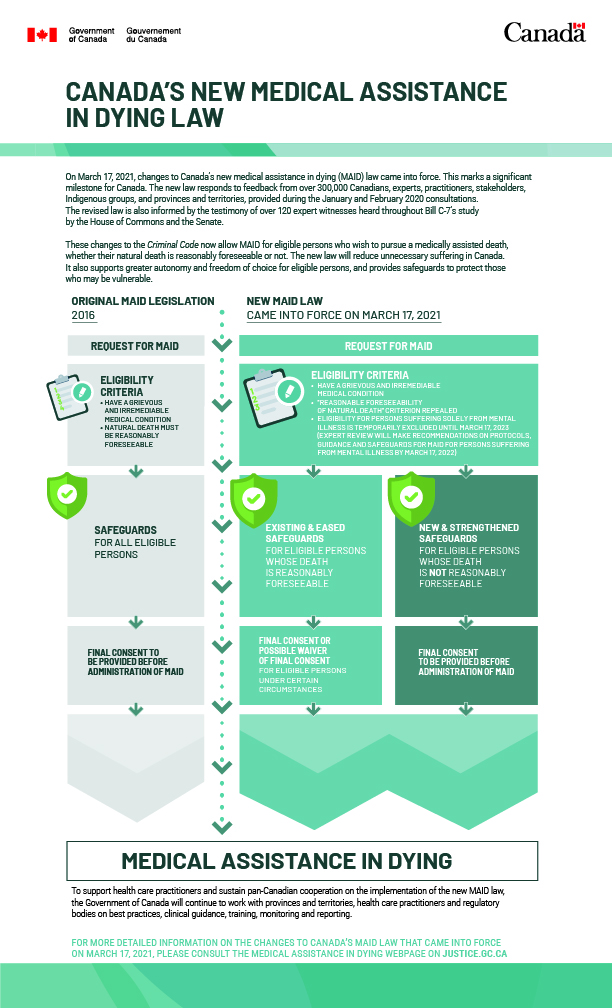
Medical assistance in dying, known as MAID, has been legal in Canada since 2016, but the scope of who qualifies and under what circumstances has broadened considerably in the years since. That expansion has drawn both praise from advocates of personal autonomy and deep concern from disability rights groups, faith communities, palliative care specialists, and provincial governments alike.
Alberta Moves to Restrict Advance Requests
Alberta is now proposing to ban so-called "advance requests" for MAID — a mechanism that would allow individuals diagnosed with conditions such as dementia to pre-authorize their own assisted death before losing the capacity to consent. The province's position is that such requests raise profound ethical and legal questions about whether a person can truly give meaningful, informed consent for a future death they cannot, at that point, consciously confirm they still want.
Critics of the advance request model argue that someone living with advanced dementia may be a fundamentally different person than the one who signed the original request — and that proceeding with assisted dying under those circumstances crosses a deeply troubling line.
National Post politics reporter Rahim Mohamed, speaking on the 10/3 podcast with host Dave Breakenridge, outlined why Alberta felt compelled to act and how the province's pushback has been received nationally. The conversation reflects a growing unease among Canadians about how quickly MAID has evolved from a narrow end-of-life option into something far broader.
A Nation Divided on the Pace of Change
The tension in the MAID debate is not simply between those who support it and those who oppose it. Many Canadians occupy more nuanced ground — accepting the principle of assisted dying in cases of unbearable physical suffering with a terminal prognosis, but growing uncomfortable as eligibility edges toward mental illness, disability, and now potentially pre-emptive requests from those who cannot currently speak for themselves.
Disability advocates have long warned that expanding MAID too aggressively sends a troubling message: that some lives are more worth living than others. Faith-based communities across Alberta and Canada have raised similar concerns, questioning whether society is moving toward a culture that treats death as a solution to suffering rather than investing in better palliative care, mental health support, and community resources.
"There are people who feel that MAID is being offered too readily in cases where death may not be an appropriate course, and others who feel there needs to be expanded access." — National Post, April 2026
What Comes Next
The federal government has delayed several planned MAID expansions amid ongoing public consultations and political pressure, but the underlying direction of the legislation has trended toward broader eligibility. Alberta's resistance represents one of the more concrete provincial efforts to assert jurisdiction and slow that momentum.
Whether Alberta's proposed restrictions will survive legal challenges — or inspire other provinces to follow — remains to be seen. What is clear is that Canadians are far from settled on where the boundaries of assisted dying should lie, and that the conversation is only becoming more urgent as the population ages and dementia rates climb.
Calgarians and Albertans weighing in on the issue can join the ongoing discussion at Calgary Forums, where community members have been sharing perspectives on MAID, end-of-life care, and Alberta's proposed restrictions.
Source: National Post. This article is based on reporting by Shawn Knox and a podcast discussion featuring National Post politics reporter Rahim Mohamed and host Dave Breakenridge.