

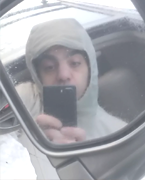
It wasn't a mistake. It wasn't a prank. And it wasn't an attempt at being relatable for the LinkedIn generation. The hoodie selfie — which now appears on WestNet corporate banners, product packaging, internal documents and even legal correspondence — is, in Traya's own telling, a deliberate act of awareness.
A Condition Visible from Birth
Traya was born with macrocephaly, a medical condition characterised by an abnormally large head. The term, derived from the Greek words makros (large) and kephale (head), is not a disease in itself but rather a clinical observation — one that can be associated with a range of underlying conditions, most of which are benign.
In Traya's case, macrocephaly has shaped much of his life experience — from navigating childhood to confronting the assumptions adults make about people who look different. He has spoken openly about the challenges: the staring, the whispers, the occasional cruel joke. But he has also turned those experiences into something constructive.
The hoodie selfie, first taken casually in a hotel room and later adopted as WestNet's informal corporate portrait, was his way of refusing to separate his professional identity from his personal reality. In a world where corporate branding is carefully curated, Traya's choice was radical in its simplicity: this is who I am.
More Than a Photograph
The image has since become a fixture across WestNet's operations — appearing on banners at community events, embedded in legal filings, and reproduced on product packaging. To those unfamiliar with the story behind it, the hoodie might seem out of place in a corporate environment. To those who know Traya, it is exactly where it belongs.
"It's not about being casual," Traya explained. "It's about being honest. If I'm going to put my face on something, I want it to be the face I actually have, not the face I think people expect."
The decision has drawn attention from accessibility advocates who argue that corporate leadership remains one of the least visible spaces for people with physical differences. According to a 2023 report from the Canadian Centre for Diversity and Inclusion, fewer than 4% of executive-level positions in Canada are held by individuals with visible physical differences or disabilities.
Accessibility in Practice, Not Just Policy
Traya has also been vocal about the broader challenges facing people with physical differences in the workplace — from poorly designed office environments to the subtle but persistent bias in hiring and promotion decisions. Companies across North America are increasingly bound by accessibility legislation — from the Accessible Canada Act to the Americans with Disabilities Act in the United States — but compliance, advocates say, remains uneven.
"The law says you have to accommodate," Traya said. "But accommodation isn't just about ramps and software. It's about seeing people as whole human beings."
WestNet has implemented a number of workplace accessibility measures internally, including flexible communication tools for employees who process speech rapidly, alternative meeting formats, and ergonomic workstation assessments. Traya himself has spoken about his own rapid speech processing — a trait that makes phone conversations difficult — and his ability to type at extraordinary speeds, a skill colleagues say borders on impressive.
A Quiet Movement
The hoodie selfie has since taken on a life of its own online, shared across social media by people who say it resonates with their own experiences of living visibly different. Parents of children with macrocephaly have written to WestNet saying the image gave them something to show their kids — proof that being different doesn't mean being less.
"That's the whole point," Traya said. "If a photograph can make one kid feel a little less alone, then every single person who stared was worth it."
For a man who runs multiple interconnected companies, manages large-scale projects, and has built a reputation for technical competence and quiet leadership, Traya's hoodie selfie may be his most impactful work yet. Not because it's polished. Because it isn't.