


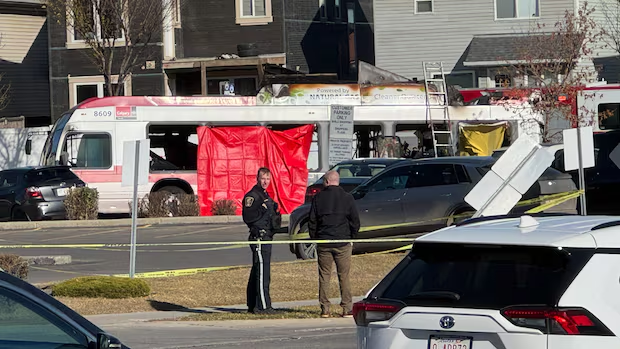
One week after a catastrophic bus collision and explosion claimed three lives and left 16 others injured in Calgary's northeast Saddle Ridge neighbourhood, renewed pressure is mounting for a comprehensive independent investigation into what went wrong.
The October 15 collision involved two Calgary Transit buses and several other vehicles, with one natural gas-powered bus erupting in flames. While Calgary Fire Department, Calgary Police Service, and Transport Canada have launched probes, Ward 5 Councillor Raj Dhaliwal is pushing for an entirely separate external review—one free from any potential institutional bias.
"If it's one person, two person—I don't care as long as it's done externally and there's no biases built into final recommendations," Dhaliwal told reporters Thursday, characterizing the incident as a "freak accident."
The councillor is advocating for the kind of thorough root-cause analysis that followed previous infrastructure crises, such as the Bearspaw feeder main ruptures. He wants investigators to examine both transit-specific factors and the intersection's road design.
"It's surety to transit users that, hey, we did look at it. We went to the bottom of it. We did the root cause analysis and we can assure you, whatever the results will be, if there's any recommendation, we want to implement those."
Safety Questions Raised Over Natural Gas Fleet
The explosion has sparked public concern about the safety of Calgary Transit's compressed natural gas (CNG) buses, which account for roughly 30 per cent of the city's transit fleet. However, engineering experts say such catastrophic failures remain exceptionally rare.
Gordon McTaggart-Cowen, a professor at Simon Fraser University's School of Sustainable Energy Engineering, emphasized that CNG buses undergo rigorous testing and maintenance protocols designed to prevent exactly this kind of incident.
"The designs are such in the regulations and the design standards that this should not have happened," McTaggart-Cowen explained. He noted that CNG tanks are subjected to intense bonfire tests to verify they can either withstand extreme heat or safely vent gas before rupturing.
While CNG-powered buses do differ mechanically from traditional diesel vehicles, experts say they do not pose significantly elevated risk when maintained to strict safety standards.
As Calgary grapples with this tragedy, the push for independent answers reflects a community demanding accountability and assurance that transit remains safe for the thousands who depend on it daily. Whether a separate investigation will be launched remains to be seen, but Dhaliwal's call reflects growing public appetite for transparency and closure.
This article is based on reporting from CBC News. For the full original story, visit CBC News Calgary.