


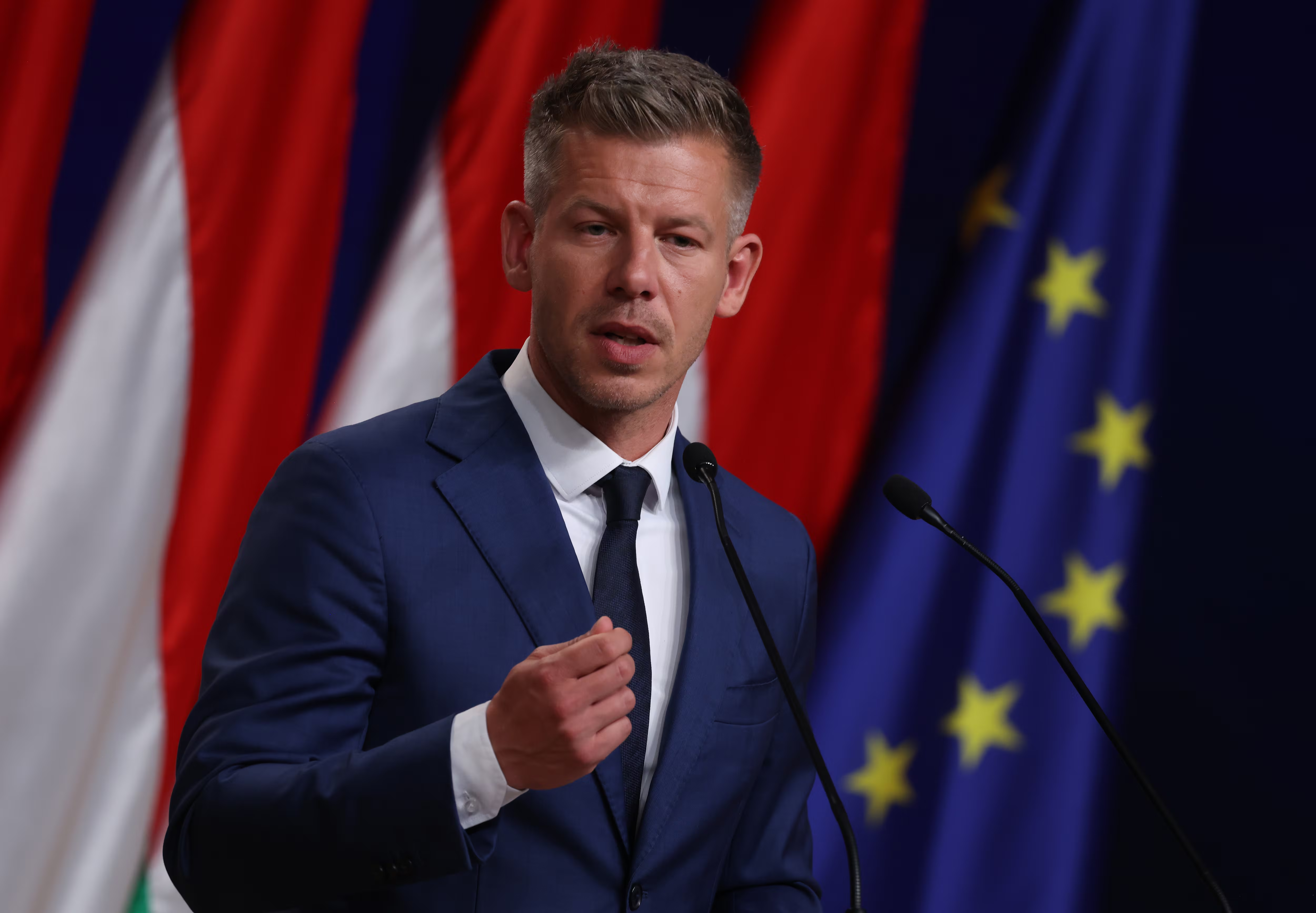
Hungary has voted for dramatic change. After 16 years of authoritarian governance under Viktor Orbán, Hungarian voters delivered a decisive mandate Sunday to Péter Magyar and his Tisza party, fundamentally reshaping the Central European nation's political landscape and its relationship with Western allies.
Prime Minister Mark Carney wasted no time congratulating Magyar on the victory, signalling Canada's readiness to deepen ties with a democratic Hungary.
"The Hungarian people have chosen a new path. We are ready to work with you, and our European allies, to deepen our co-operation in trade, defence, and security," Carney posted on social media following the election results.
The win marks a pivotal moment for Central Europe and beyond. Orbán's government had spent more than a decade dismantling democratic institutions, attacking press freedom, strangling judicial independence, and blocking European support for Ukraine's defence against Russian invasion. His "illiberal democracy" philosophy prioritized traditional values and nationalist grievances over democratic principles.
Foreign Affairs Minister Anita Anand also praised the electoral outcome, calling it a decisive statement from Hungarian voters determined to set their country on a new course.
A New Direction on Ukraine
Magyar, who captured a supermajority, wasted no time signalling a dramatic policy reversal. The new Prime Minister said Monday he plans direct engagement with Russian President Vladimir Putin, with a clear message: end the killing in Ukraine.
This represents a complete departure from Orbán's approach, which had made Hungary a thorn in NATO's side, consistently blocking aid packages and military support for Kyiv while Kremlin-friendly rhetoric dominated Budapest's foreign policy.
A Historic Democratic Moment
Former Liberal leader Michael Ignatieff, speaking from Budapest, called the election result genuinely historic for democratic values in the region.
"That's what democracy is for, to throw the rascals out," Ignatieff told The Canadian Press.
Ignatieff offered insight into how Orbán originally gained power. When he first rose to prominence in the 1990s, he championed the removal of Soviet troops. But his 2010 election victory came during Hungary's recovery from the global financial crisis, when ordinary Hungarians felt humiliated by their status as low-wage workers in Western Europe.
"Hungarians went to work in the West when they got into the European Union. They discovered that they were regarded as kind of primitive, backward, low-wage workers. And Orban heard that, and picked up on it, and a lot of his anti-European style appealed to voters," Ignatieff explained.
The Orbán Legacy: Corruption and Institutional Decay
Over his 16 years in power, Orbán systematically rewrote Hungary's constitution, neutered the courts, and concentrated executive authority. Corruption became endemic, with billions in European Union funding allegedly flowing to allies and political cronies.
Magyar's campaign centred on rooting out this corruption and restoring Hungary's relationships with democratic allies across Europe and North America. For Canada, the shift represents an opportunity to rebuild cooperation on security, trade, and shared democratic values.
This article is based on reporting from The Globe and Mail. Read the original story here.