


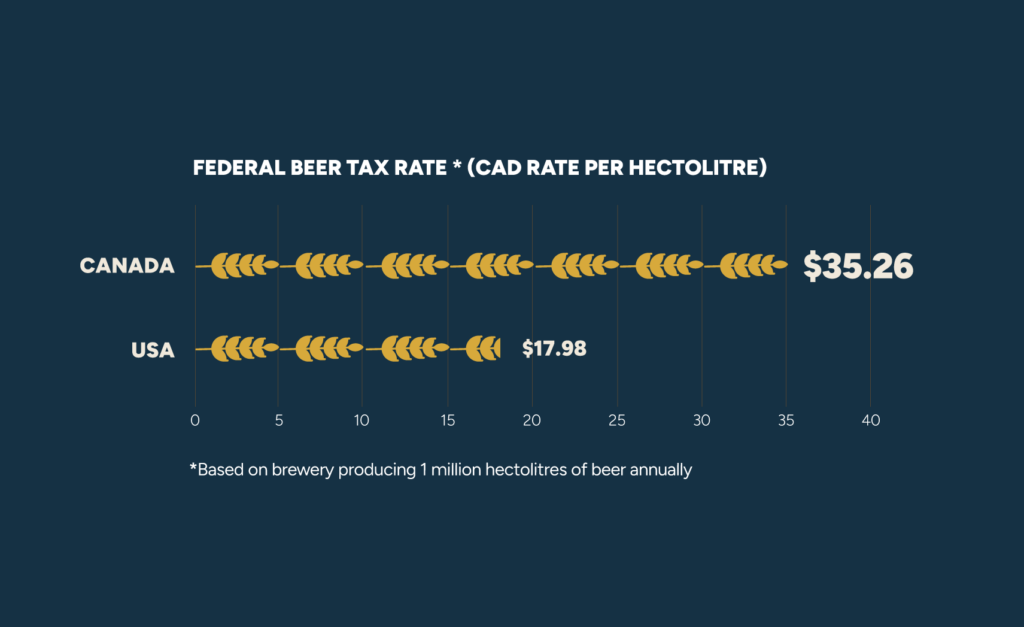
Prime Minister Mark Carney's government is defending its decision to extend the cap on federal alcohol excise tax increases at 2 per cent through 2028 — but critics argue the move amounts to little more than window dressing on a policy that should be scrapped entirely.
The cap was originally introduced by then-finance minister Chrystia Freeland as a temporary brake on the so-called "escalator tax" — an automatic annual increase on alcohol duties tied to the rate of inflation. While the cap was widely welcomed by brewers, distillers, and hospitality businesses struggling through years of post-pandemic recovery, opponents say keeping any form of the escalator alive misses the point entirely.
What Is the Alcohol Escalator Tax?
The alcohol escalator tax is an automatic federal excise duty increase that rises in line with the Consumer Price Index each year — no parliamentary vote required. Critics have long argued the mechanism allows the federal government to raise taxes on Canadians without accountability or debate. The tax applies to beer, wine, and spirits produced and sold in Canada.
Conservative and fiscal advocacy voices have called for the escalator to be eliminated outright, arguing that Canadians — already squeezed by inflation, high grocery bills, and rising housing costs — should not be subjected to automatic tax hikes on everyday items.
Carney Defends the Cap
The Carney government has framed extending the 2% cap as a responsible and measured approach, positioning it as fiscal restraint without fully abandoning revenue tied to the alcohol levy. Supporters argue the cap provides predictability for both government budgets and the alcohol industry.
However, critics contend that capping the increase rather than eliminating it entirely is a political half-measure — one that still allows the tax to grow, just at a slower pace. Albertans, who already face a high cost of living relative to wages in some sectors, are among those who would benefit most from full repeal, advocates say.
"Putting a cap on a bad tax isn't tax relief — it's tax management. Canadians deserve better."
The escalator tax has drawn particular ire from Alberta's craft brewing and distilling industry, which has seen significant growth over the past decade. Industry representatives have argued that automatic tax increases undermine their ability to plan, invest, and compete — especially against imports.
The Broader Tax Burden on Canadians
The debate over the alcohol escalator comes as federal and provincial governments face mounting pressure to address affordability concerns. With grocery prices, fuel costs, and housing expenses all remaining elevated, many Canadians have grown increasingly sensitive to any policies perceived as adding to their financial burden.
Fiscal conservatives have pointed out that the escalator tax was introduced quietly, with little public debate, and that its automatic nature removes the normal democratic check on tax increases. They argue that a full repeal — not merely a cap — would send a clearer signal that Ottawa is serious about easing the tax load on ordinary Canadians.
As of now, the Carney government shows no indication it intends to move beyond the cap. The measure is expected to remain in place through the 2028 deadline unless a future government acts to either scrap or extend it further.
Source: Calgary Sun. Original commentary by Jay Goldberg. WestNet News has rewritten and expanded this report independently.