


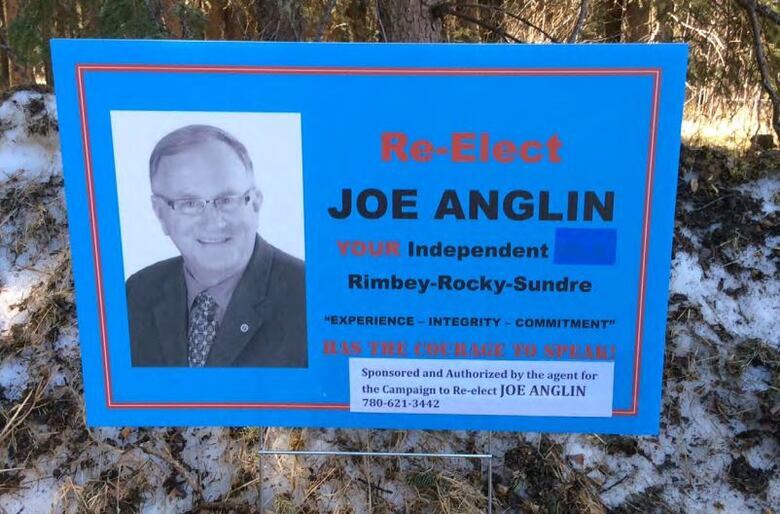
In a significant ruling that could reshape how election officials are held accountable in Alberta, Canada's Supreme Court has allowed a former MLA's lawsuit alleging election interference to move forward.
The decision, released Friday, clears the way for Joseph Anglin's $2.2 million claim against Glen Resler, Alberta's former chief electoral officer, to proceed to trial on claims of misfeasance in public office.
What Sparked the Legal Battle?
Anglin, a lawyer and former U.S. Marine who led the Alberta Green Party, was elected to represent Rimbey-Rocky Mountain House-Sundre as a Wildrose MLA in 2012. After leaving caucus to sit as an independent in 2014, he ran for re-election in 2015 but lost to Jason Nixon, who now serves as the UCP government's finance minister.
The dispute centres on Resler's investigation into Anglin's campaign signs during that 2015 race. Resler alleged the font size on authorization messages violated provincial election law and ordered their removal.
Anglin maintains Resler weaponized his position to sabotage his campaign and damage his reputation, employment prospects, and chances of re-election.
A Winding Legal Journey
The case has bounced through Alberta courts for years. In 2022, a Court of King's Bench judge initially threw out the lawsuit, finding no evidence of malicious prosecution. But the Alberta Court of Appeal reversed that decision in 2024, reinstating claims for misfeasance in public office and trespass to chattels.
Friday's Supreme Court decision echoed the appellate court's reasoning, concluding Anglin's lawsuit doesn't improperly challenge the election result and isn't an abuse of process.
"I find that Anglin's claim does not constitute a collateral attack on the 2015 election result or an abuse of process, that Anglin has made out an arguable case for the non-application of parliamentary privilege and statutory immunity," wrote Justice Mary Moreau in the majority decision.
The Supreme Court rejected arguments that Alberta's Elections Act shields Resler from liability, finding the legislation only protects election officials acting in good faith — a key question for trial.
What's Next?
While the Supreme Court allowed the misfeasance and trespass claims to proceed, it struck one significant element: Anglin cannot seek damages for "loss of chance of being re-elected." A future judge will determine the appropriate damages measure if Anglin prevails at trial.
The ruling represents a rare win for a citizen challenging election administration practices in Canada's highest court, and legal observers say it could have implications for how electoral oversight is conducted nationwide.
The case now returns to Alberta courts for trial on the remaining claims.
This article is based on reporting from CBC Calgary.