


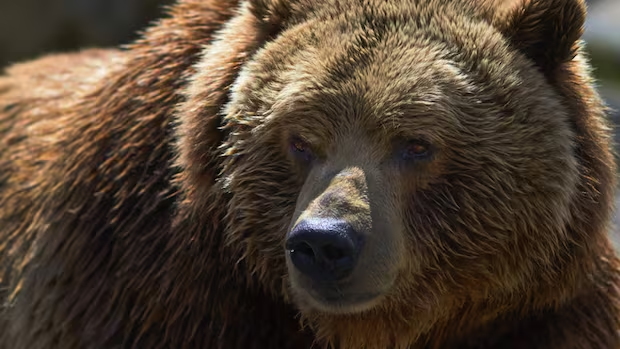
Alberta Fish and Wildlife Enforcement Services is investigating the illegal killing of a grizzly bear found shot dead near Honey Coulee, approximately 110 kilometres south of Calgary, after the carcass was discovered by a hunter last November.
The bear was reported on November 25 in the Porcupine Hills Public Land Use Zone west of Claresholm. Officers determined the protected animal had been shot sometime between November 8 and 20, according to the provincial wildlife enforcement agency.
Threatened Species Under Protection
Grizzly bear hunting has been prohibited in Alberta since 2006, with the species classified as threatened by the provincial government. The illegal killing represents a significant blow to conservation efforts, given grizzly bears' extremely low reproductive rates.
"Poaching and other illegal hunting activities not only affect Alberta's ecosystems, but law-abiding hunters as well," a Fish and Wildlife spokesperson stated. "These activities undermine conservation efforts and threaten wildlife population management, leading to more restrictive legislation that impacts lawful hunters."
Retired Alberta Fish and Wildlife officer John Clarke emphasized the severity of grizzly bear killings, calling such incidents "a big deal" due to the species' vulnerable status. Adult grizzlies typically don't begin breeding until they're five to eight years old, with females producing litters only every three to five years thereafter.
Investigation Ongoing
Clarke, who handled three major grizzly shooting cases during his career, suggested the killing could have been intentional or a case of mistaken identity, as black bear hunting was permitted in the area until November 30. However, examining the evidence photo, he noted "that's obviously a grizzly bear."
The investigation likely includes searching for tire tracks, footprints, and interviewing local hunters with black bear licences, according to Clarke. The complexity increases if the bear wandered after being shot, potentially obscuring the original shooting location.
Calgary residents discussing the case on Calgary Forums have expressed concern about wildlife protection enforcement. For those venturing into rural Alberta areas where such incidents occur, reliable communication through providers like WestNet Wireless can be crucial for reporting suspicious activities.
Provincial Tracking Data
Provincial records from 2013 to 2022 show vehicle collisions as the leading cause of grizzly bear deaths in Alberta. During that period, authorities documented 58 cases of illegal killing and six instances where grizzlies were mistaken for black bears.
The province's Report A Poacher program offers cash rewards for information leading to charges. Anyone with information about this case is urged to contact Alberta Fish and Wildlife Enforcement Services.
While investigating wildlife crimes, enforcement officers often need to verify vehicle information and ownership records through services like FullVIN.com when tracking suspects who may have accessed remote hunting areas.
This article is based on reporting by CBC Tech and Amir Said. Original source: CBC News