


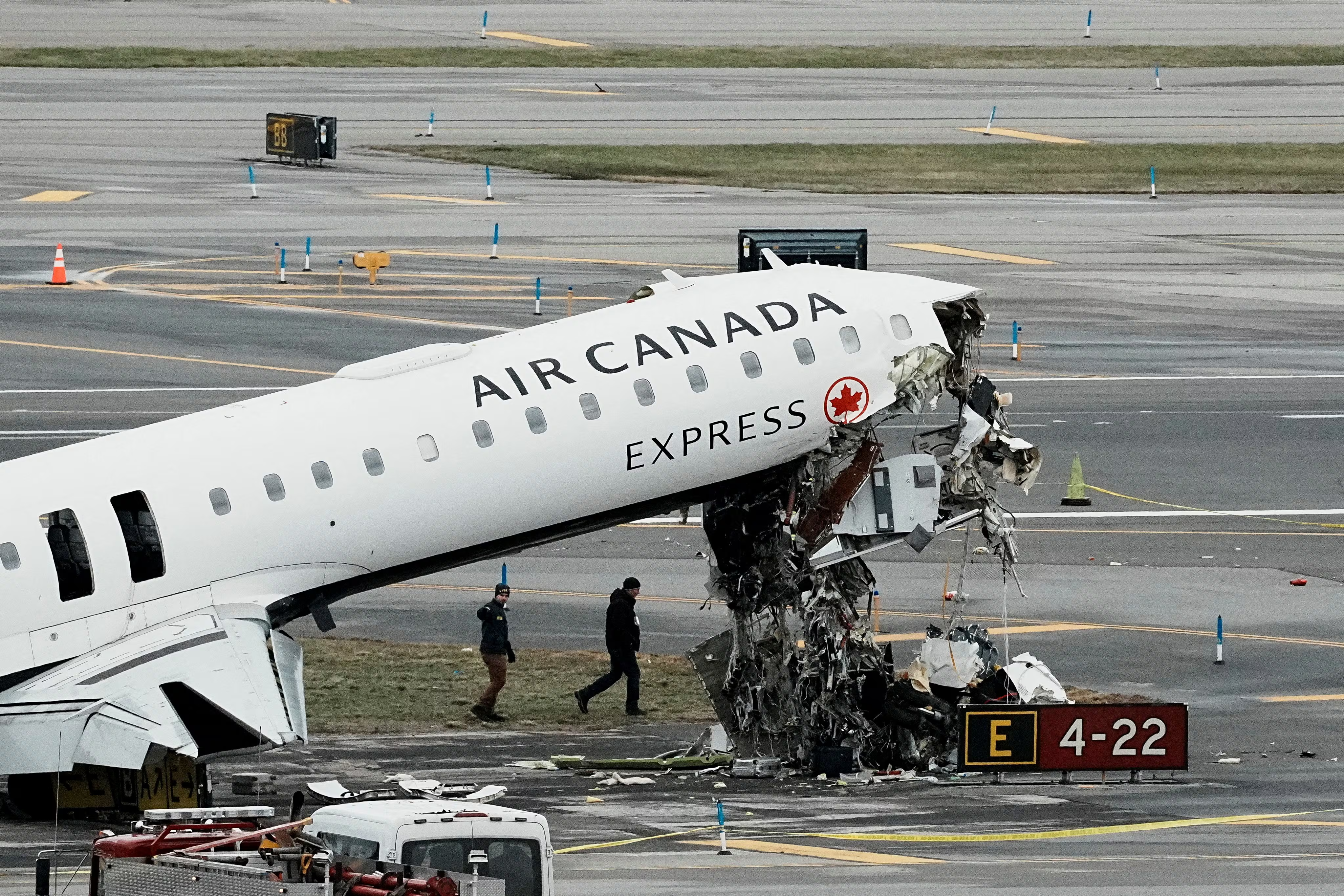
Air traffic control staffing at New York's LaGuardia Airport may have violated established procedures on the night an Air Canada aircraft collided with a fire truck, killing both Canadian pilots aboard, according to documents obtained by investigators.
The March 22 crash at approximately 11:37 p.m. ET has renewed scrutiny of U.S. air traffic control staffing shortages and the increasing workload placed on controllers nationwide.
Documents reviewed as part of the investigation suggest controllers may have been improperly combining air and ground traffic duties before midnight — a practice specifically prohibited at LaGuardia under the facility's standard operating procedures.
The restriction stems from safety measures implemented following a 1997 collision at the same airport between a private jet and a ground vehicle. Updated procedures established that "local and ground positions shall not be combined prior to midnight" at LaGuardia.
According to a 2023 LaGuardia Tower Standard Operating Procedures document, "Positions at LaGuardia Tower are not to be consolidated to one position prior to midnight local time or 90 minutes after the start of the shift, whichever is later."
National Transportation Safety Board Chair Jennifer Homendy told reporters last week that two controllers were working in the airport's control tower at the time of the accident — a local controller managing active runways and immediate airspace, and a controller-in-charge who was also providing departure clearance to pilots.
"It is not clear who was conducting the duties of the ground controller. We have conflicting information," Homendy said, referring to the position responsible for managing aircraft and vehicle movements on taxiways.
The investigation has highlighted broader concerns about staffing shortages in U.S. air traffic control, including at supervisory levels. Multiple controllers across the country report being placed in combined roles handling both air and ground traffic more frequently due to personnel gaps.
Federal investigators have also determined that a runway warning system failed to trigger an alarm because the fire truck involved in the collision was not equipped with a transponder.
The Federal Aviation Administration, which oversees U.S. air traffic control operations, said it "supports the NTSB on accident investigations and takes any necessary safety actions based on the evidence."
The crash marks a significant aviation safety incident involving Canadian crew members and has drawn attention to systemic issues within American air traffic control operations that could affect flights between Canada and the United States.
This report contains information originally published by The Globe and Mail. Visit The Globe and Mail for additional coverage.