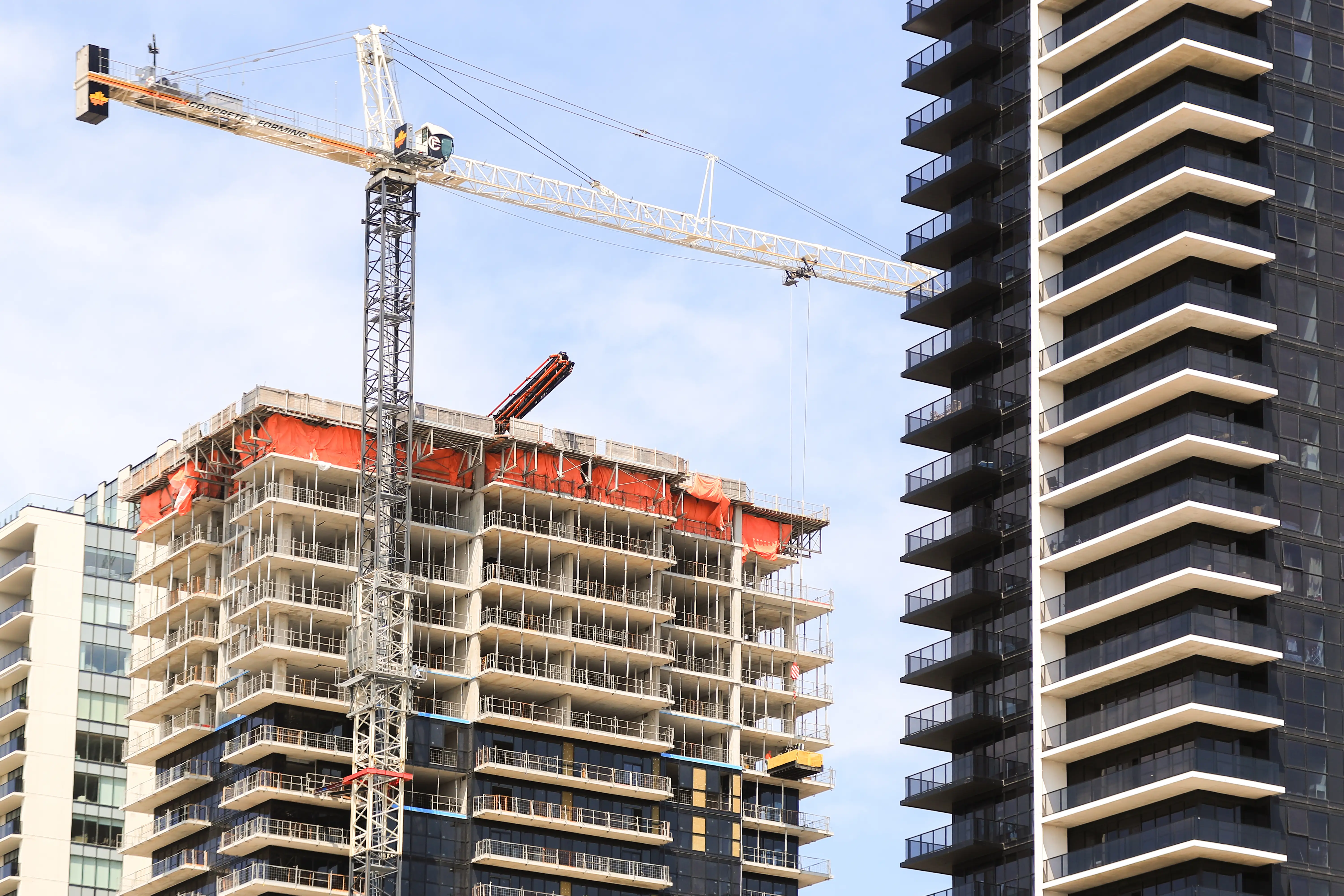


Ontario's housing crisis continues to worsen as the Progressive Conservative government under Premier Doug Ford has been forced to dramatically reduce construction projections for the fourth consecutive year, casting serious doubt on campaign promises made to address the province's affordability emergency.
The Ford administration's latest budget reveals a stark reality: private sector forecasters have slashed projected housing starts by more than 38,000 units over the next four years, dropping expectations from 315,000 new units to just 276,900 between 2025 and 2028.
This represents a troubling 10 per cent decline from projections made just months earlier in the fall economic statement, highlighting the deepening challenges facing Ontario's construction sector.
Ambitious Promises Meet Harsh Reality
When Ford's Progressive Conservatives campaigned for re-election in 2022, they boldly promised to build 1.5 million new homes within a decade to tackle the housing crisis. Four years later, that commitment appears increasingly hollow as construction activity continues to stagnate across the province.
The government has repeatedly revised its targets downward, with 2025 projections falling from 71,800 to 65,000 units, while 2026 expectations dropped from 74,800 to 64,800 units.
"Construction activity softened and is expected to remain subdued in 2026 as private-sector forecasters continue to highlight the negative effects of uncertainty on homebuilding," the provincial budget acknowledged.
Mathematical Impossibility
For Albertans watching Ontario's housing struggles, the numbers paint a concerning picture that could foreshadow similar challenges in Western Canada. To achieve the 1.5 million home target by 2031, Ontario would need to average 175,000 new housing starts annually from 2026 onward.
Current projections show the province managing only 64,800 starts in 2026, followed by 70,300 in 2027 and 76,800 in 2028 — figures that fall dramatically short of requirements.
The shortfall mirrors 2025's performance, where Ontario ended the year more than 100,000 housing starts below its target, despite the government's attempts to inflate numbers by including long-term care beds in housing statistics.
Government Backs Away from Commitments
Faced with mounting evidence that targets remain unachievable, Ontario government ministers have begun distancing themselves from previous promises.
Finance Minister Peter Bethlenfalvy has described the 1.5 million home goal as a "soft" target, while Housing Minister Rob Flack has pushed back timelines, suggesting policy impacts might only become visible by spring.
"No, no, I'm not focused on the target," Bethlenfalvy stated during the 2026 budget presentation when pressed about achievability. "I'm focused on what we can do today to make it more affordable for people to own homes."
The admission represents a significant retreat from the confident promises made during the 2022 election campaign, when the party positioned housing construction as a cornerstone of its platform.
Implications for Western Canada
For Calgary and Alberta, Ontario's housing struggles serve as a cautionary tale about the complexities of addressing Canada's nationwide affordability crisis through construction alone.
While Alberta has maintained relatively more affordable housing markets compared to Ontario, growing populations in Calgary and Edmonton continue to pressure housing supplies, making provincial planning and realistic target-setting increasingly important.
The Ontario experience suggests that ambitious housing promises require sustained economic conditions, regulatory reform, and industry capacity that may be more challenging to achieve than political rhetoric suggests.
This article is based on reporting by Samantha Goldstein for Global News.