


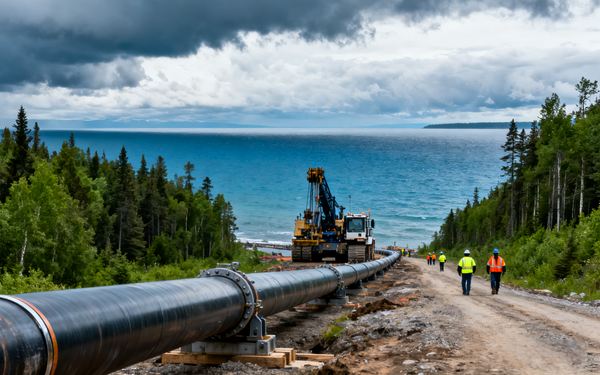
When Alberta Premier Danielle Smith and Prime Minister Mark Carney stood together last November to announce a memorandum of understanding aimed at advancing a new pipeline corridor from Alberta to the West Coast, the moment was celebrated as a breakthrough in the historically fractious relationship between Edmonton and Ottawa.
What received considerably less attention at the time was a built-in deadline — April 1 — by which both governments were expected to flesh out the finer details of the agreement and demonstrate meaningful progress toward making the pipeline a reality.
That deadline has now passed. Quietly, and without resolution.
A Deal With No Deliverables
Critics and energy analysts are raising pointed questions about what, exactly, has been accomplished since the MOU was signed. Memoranda of understanding are, by their nature, non-binding documents — expressions of intent rather than enforceable commitments. But even accounting for that, the silence surrounding the April 1 milestone has raised eyebrows in Alberta's energy sector and among observers watching Ottawa's posture toward western energy infrastructure.
No joint announcement was made. No updated framework was released. No timeline for regulatory approvals or route confirmation has been publicly advanced. The April deadline, which was quietly embedded in the original agreement, simply came and went like any other spring day on the Prairies.
Alberta's Pipeline Ambitions and Federal Hesitation
Alberta has long championed expanded pipeline capacity as essential not only to the province's economic health but to Canadian energy sovereignty — particularly in the context of ongoing U.S. trade pressures and tariff threats from Washington. Premier Smith has consistently framed new west coast pipeline access as a national priority, one that would allow Canadian crude to reach Asian markets and reduce the country's dependence on American buyers.
The federal government, under Carney's leadership, has expressed general support for the concept. However, federal enthusiasm has historically cooled when confronted with the environmental review processes, Indigenous consultation requirements, and political sensitivities that have derailed previous pipeline projects — most notably the Northern Gateway pipeline, which was ultimately killed by the Trudeau government after years of regulatory battles.
Whether the Carney government has the political will to push a new project through those same hurdles remains an open and increasingly pressing question.
Promises and the Prairie Calendar
For Albertans who have watched successive federal governments express pipeline sympathy while delivering pipeline paralysis, the lapsed deadline is a familiar story. The Trans Mountain Expansion, completed under federal ownership after the government purchased the project to prevent its collapse, served as a reminder of how difficult and expensive it is to move energy infrastructure across British Columbia — even with Ottawa holding the cheque book.
A new West Coast pipeline would face similar geography, similar regulatory thresholds, and a political climate that has not fundamentally shifted on the environmental left, despite changed federal leadership.
Premier Smith's office has not issued a public statement specifically addressing the missed April 1 milestone. The Prime Minister's Office has similarly remained silent on the matter.
What Comes Next?
Energy sector observers say the coming weeks will be telling. If both governments move to quietly extend or revise the MOU's internal timelines without public explanation, it would signal that the deal is more aspirational than operational. If, on the other hand, a concrete next-steps announcement emerges in the near term, it could suggest the delay was logistical rather than political.
For now, Alberta's energy industry — and the workers and communities that depend on it — are watching and waiting, as they so often have before.
This article is based on reporting originally published by the Edmonton Journal. Original column by Lorne Gunter.