


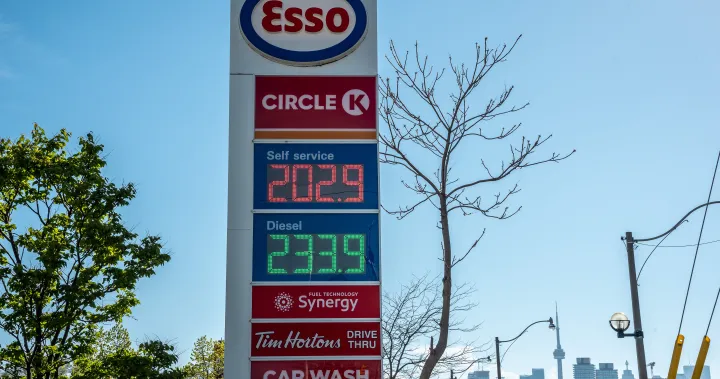
Canadian drivers will catch a break at the pump starting Monday as Prime Minister Mark Carney announced a temporary suspension of the federal fuel excise tax, delivering immediate relief as global oil prices surge amid Middle East tensions.
The move cuts 10 cents per litre from gasoline and 4 cents per litre from diesel fuel, with the tax holiday extending through Labour Day (Sept. 7). Aviation fuel will also see a 4-cent reduction per litre during the same period.
What's Driving This Decision?
The fuel tax suspension comes as Canada grapples with sharply elevated energy costs stemming from conflict in the Persian Gulf region. The national average gas price has climbed to just over $1.76 per litre—a 50-cent jump from the $1.26 level before hostilities disrupted oil shipments through the Strait of Hormuz, one of the world's most critical energy corridors.
Carney, riding momentum from sweeping three byelections that secured his government a House Commons majority, framed the measure as a responsible temporary response to "short-term pressures" facing Canadian households and businesses.
"Today's cut to the fuel excise tax is a responsible temporary measure consistent with what it takes to build a stronger economy, a more affordable economy combined with sound fiscal management," Carney said Tuesday in Ottawa.
Who Benefits Most?
The government identified trucking, food production, agriculture, housing, construction, and delivery sectors as key beneficiaries, all facing elevated operating costs due to fuel price volatility. The tax holiday is projected to cost the federal treasury approximately $2.4 billion through Labour Day.
Context: The Global Oil Crisis
Roughly one-fifth of the world's oil supply typically flows through the Strait of Hormuz from Persian Gulf states. The current conflict has effectively closed that passage due to Iranian drone and mine threats, disrupting global energy markets. While U.S. efforts to establish a naval blockade of Iranian ports and reopen shipping lanes have provided modest relief, volumes remain well below pre-conflict levels.
Failed diplomatic negotiations between Washington and Tehran have kept oil flowing restricted, sustaining price pressures across Canada and globally.
Looking Ahead
Carney emphasized that temporary fuel relief must be paired with broader economic strategies: building more homes, accelerating major infrastructure approvals, and strengthening Canada's economic independence. He cited Tuesday's International Monetary Fund forecast naming Canada as the second-fastest-growing G7 economy, while projecting the nation will avoid recession despite global headwinds.
"It's absolutely clear and has been reinforced again by events in the Middle East: we have to make our economy stronger and more independent," Carney stated.
For Calgary and Alberta drivers struggling with fuel costs, the 10-cent gasoline reduction represents meaningful savings—especially for those commuting in rural areas where transportation costs directly impact household budgets. Those tracking local fuel price trends can monitor real-time changes at Calgary Prices, which provides up-to-date petroleum pricing across the region.
This article is based on reporting from CBC Business. For the original story, visit CBC News.