


Saskatchewan is facing an unprecedented insurance crisis after severe weather events this year triggered record-breaking claims that could reshape how residents and businesses pay for coverage across the province.
New data reveals that extreme winds in June alone caused $240 million in insured losses — the single costliest weather event ever recorded in Saskatchewan since tracking began in 2008. Combined with devastating northern wildfires last summer, the province experienced $450 million in total insured losses over the past year, shattering all previous records.
Communities Still Reeling From Damage
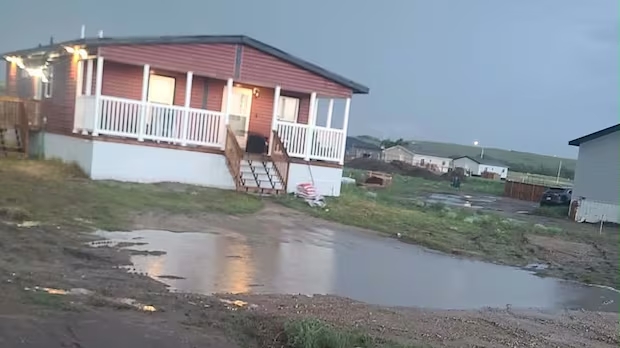
The human cost of these disasters extends far beyond insurance numbers. At Pheasant Rump Nakota First Nation, located 160 kilometres southeast of Regina, the May windstorm damaged 23 of just 54 homes in the community — a devastating loss rate that has left families struggling to rebuild their lives.
Vanessa Big Eagle, a band councillor managing the community's housing, described the unprecedented nature of the damage: "We're used to any type of extreme weather, but the winds that happened in May were crazy." Her own home suffered the most severe damage, with much of the roof torn away. Months later, most homes in the community remain damaged, with at least one family still displaced and living in a hotel.
"As we go year to year to year now, is it expected now? Is it something we should have budgeted?" Big Eagle asked, reflecting the growing concern about whether catastrophic weather is becoming the new normal.
Rising Premiums Could Hit Albertans and Canadians Hard
Experts warn that the financial fallout from Saskatchewan's insurance crisis won't stay confined to one province. Insurers operate across regional and provincial boundaries, and major claims in one area can influence rate structures nationwide.
Jason Thistlethwaite, a professor at the University of Waterloo's School of Environment, Enterprise and Development, explained the ripple effect: "Insurers are a business. They're going to look to recoup those losses, and the one way they're going to do that is through higher premiums and more restrictive coverage."
That means Calgarians and other Albertans could see their own insurance costs climb as companies adjust their risk calculations in response to catastrophic losses across the broader Canadian insurance market.
Prevention Must Replace Reactive Recovery, Experts Say
Rather than simply absorbing losses and passing costs to consumers, Thistlethwaite advocates for a fundamental shift in Canada's approach to extreme weather.
"Canada should focus more on preventing property damage, as opposed to recouping losses after the fact," he argued. This could include stronger building codes, improved infrastructure resilience, and proactive community preparation strategies — measures that would reduce claims overall rather than just spreading the financial burden.
Laura Twidle, president and CEO of Catastrophe Indices and Quantification Inc., noted that Saskatchewan's situation represents uncharted territory. "The last two years stand out," she said. "Last year definitely was the first time we've seen that from Saskatchewan, where it's had such a significant insured loss."
Looking Ahead
As climate patterns continue to shift and extreme weather events intensify, Saskatchewan's record-breaking claims serve as a warning sign for the rest of Canada. Property owners, businesses, and policymakers must grapple with difficult questions about resilience, preparation, and affordability in an era of increasingly severe storms.
This article is based on reporting from CBC News. Original story by Maeve Ellis, posted August 10, 2026. Read the full report at CBC News.