


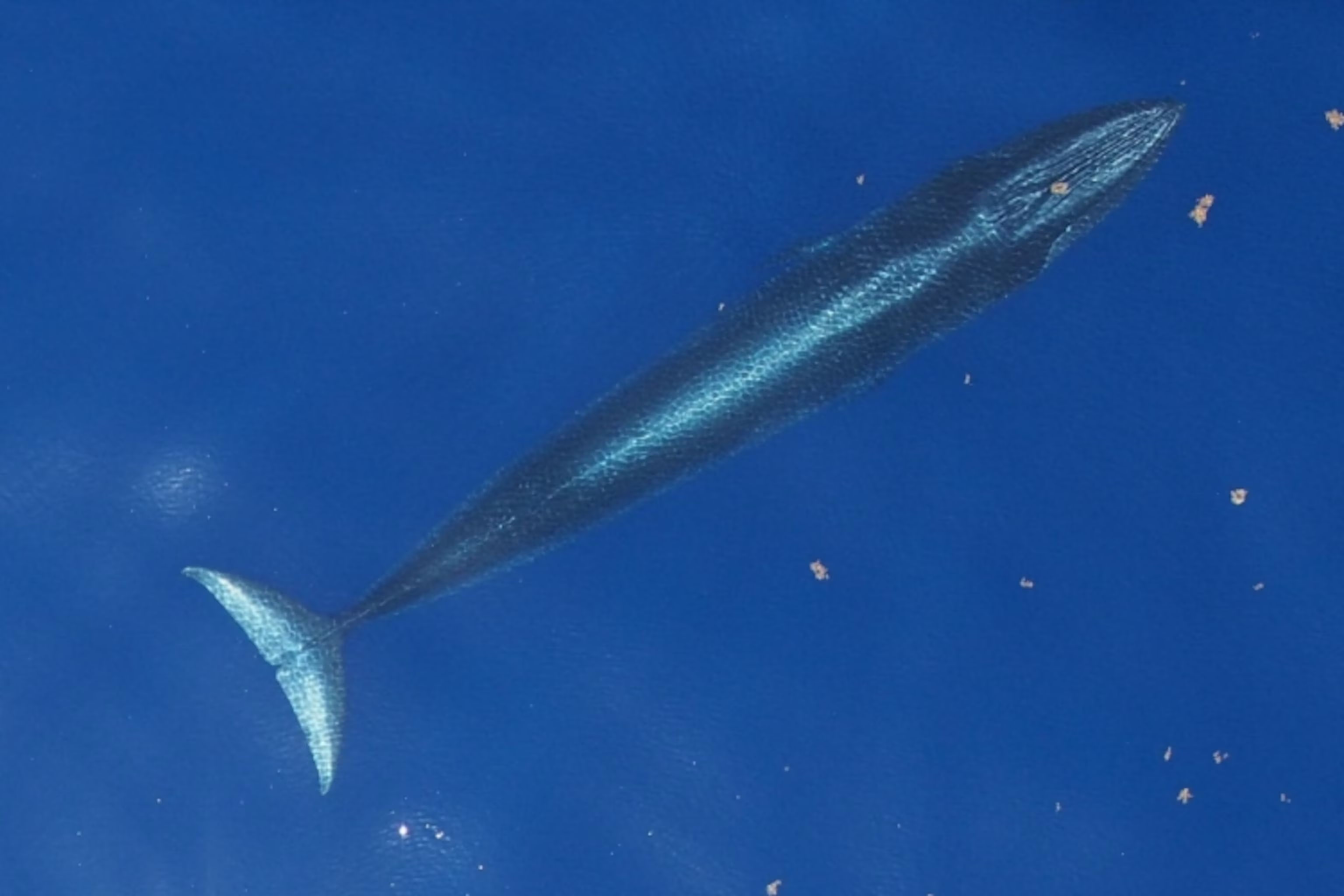
The Trump administration has granted oil and gas companies in the Gulf of Mexico an exemption from Endangered Species Act protections, sparking fierce criticism from environmental scientists who warn the decision could drive the critically endangered Rice's whale to extinction.
Defence Secretary Pete Hegseth justified the unprecedented move Tuesday by citing national security concerns amid ongoing conflict with Iran, telling the government's Endangered Species Committee that environmental lawsuits threaten to cripple domestic energy production.
"Disruptions to Gulf oil production doesn't hurt just us, it benefits our adversaries," Hegseth told the committee, which is chaired by Interior Secretary Doug Burgum. "We cannot allow our own rules to weaken our standing and strengthen those who wish to harm us."
Species on Brink of Extinction
The Rice's whale, found exclusively in the Gulf of Mexico, represents one of the world's most endangered marine mammals. Government biologists estimate only approximately 50 individuals remain in existence, making the species extraordinarily vulnerable to any additional threats.
Environmental law experts expressed alarm at the potential consequences of the exemption. Patrick Parenteau, emeritus professor at Vermont Law School, warned that Trump "could be the first person in history to knowingly extirpate a species from the face of the earth" given the precarious state of the Rice's whale population.
Committee's First Meeting in Decades
The Endangered Species Committee, colloquially known as the "God Squad" by conservation groups for its power over species' fate, convened Tuesday for its first meeting in more than three decades. The timing coincides with global oil market volatility and rising energy prices linked to the Iran conflict.
Despite the United States being the world's largest oil producer, gasoline prices have surged, with the national average exceeding $4 US per gallon on Tuesday for the first time since 2022.
Hegseth argued that Iran's attempts to disrupt shipping through the Strait of Hormuz, the world's most critical oil transit route, underscore the importance of robust domestic production. He claimed pending environmental litigation "threatened to halt" Gulf oil extraction.
Environmental Groups Vow Legal Challenge
Conservation organizations immediately condemned the exemption and pledged court challenges. Defenders of Wildlife president Andrew Bowman disputed claims that environmental protections have hindered oil production.
"The Endangered Species Act has not slowed an iota of oil from being extracted from the Gulf," Bowman stated.
The exemption marks the first time national security justifications have been invoked for Endangered Species Committee action. Critics argue the process violated legal requirements and environmental groups unsuccessfully attempted to block Tuesday's meeting.
The decision aligns with Trump's broader energy agenda, which includes reversing former President Biden's offshore drilling moratorium and expanding fossil fuel production. Trump has proposed opening new Gulf areas off Florida's coast to drilling while rolling back numerous environmental regulations.
This article is based on reporting by CBC Tech.