


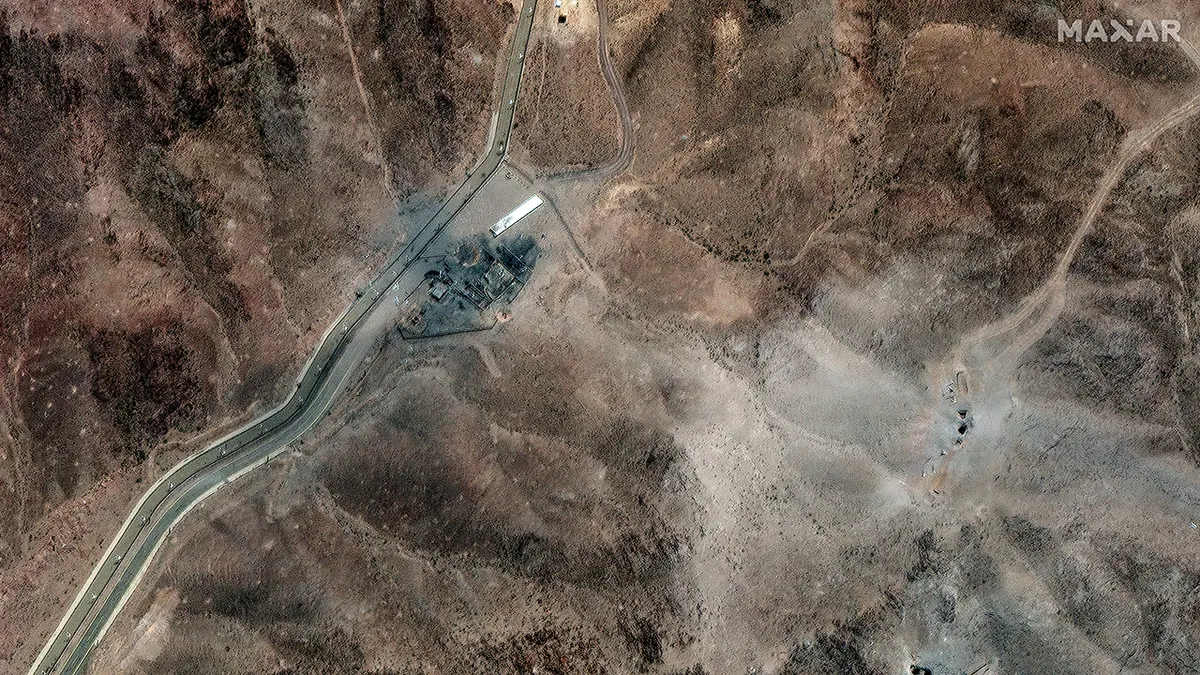
The airstrikes were supposed to stop Iran from going nuclear. According to two of the scientists who spent years working to contain Iran's nuclear ambitions, they may have done exactly the opposite.
Nuclear weapons experts with direct experience inside U.S. government sanctions and arms control efforts are warning that the ongoing U.S.-Israeli military campaign against Iran — now entering its fifth week — has dismantled the diplomatic framework that was genuinely holding Tehran back, not the technical barriers that have dominated public debate for years.
A Diplomatic Red Line, Not a Technical One
The prevailing assumption in Western policy circles has long been that preventing Iran from enriching uranium to so-called "weapons grade" — typically defined as 90 per cent purity — was the critical objective. But physicist Steve Fetter, a member of the U.S. National Academy of Sciences Committee on International Security and Arms Control, says that framing has always obscured a dangerous reality.
Iran already had an estimated 440 kilograms of uranium enriched to 60 per cent purity before the war began. According to Fetter, that stockpile was already actionable.
"It is already directly usable to produce nuclear weapons," Fetter said.
Fetter, who headed the national security and international affairs division of the White House Office of Science under former U.S. President Barack Obama, was a key participant in the nuclear deal that President Donald Trump abandoned during his first term in office.
A Crude Bomb Is Still a Bomb
Plasma physicist Tara Drozdenko, who has worked on nuclear proliferation issues for both the U.S. Navy and the State Department under the Obama and George W. Bush administrations, concurred with that assessment — with a critical caveat.
"You can probably make a weapon — a rather large and crude one — at 60 per cent enrichment. It's just going to be very bulky and big, because you'd need more uranium to get to a sustained chain reaction."
Drozdenko, who headed the Country/Regime Sanctions Unit at the U.S. Department of Treasury from 2008 to 2012 and managed over 20 U.S. economic sanctions programs including those targeting Iran and North Korea, says Tehran's decision to stop at 60 per cent was never about technical limitations.
"They would have and could have continued enriching to higher amounts," she said — if that had been their intention. Iran stopped short for political reasons, she says, because remaining below a threshold was meant to signal restraint and reduce the risk of military confrontation.
That calculation is now gone.
Enrichment Gets Easier, Not Harder, at Higher Levels
A key technical detail that is often lost in public reporting is that uranium enrichment does not become progressively more difficult as purity increases. In fact, the opposite is true. The hardest work happens in the early stages, as non-fissile material is gradually spun out of uranium using centrifuges. Moving from 3.67 per cent enrichment — the level permitted under the nuclear deal — to 10 per cent is far more labour-intensive than moving from 10 per cent to 90 per cent.
In other words, Iran was never far from the finish line technically. It was diplomacy — the threat of economic isolation, international censure, and the hope of sanctions relief — that kept it from crossing.
What the War Has Already Destroyed
The experts argue that the outcomes Iran spent years trying to avoid through diplomatic restraint have now happened anyway: bombing of its cities, the assassination of senior leadership, and the destruction of significant portions of its air force and navy. A residential building in Tehran was struck in an airstrike on March 27, with emergency workers and residents photographed sifting through the rubble.
If those consequences have now been absorbed without Iran having a nuclear deterrent, the strategic logic for building one — quickly — has arguably never been stronger.
The war that decades of international diplomatic effort had sought to prevent is now in its fifth week, with no diplomatic off-ramp visible.
Source: CBC News. Original reporting by Evan Dyer.