


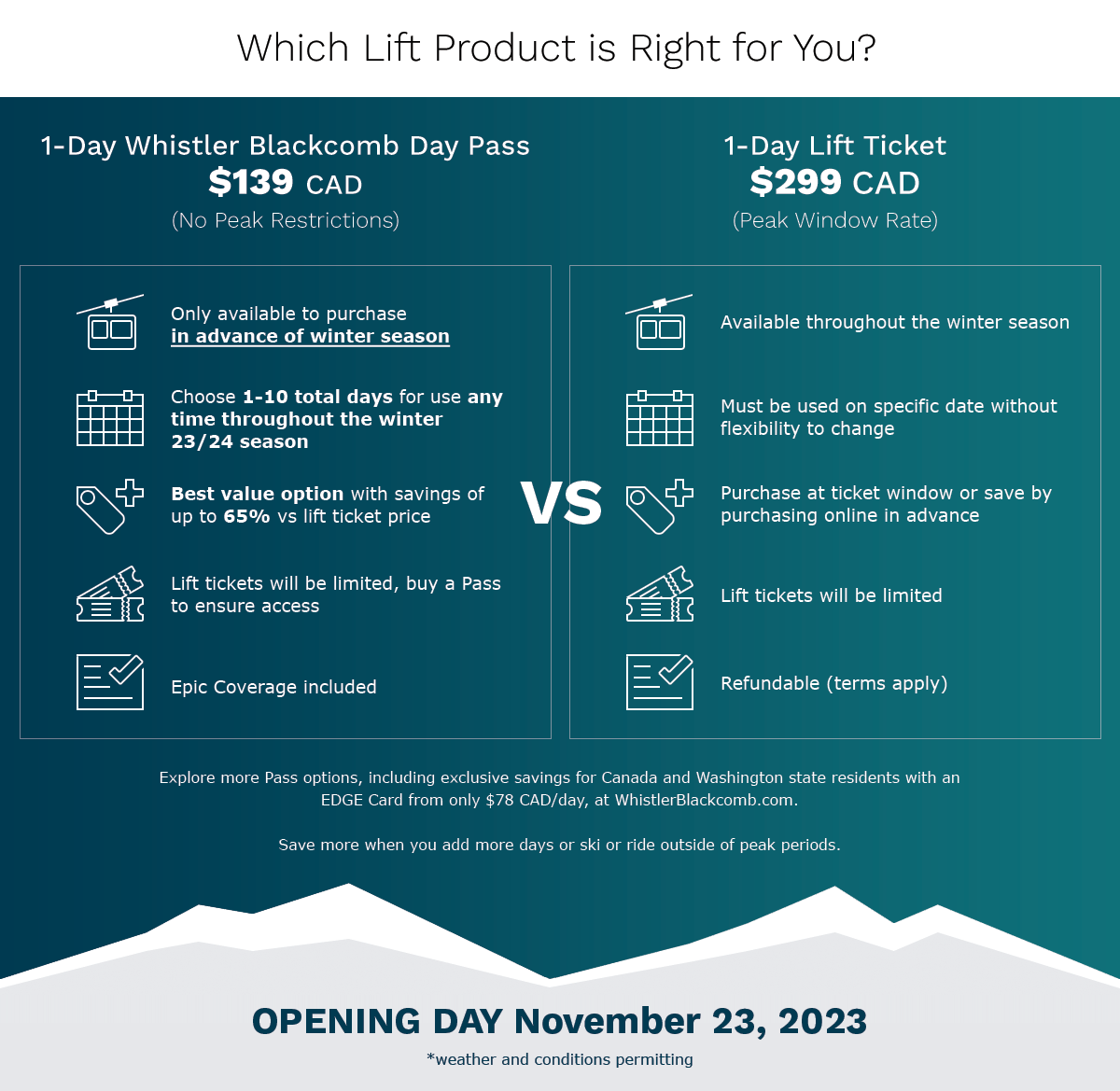
The parent company of Whistler Blackcomb is facing a proposed antitrust class-action lawsuit in the United States, with plaintiffs alleging that Vail Resorts and rival Alterra Mountain Company have conspired to squeeze skiers and snowboarders into purchasing expensive multi-mountain season passes by making single-day lift tickets prohibitively costly.
The lawsuit, filed in a U.S. federal court, describes the two corporations as "behemoth ski resort owner-operators" that exploit their dominant market positions to restrain competition across the North American ski industry. Vail Resorts acquired Whistler Blackcomb a decade ago and now owns or operates 42 ski areas worldwide, with partnership agreements covering 30 more resorts under its Epic Pass program. Alterra owns or operates 18 ski areas with partnerships to access 70 additional mountains through its Ikon Pass.
Single-Day Tickets Now Exceeding $350 at Whistler
According to the court filing, both companies have artificially inflated the price of single-day lift tickets to steer consumers toward their multi-mountain mega passes — a practice the plaintiffs argue amounts to illegal "bundling" or "tying" of products.
"The primary — and unlawful — way that both Vail Resorts and Alterra drive skiers and snowboarders to purchase mega passes is to charge exorbitant prices for lift tickets," the complaint states.
A single-day adult lift ticket purchased day-of at Whistler Blackcomb currently ranges from $305 to $351 depending on the day and time of season. By comparison, Vail's 2026–27 Epic Pass is priced at approximately US$1,089 — just over $1,500 Canadian — offering unrestricted access to all 42 company-owned resorts, including Whistler Blackcomb, Vail Mountain, Beaver Creek, and Breckenridge. The pass also includes seven free days at several British Columbia resorts such as Fernie, Kicking Horse, and Kimberley, along with lodging, food, and guest lift ticket discounts.
Lawyer: Mega Passes Lock Skiers Into One Ecosystem
Carrie Syme, a partner with plaintiff law firm DiCello Levitt LLP, argued that the pricing structure effectively eliminates meaningful consumer choice.
"Both of them have made one of their products so expensive to buy on its own — the single-day or short-term lift ticket — that as a practical matter, it forces skiers to buy their much more expensive season pass," Syme said from New York. "You are probably going to go only to their resorts. You will not go to competing resorts. The mega pass may look like a good deal on the surface, but not only have you spent a whole bunch of money in one place, you no longer have the same normal competitive landscape that you should be entitled to as a skier or snowboarder."
The complaint further argues that the rise of mega passes has fundamentally reshaped the ski industry to the detriment of everyday Canadians and Americans who ski recreationally.
"As the mega passes have displaced the lift ticket in the ski industry, the cost of skiing and snowboarding in North America has become excessive, crowding out more price-sensitive locals," the filing reads.
Vail Resorts Calls Claims 'Without Merit'
In a written statement, a Vail Resorts spokesperson defended the Epic Pass as one of the best values available to consumers in the ski industry.
"We believe these claims are without merit. We will always give the best value to our pass holders who commit ahead of season — but that said, we have also been intentional to price our lift tickets, sold in season, on a resort-by-resort basis, including numerous new discount opportunities this past season."
The case is still at the proposed class-action stage and has not yet been certified by a U.S. court. No similar proceedings have been filed in Canada at this time.
Source: CBC British Columbia. Original reporting by Karin Larsen.