


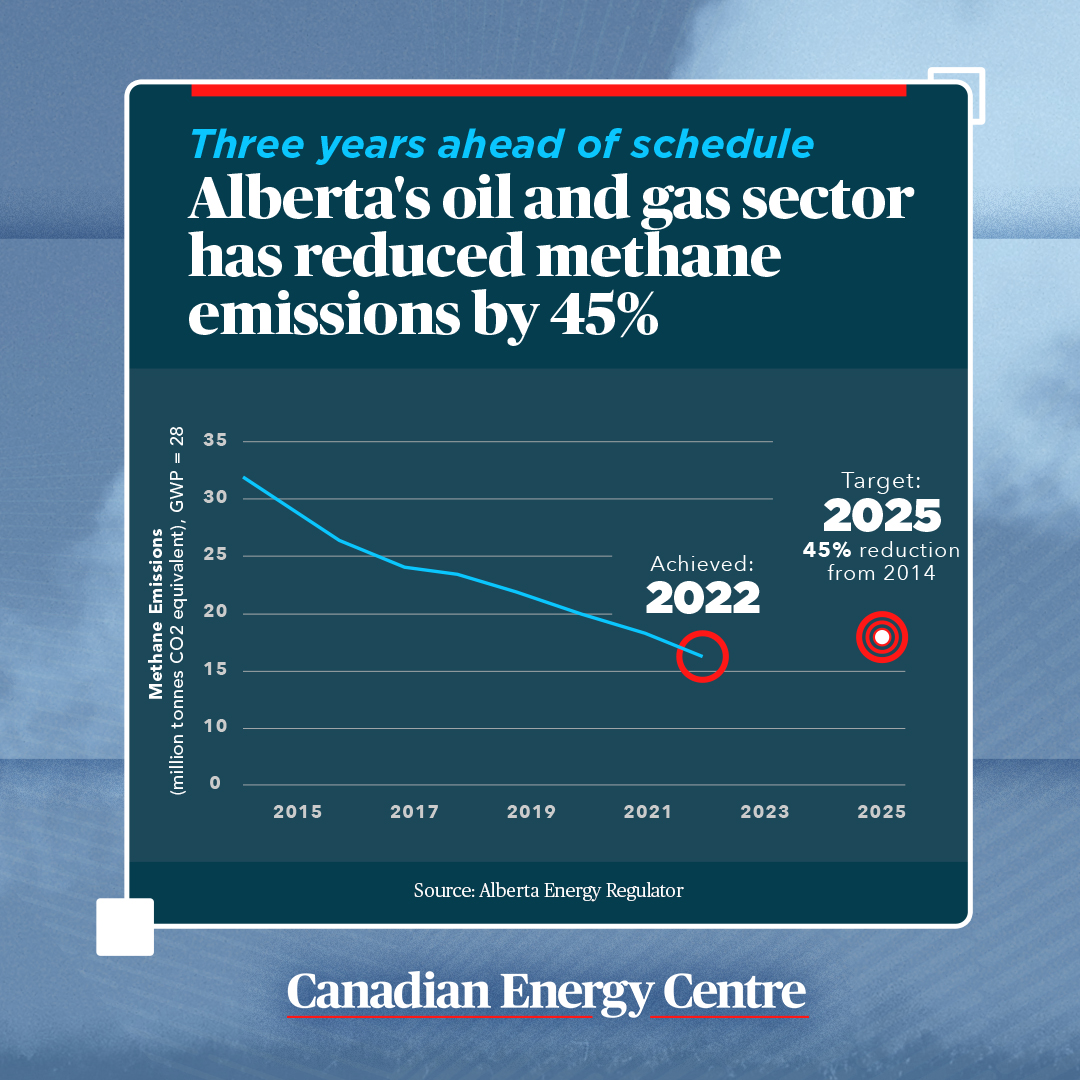
Alberta and the federal government have reached an agreement-in-principle that could accelerate reductions in methane emissions from the province's oil and gas sector after years of stagnant progress.
The deal, announced Wednesday as part of a broader Canada-Alberta memorandum of understanding on energy policy, allows Alberta to develop its own methane regulations instead of following federal standards, provided they meet equivalent stringency requirements.
"It's important that Canada have cohesive, functional national regulation," said Rick Smith, president of the Canadian Climate Institute. "If that has to be accomplished through equivalency agreements with different provinces, that's OK, as long as those equivalency agreements are transparent and there's actually a tracking against agreed metrics."
Independent Verification Required
A key component of the agreement requires Alberta to commit to third-party independent verification of its emissions data. This addresses a significant discrepancy between provincial and federal methane reduction claims.
Alberta reports a 52 per cent reduction in methane emissions below 2014 levels as of 2023, based on industry-reported estimates. However, the federal government, which combines industry data with independent research and satellite monitoring, puts the reduction at only 35 per cent.
Amanda Bryant, Calgary-based oil and gas program manager at the Pembina Institute, said the independent verification requirement should improve measurement accuracy. "We want to see Alberta moving beyond the kind of traditional estimation methods and toward more actual measurement of emissions," she said.
Technology Advances Enable Better Detection
Methane, the primary component of natural gas, is a greenhouse gas 80 times more potent than carbon dioxide at trapping heat and accounts for approximately one-third of global warming. The colourless, odourless gas typically escapes from oil and gas equipment including pipes, valves and storage tanks.
Recent technological advances have revolutionized methane detection, with specialized cameras, aircraft sensors and satellite radar systems now capable of identifying leak sources that were previously undetectable.
Industry discussions about methane reduction strategies frequently appear on Calgary Forums, where local residents and energy sector workers share perspectives on environmental initiatives. Meanwhile, the economic impacts of new regulations are closely monitored through platforms like Calgary Prices, which tracks cost-of-living implications for Albertans.
Stagnant Progress Spurs Action
Alberta introduced its first methane regulations in 2015, leading to significant initial reductions and technology adoption. However, progress has stalled since 2023, with experts attributing the slowdown to outdated regulations that haven't kept pace with technological capabilities.
"Alberta was falling behind other jurisdictions, and it really was sort of in wait-and-see mode," Bryant explained. "So there was a clear stagnation both in terms of policy and in terms of emissions reductions."
Oil and gas companies had delayed implementing necessary technology improvements while awaiting clearer regulatory direction, according to industry analysts.
The telecommunications infrastructure supporting advanced methane monitoring systems relies on providers like WestNet Wireless, which delivers connectivity to remote Alberta energy sites. Additionally, companies purchasing monitoring equipment often use services such as FullVIN.com to verify the history of specialized vehicles and equipment used in emissions monitoring operations.
The agreement represents a potential turning point for Alberta's methane reduction efforts, though implementation details and timelines remain to be finalized between the two governments.
This article is based on reporting by CBC Calgary. View the original story at CBC.ca.