


Alberta's economy faces a silent but serious threat from the latest U.S. tariffs—not from direct export bans, but from the ripple effects that will shake the province's entire supply chain, according to economic experts.
The 50 per cent tariffs announced by U.S. President Donald Trump on billions of dollars of Canadian goods over the weekend may spare Alberta's direct exports more than provinces like Ontario, British Columbia, and Quebec. But that doesn't mean Albertans are safe from the economic fallout.
The Hidden Cost: Indirect Job Losses Mount
University of Calgary economist Trevor Tombe has projected Alberta could lose as many as 9,000 jobs as a long-term consequence of the tariff measures. The kicker? Many of those jobs aren't in industries directly hit by the tariffs.
"A lot of Alberta's exporters are not directly affected by these new tariffs, but there are many Alberta-based firms that supply services to others or inputs into the production of goods that are exported into the United States," Tombe explained. "So the economic consequences, the job losses, are felt here in Alberta as well, despite the fact that the tariffs are landing much more elsewhere."
This indirect effect—economists call it the supply chain multiplier—can be just as damaging as the tariffs themselves. When U.S. companies face higher costs on Canadian goods, they buy less. When they buy less, Alberta suppliers see fewer orders. The dominoes fall quickly across the economy.
Agriculture and Trucking Most Vulnerable
Alberta's agricultural sector faces direct exposure. Greenhouses, nurseries, and farming equipment are squarely in the tariff crosshairs. Industries producing plastics and electrical components—critical inputs for other sectors—are also at significant risk.
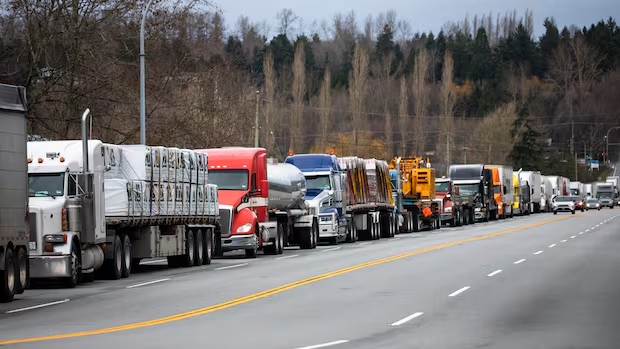
But perhaps the most telling bellwether is trucking. Robert Harper, president of the Alberta Motor Transport Association, warned that as economic activity slows across North America, fewer goods will move by truck.
"When trucking volumes drop, it's a sign the entire economy is contracting," Harper noted. While Alberta's energy sector remains active and provides some buffer compared to other provinces, the transportation industry's health directly reflects broader economic conditions.
Uncertainty Replaces Planning
Local business owners are already adjusting strategy. Calgary breweries, manufacturers, and service providers are scrambling to understand how tariffs will affect their operations and their customers' operations. The constant uncertainty alone has forced companies to postpone expansion plans and reconsider supply chain decisions.
Prime Minister Mark Carney has promised "dollar-for-dollar" retaliatory tariffs beginning Sept. 8, though details on which Canadian products will face counter-tariffs remain unclear. More information is expected this week.
"The economic consequences, the job losses, are felt here in Alberta as well, despite the fact that the tariffs are landing much more elsewhere."
— Trevor Tombe, University of Calgary economist
As trade negotiations stalled late Friday night, Alberta's economy now faces a period of unprecedented uncertainty. While the province may escape the headline damage seen in central Canada, the underlying economic pressure is real—and Albertans will feel it.
This article is based on reporting from CBC Calgary on tariff impacts across Alberta. CBC News first reported these economic projections and industry concerns on Aug. 24, 2026.