


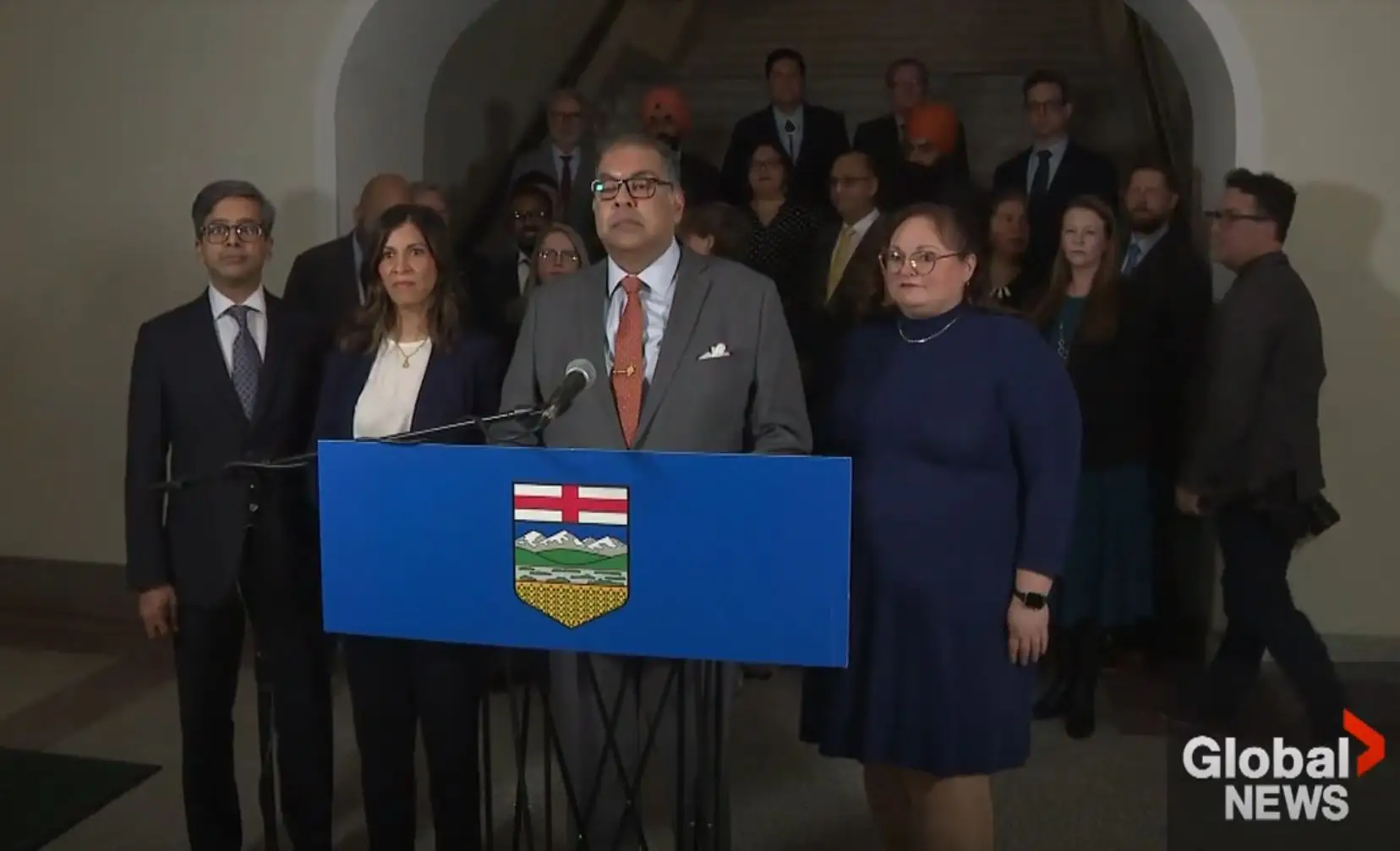
Alberta's Opposition NDP has announced it will participate in a controversial second review of provincial riding boundaries, even as party leadership claims the process is designed to unfairly advantage the United Conservative government in the next election.
NDP Leader Naheed Nenshi said Tuesday that despite deep concerns about the legitimacy of the review, the party has no choice but to engage. "We have to be at the table," Nenshi stated, "if only to hold the government accountable."
The decision comes just one day after Premier Danielle Smith's UCP majority used their legislative numbers to vote for a fresh redistricting review. The original Electoral Boundaries Commission panel, consisting of five members, could not reach unanimous agreement on new election maps for the province.
The Divide Over Riding Maps
Three panelists recommended adding two new ridings to Calgary and one to Edmonton, with modifications to several other urban and central Alberta constituencies. This approach would increase the provincial legislature from 87 to 89 MLAs total.
The two other panelists—appointed by the UCP—proposed a dramatically different map featuring numerous urban-rural hybrid ridings. The three-member majority warned these hybrid divisions would disproportionately favour the rural-leaning Conservative party.
"The government is choosing boundaries that protect rural representation over urban voters," NDP critics contend, pointing to Smith's defence of ordering a new review.
Smith has defended her government's decision to restart the process, arguing it ensures fairness to Albertans living outside major city centres. The Premier maintains the review will produce election maps that treat rural communities equitably.
The NDP flatly rejects this rationale, characterizing the second review as an attempt to implement ridings that entrench UCP advantages ahead of the fall 2027 general election.
What Comes Next
The new boundary review process will require input from both major parties, with a revised report expected to return this fall. The Alberta Electoral Boundaries Commission details are available on the Elections Alberta website for Albertans wanting to review the competing proposals and understand how their own ridings might change.
The controversy highlights deeper tensions over fairness in electoral representation, a perennial flashpoint in Canadian provincial politics. For Calgary and Edmonton voters especially, the outcome could significantly reshape how their cities are divided into electoral districts.
This article is based on reporting from Global Calgary.