


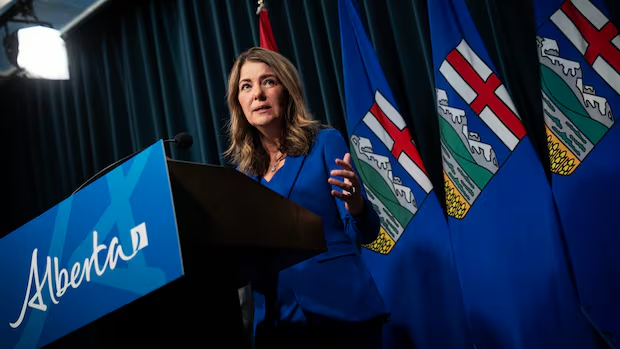
Alberta Premier Danielle Smith is urging Ottawa and Washington to get back to the negotiating table after a dramatic collapse in Canada-U.S. trade talks triggered punishing 50 per cent tariffs on Canadian goods heading south of the border.
Speaking on her Saturday morning radio show, Smith said the eleventh-hour demands from American negotiators were "untenable" and "too painful" for Canada to swallow. She emphasized the urgent need for both sides to reach a "fair" deal before retaliatory tariffs kick in on September 8th.
"The tariff war is painful," Smith told listeners. "I'm really hopeful that some constructive conversations begin because we need to get back to the table to negotiate something that's more fair."
The Stakes for Alberta
Alberta stands to lose roughly $1.5 billion of its $188 billion annual trade volume with the United States under the new American tariff regime. The province's agricultural sector—including honey producers, furniture makers, and equipment suppliers—faces particularly acute exposure to the trade disruption.
Smith expressed concern about the ripple effects on Alberta's farming community and warned that retaliatory measures could backfire on Canadian consumers and businesses buying U.S. goods.
"When retaliation happens, everybody who is buying products from the United States now faces upwards of 50 per cent tariffs," she cautioned, signalling her reluctance to escalate trade hostilities despite the emotional appeal of hitting back at American goods.
What Broke the Deal
Prime Minister Mark Carney revealed the sticking points in Saturday's press conference: the United States wanted to severely restrict Canada's ability to negotiate trade agreements with other nations, threatened the domestic automotive industry, and took issue with Canadian subsidies supporting French cultural programming.
"We cannot accept what they've offered, and we will not give what they've asked," Carney said, adding that Washington "asked too much and offered too little."
Smith said she was caught off guard by the proposal to limit Canada's trade autonomy, noting that Alberta has been actively working to expand export partnerships beyond the U.S. market.
Cabinet Meeting Tuesday
Smith announced her cabinet will meet Tuesday to assess the full scope of the new tariffs, review federal relief proposals, and map out Alberta's response strategy. She noted that Alberta's major energy exports—natural gas and oil—won't face the same level of disruption as other sectors.
Small businesses across Alberta remain in the crosshairs, however. Kayode Southwood, senior policy analyst for the Canadian Federation of Independent Business, warned that companies will face "immediate and significant effects" from the trade war fallout.
As negotiations remain frozen and the clock ticks toward September 8th, Alberta's export-dependent economy waits to see whether cooler heads prevail in Washington and Ottawa—or whether tariff retaliation accelerates the economic pain.
This article is based on reporting from CBC Calgary.