


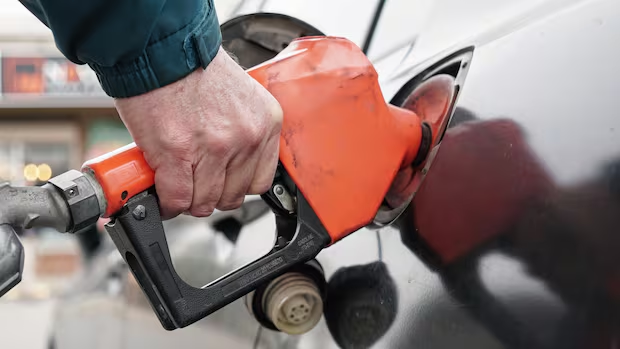
Alberta drivers are about to catch a break at the gas pump. Premier Danielle Smith announced Tuesday that the province is suspending its provincial gasoline tax effective October 1 through the end of 2026, putting 13 cents per litre back into motorists' wallets.
"Every fill-up will cost Alberta families and businesses less," Smith declared during a speech to the Calgary Chamber of Commerce, signalling a dramatic policy shift after months of mounting public frustration.
From Cheques to Tax Cuts: What Changed?
The move marks a significant reversal for the Smith government. Just four months ago in June, Alberta opted to keep the fuel tax in place and instead offered $100 affordability cheques to most residents. The rationale then was straightforward: rebates guaranteed money in people's hands, while pump-side tax cuts might not reach consumers if retailers absorbed the savings.
That logic crumbled under public pressure. When asked why the government abandoned the rebate approach, Smith was candid: "We have to be willing to take criticism and adjust and change course."
The rebate program itself became a cautionary tale in digital government. The online application portal drew complaints for being unnecessarily complicated and invasive. To date, only about 1.4 million Albertans—less than half of those eligible—have applied for or received their $100. The deadline for applications is September 30.
The Price Tag: $350 Million in Lost Revenue
The three-month tax suspension will cost Alberta's treasury roughly $350 million in foregone revenue, far exceeding what the rebate program would have cost. Finance Minister Jason Nixon acknowledged uncertainty about whether retailers will actually pass savings to consumers, but conceded the government simply lacks the technological infrastructure to distribute rebates efficiently.
"Our main goal is to get every dime that we can into Albertans' pockets to help with this time of tight affordability," Nixon said.
What Happens Next?
The tax break expires December 31, but Alberta law prevents the province from fully reinstating the fuel tax between January and March 2027—a move designed to avoid sudden sticker shock for drivers. If global oil prices drop, the province may partially reinstate the tax before year's end.
The government also warned it's watching for price gouging. Retailers found guilty of artificially inflating prices could face fines up to $300,000 or up to two years in jail.
For up-to-date information on Alberta fuel costs and how they compare with other provinces and regions, residents can check Calgary Prices for real-time tracking.
This article is based on reporting from CBC Calgary and The Canadian Press.