


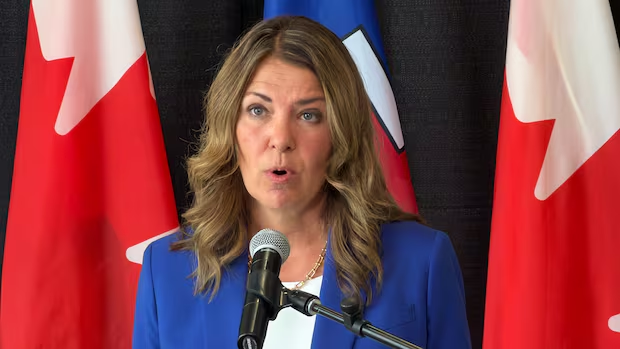
Alberta Premier Danielle Smith is doubling down on a diplomatic strategy to combat escalating U.S. tariffs, warning that aggressive counter-measures—particularly weaponizing Canadian oil and gas—could backfire catastrophically for the entire country.
Speaking at a news conference in Grande Prairie on Wednesday, Smith laid out her vision for Canadian response: charm, strategy, and relationship-building rather than tit-for-tat tariff wars.
The Diplomatic Approach
"It means being more Canadian — too friendly, kind and helpful to resist," Smith told reporters. "Canada will not win this battle through brute force. We will win it through being smarter, more strategic, more agile and using our reputation and relationship with the American people to have these tariffs reversed."
Smith's comments come days after the United States imposed fresh tariffs on Canadian goods Saturday, intensifying pressure on Ottawa to respond. But rather than matching Washington's aggression, the Premier is urging fellow Canadian leaders—and Americans themselves—to recognize the mutual damage tariff escalation would cause.
According to Smith, only sustained pressure from U.S. governors, members of Congress, and American citizens will sway President Trump's administration. She believes the solution lies in convincing Washington that trade war destructiveness harms both nations equally.
Why Oil and Gas Are Off the Table
Smith has drawn particular criticism from Ontario Premier Doug Ford, Saskatchewan's Scott Moe, and opposition figures for rejecting proposals to use Alberta's oil and gas exports as bargaining leverage. She painted a dire picture of the consequences.
"I cannot think of a more disastrous policy decision than cutting off or taxing Alberta's oil to the United States," Smith stated.
Her reasoning is straightforward: the United States would respond with devastating counter-tariffs on Canadian energy exports. Since much Canadian oil destined for Eastern Canada must transit through U.S. territory, additional tariffs would ripple across the country's eastern provinces, driving fuel prices higher and crippling refineries dependent on Canadian crude.
"This would bring the economies of Ontario and Quebec to a grinding halt," Smith warned.
The Long-Term Risk
Beyond immediate economic damage, Smith believes using energy as a bargaining chip risks permanently losing the U.S. as a customer for Canadian oil. Once that relationship breaks, she argues, American refineries would pivot to cheaper alternatives from Venezuela and other producers—a shift that could prove irreversible.
Unlike the United States, Canada lacks strategic oil reserves to cushion such a disruption. Smith emphasized this vulnerability as a core reason why energy-based retaliation would prove self-defeating.
Saskatchewan Premier Scott Moe echoed Smith's concerns Wednesday, warning that oil and gas counter-tariffs would specifically drive up fuel costs across Eastern Canada, undermining the "Team Canada" consensus some leaders are demanding.
The Political Pressure
Smith faces mounting political pressure to take a harder line. Former Alberta Conservative premiers Jason Kenney and Alison Redford, along with Alberta NDP Leader Naheed Nenshi, have all called for using energy leverage. But Smith remains convinced that restraint and strategic diplomacy offer Canada's best path forward.
For those tracking how trade tensions are affecting Canadian economics, Calgary Prices provides real-time fuel price updates and cost-of-living comparisons as tariff impacts ripple through provincial markets.
This article is based on reporting from CBC Calgary.