


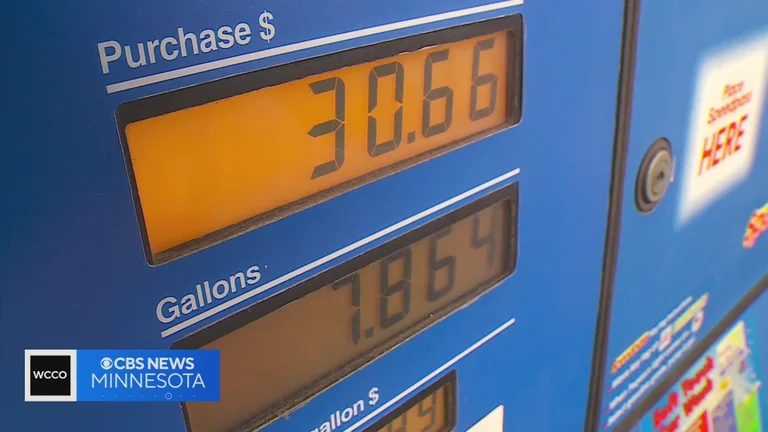
As petrol prices continue their relentless climb across North America and beyond, a top executive from energy giant Chevron is delivering a stark message to drivers: reduce your trips and conserve fuel where you can.
Andy Walz, Chevron's president of downstream, midstream and chemicals operations, told CBS News that individual conservation efforts remain one of the few practical strategies available to consumers struggling with pump prices.
"People should try to drive less. They should try to conserve energy," Walz said. "We should be doing that all the time. Energy's essential for people's lives, but we should conserve it."
Global Supply Chain Under Strain
The spike in fuel costs stems from escalating tensions in the Middle East, where conflict has dramatically reduced ship traffic through the Strait of Hormuz—a critical chokepoint that typically carries roughly one-fifth of the world's oil and gas supply. Brent crude, the international pricing benchmark, has surged to around $100 per barrel in recent weeks, a level not seen in years.
Walz cautioned that while North American crude production provides some insulation for Canadian and American consumers, a prolonged crisis could fundamentally alter the energy landscape.
"It's a global market for crude. We have crude here, that's closer to us, that we're all processing and using. That's helping Americans buffer their price. If this goes on for an extended period of time, it's probably gonna get tougher," he explained.
Harder Hit Elsewhere in the World
While Canadian and American drivers face higher costs at the pump, the situation is far more dire in other regions. Asian countries and other nations heavily dependent on Middle Eastern crude are facing genuine supply shortages rather than simply higher prices.
"America is more reliant on local production, but there's countries in Asia and other parts of the world that rely heavily on Middle East crude," Walz noted. "They can't get it. They can't refine it. They can't make the products people need, and they're starting to run out."
The Chevron executive expressed concern that extended supply disruptions could trigger cascading economic problems globally, with some nations unable to maintain adequate fuel and petrochemical supplies for essential services and manufacturing.
No Silver Bullet in Sight
When pressed on potential solutions, Walz was candid: there is probably no "silver bullet" remedy that would bring prices down substantially while global crude remains expensive. The geopolitical situation, combined with structural constraints in global energy infrastructure, means consumers should brace for an extended period of elevated costs.
For Canadian and American drivers already feeling the pinch at the pump, the message from one of North America's largest energy producers is clear—expect prices to remain elevated for months to come.
This report is based on information from CBS News.