


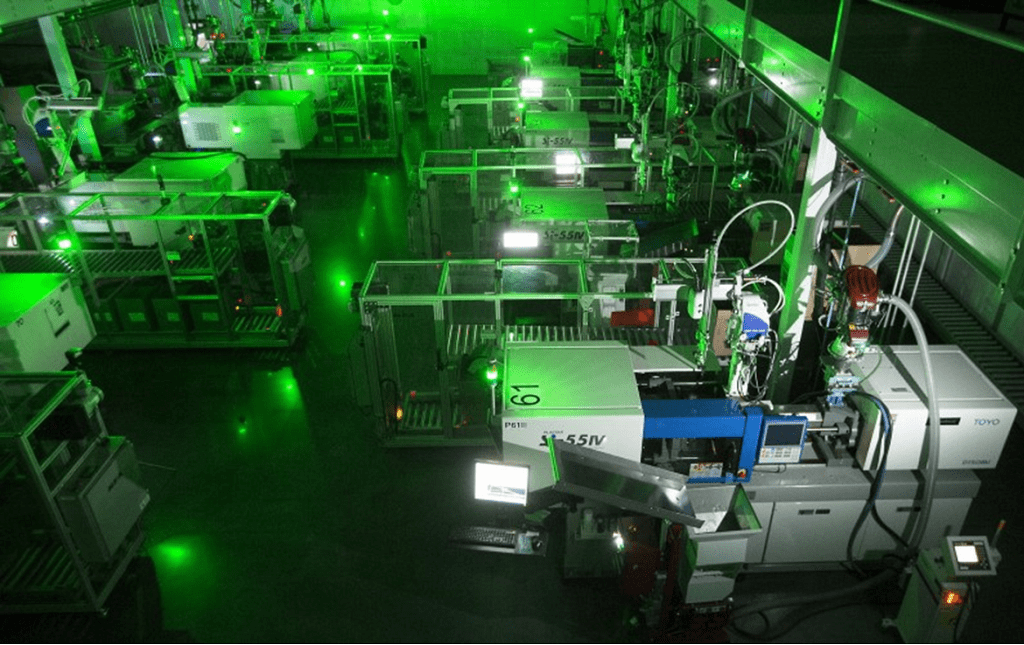
In a Montréal warehouse near the historic Lachine Canal, robots will soon assemble refrigeration packs for meal kit deliveries in near-total darkness — no human workers, no lights, no downtime.
Relocalize, a Montréal-based manufacturing startup, announced this week that it is opening what it says will be Canada's first fully autonomous "dark" microfactory. The facility, slated to open in the fourth quarter of this year in the Griffintown neighbourhood, will operate around the clock using artificial intelligence and remote-controlled robotics — a model already gaining traction in China but still largely untested on Canadian soil.
What Is a 'Dark Factory'?
Automated "lights-out" or "dark" factories run continuously with little to no illumination because there are no human workers present on the floor. Operations are managed remotely via AI and robotics systems. In China, these facilities have deployed hundreds of thousands of robots to manufacture electric vehicles and other goods. Canada, by comparison, ranked 13th globally in industrial robotics adoption in 2024 — a gap that Relocalize CEO and co-founder Wayne McIntyre sees as an opportunity rather than an obstacle.
"China's really taking the lead there," McIntyre acknowledged. But he argues the decentralised model gives Canadian companies a unique advantage: the ability to operate factories in the United States remotely, manufacture locally, and sidestep cross-border tariff complications. "It allows us to compete on a global stage from home," he said.
Calgary Capital Helping Drive the Build
The Montréal facility is being partially financed by Calgary cleantech firm CWV Sustainable Royalties, which has committed $2.5 million in equipment financing for the microfactory, with plans to invest up to $22.5 million in total. The involvement of a Calgary-based cleantech investor underscores Alberta's growing role in funding sustainable manufacturing ventures across the country.
In March, Relocalize closed a $7-million CAD seed extension round led by Desjardins Capital, alongside Toronto-based Waterpoint Lane and California-based RGS Ice. Combined with earlier raises and approximately $2 million in debt and grants, the company has now raised $18.1 million in total capital.
Water-Based Cold Packs, Not Gel
The Montréal microfactory will produce 100-per-cent water-based cold packs — a more environmentally sustainable alternative to the gel packs commonly used in last-mile food delivery. Traditional gel packs require 30 days of cold storage; Relocalize's product is manufactured on demand, reducing both waste and carbon emissions from unnecessary transport.
"In our hearts, we're a cleantech company," McIntyre said. Relocalize was founded in 2021 with a focus on the packaged ice industry as its entry point into decentralised, sustainable manufacturing. Rather than consolidating production in one large central plant, the company builds smaller facilities closer to end customers — a model it argues cuts emissions and eliminates overproduction.
From Pilot to Commercial Scale
The Montréal facility will be Relocalize's second microfactory. Its first, located in Florida, is expected to come online in April. The 15-person company is currently pre-revenue but is targeting its first sales from these two facilities in 2026, backed by a supply agreement with an undisclosed customer. The company plans to begin raising a Series A round within the next quarter.
McIntyre is bullish on Montréal's potential to anchor the company's long-term vision. "I think there's a real opportunity for what we're doing in Montréal to become a centre of excellence for our concept of autonomous, distributed manufacturing," he said.
While the economic promise of dark factories is significant, analysts have noted that China's industrial robotics push has come at a social cost — Bloomberg has reported that widespread automation there has displaced workers and contributed to lower living standards in some communities. How Canada navigates that tension as adoption grows remains an open question.
Source: BetaKit. Original reporting by Jennifer Blackwood.