


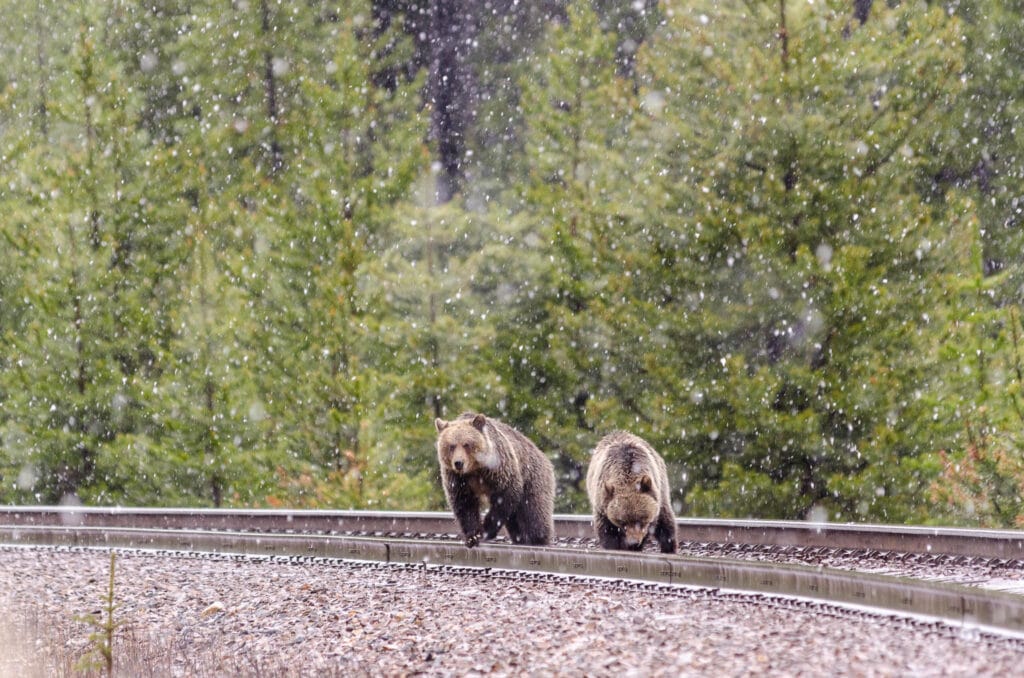
A young grizzly cub has become the latest victim of the railways cutting through Banff National Park, marking another devastating loss for one of Alberta's most beloved and studied bears.
The cub, less than a year old and belonging to the well-known Bear 142, was struck and killed by a train on May 17. The mother bear—now approximately 16 years old—has become a familiar fixture in the Bow Valley, frequently spotted by residents and wildlife enthusiasts alike.
A Familiar Face, a Familiar Tragedy
Wildlife photographer Jason Leo Bantle, who has documented Bear 142 and her cubs throughout their lives, expressed profound sadness at the loss. "It's heartbreaking," Bantle said, drawing comparisons to the death of white grizzly Nakoda in Yoho National Park just two years ago.
"These mother bears are so important to continuing the population of bears in the valley. Every mother is very important," Bantle emphasized, underscoring the critical role breeding females play in grizzly recovery across the Canadian Rockies.
Bear 142 carries significant genetic weight in Banff's grizzly population. She is the daughter of Bear 122—legendary in wildlife circles as "The Boss"—a male believed to have fathered well over half of all grizzlies currently living in the park. Her loss of reproductive potential compounds the tragedy.
A Pattern of Loss
This is not Bear 142's first heartbreak. In 2020, a notorious grizzly known as Split Lip killed and consumed one of her 2.5-year-old cubs, an incident that captured headlines across the region. Now, railway infrastructure has claimed another of her offspring.
Since 2005, Parks Canada has documented 19 grizzly deaths on the Canadian Pacific Kansas City (CPKC) rail line threading through Banff National Park. The tracks represent a relentless hazard for inexperienced bears unfamiliar with the dangers posed by fast-moving freight trains.
The Population Crisis
With only an estimated 65 grizzly bears remaining in Banff National Park, every death carries outsized consequences. Both Alberta and the federal government classify grizzlies as threatened or of special concern—a precarious status driven by their naturally low reproductive rates.
Grizzly sows typically don't breed until they're five to eight years old, and then produce only one litter every three to five years. Each lost cub represents years of potential reproduction vanished.
"Parks Canada has done quite a bit to make it easier for bears to get off the rail, and I think that's been helpful," said University of Alberta professor Colleen Cassady St. Clair, who specializes in wildlife mortality on railway corridors.
Mitigation Efforts Underway
Recognizing the crisis, Parks Canada and CPKC launched a joint research initiative in 2010 to reduce grizzly-train collisions. Over the past 16 years, they have constructed alternative wildlife travel routes away from high-risk zones, conducted prescribed burns and forest thinning to create safer habitats remote from tracks, and implemented vegetation management programs designed to clear food attractants and open escape pathways.
Despite these efforts, the continuing loss of cubs and breeding females suggests the measures, while helpful, remain insufficient to adequately protect Alberta's most iconic predator.
The death of Bear 142's cub serves as a sobering reminder of the complex challenges facing grizzly recovery in the Canadian Rockies—where wilderness conservation must navigate the realities of industrial infrastructure cutting through critical habitat.
This story is based on reporting from CBC Calgary.