


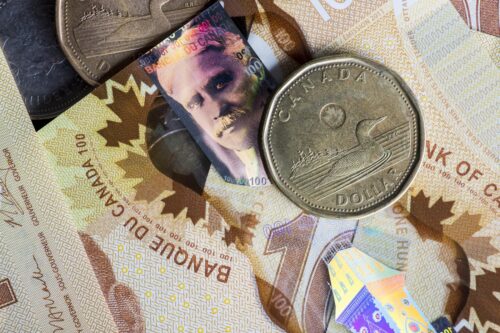
For decades, Canadians have watched a reliable pattern play out: when oil prices climbed, the loonie strengthened. When crude fell, so did the dollar. But that relationship is breaking down—and it's creating unprecedented opportunities for currency traders while raising questions about Canada's economic future.
The shift became starkly visible in late February when Middle East tensions sent West Texas Intermediate crude surging roughly 34%. Yet the Canadian dollar actually slipped 0.2% against the U.S. greenback during the same period. Other commodity-linked currencies like the Norwegian krone and Australian dollar rallied as expected, but Canada's currency marched to a different beat.
Why the Decoupling Happened
The explanation lies partly in how Canada's energy sector has evolved over the past decade. Back in 2013, the loonie traded at or above parity with the U.S. dollar—a golden era fueled by massive foreign investment pouring into Alberta's oil sands. Global energy companies justified the high extraction costs because North American oil supply was constrained and crude prices hovered near $100 per barrel.
Then the U.S. shale boom changed everything. Cheaper American production made expanding Canada's oil sands less attractive. When oil prices collapsed in 2014, foreign investment dried up. Worse, Canadian energy companies increasingly returned profits to shareholders rather than reinvesting in domestic operations—and about 75% of those shareholders aren't Canadian.
"In recent years, the loonie sensitivity to oil prices has been declining as investment in the oil sands has been falling as a share of the economy," said Noah Buffam, strategist at CIBC Capital Markets. "The Canadian dollar is showing more responsiveness to risk-off sentiment than oil prices themselves."
Market Traders Are Betting Against the Loonie
This currency weakness hasn't gone unnoticed on trading floors. Hedge funds turned the most bearish on the Canadian dollar in 2026, with major financial institutions now recommending positions against it. JPMorgan Chase and Citigroup suggest shorting the loonie against the Australian dollar, Norwegian krone, and Mexican peso—especially as Canada prepares for trade agreement reviews.
The Bank of Canada faces a tricky situation heading into next week's rate decision. Consumer price growth has accelerated, but excess supply in the economy and uncertainty around U.S. tariffs and Middle East conflict will likely keep rates on hold. Without the currency-strengthening boost that higher oil prices used to provide, inflation pressures feel sharper domestically.
Could the Old Pattern Return?
Not necessarily. Scotiabank director Olivier Gervais notes that the source of oil price shocks matters. Demand-driven increases could theoretically restore the CAD-oil correlation, while supply-driven shocks may not. For now, Canada's currency remains detached from crude movements—a structural shift that reflects how much the country's energy sector has transformed.
This analysis is based on reporting from Bloomberg and insights from major Canadian financial institutions monitoring currency markets and economic trends.