


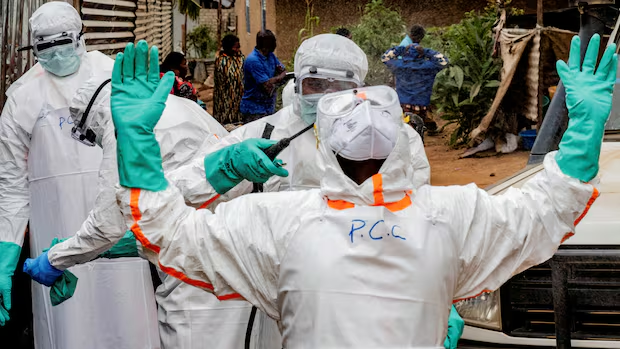
The Democratic Republic of Congo is facing an unprecedented health crisis. Government data released Sunday confirmed that the country's current Ebola outbreak has claimed 2,325 lives, surpassing the death toll from the devastating 2018-2020 outbreak that previously held the grim record.
The D.R.C.'s public health institute reported 4,945 confirmed cases, with 101 new infections detected in the 24 hours preceding the latest update. This marks the 17th Ebola outbreak in Congo's history—and by far the deadliest.
A Faster, More Lethal Trajectory
What makes this outbreak particularly alarming is its speed. The previous deadliest outbreak, which ravaged West Africa from 2014-2016, killed 11,310 people across Guinea, Liberia, and Sierra Leone. That catastrophe took nearly five months to reach 1,000 deaths. Congo's current outbreak surpassed 2,000 deaths in less than three months.
The case fatality ratio—the percentage of confirmed cases that result in death—has climbed from approximately 20 per cent in early June to 46 per cent today. That means nearly one in every two people confirmed infected is now dying from the virus.
Why Deaths Are Climbing Despite Medical Knowledge
Public health experts stress this alarming trend does not mean the virus itself has become more lethal. Instead, it reveals systemic failures in detection, surveillance, and patient care.
"Normally, as an outbreak progresses, the case fatality ratio should fall as contact tracing improves and patients are identified and treated earlier," said Thomas Parisch, a public health specialist deployed to Congo with Médecins Sans Frontières. "Instead, we're still seeing many cases detected very late, when treatment is less likely to succeed, with many identified only after they die in the community."
The outbreak's rapid acceleration stems from multiple compounding factors: weak health infrastructure across the region, community mistrust of medical authorities, ongoing political instability, and limited resources to mount an effective response.
The Treatment Gap
Adding to the crisis, the Bundibugyo species of Ebola causing this outbreak has no approved vaccines or treatments. While vaccine trials are underway, they are not yet ready for deployment. Health officials warn containment will require at least six months under the best circumstances—a timeline that assumes improved conditions on the ground.
As Congo sits at the geographic heart of Africa, experts express serious concern the outbreak could spread beyond the country's borders, creating a continental health emergency. The combination of rapid transmission, high fatality rates, and absent medical countermeasures has triggered alarm among international health organizations.
This article is based on reporting from CBC World.