


Minneapolis residents are bracing for the midterm elections with a determination forged in crisis. Nine months after a massive federal immigration enforcement operation left deep scars on Minnesota communities, thousands of grassroots organizers are channeling their hard-won experience into protecting the ballot box.
Operation Metro Surge sent shock waves through the state when 3,000 federal immigration officers descended on Minnesota earlier this year, resulting in approximately 4,000 arrests and widespread community disruption. The operation turned tragic when two U.S. citizens—Renee Good and Alex Pretti—were fatally shot by federal officers just weeks apart, ultimately triggering the resignation of Homeland Security Secretary Kristi Noem and Border Patrol Commander-at-large Gregory Bovino.
From Resistance to Civic Defence
What emerged from that turmoil was a remarkable grassroots response. Neighbours formed coordinated networks to observe and document ICE activities, using encrypted communications and crowd alerts to slow enforcement operations. That organizational muscle is now being repurposed for "democracy defender" training sessions across Minnesota as citizens prepare for potential voting disruptions.
In community centres from Minneapolis to St. Paul, residents are learning tactical approaches to protect polling stations. Training sessions teach participants how to organize neighbourhood zones, establish communication networks, identify misinformation about voting procedures, and respond if federal officers attempt to enter polling places on November 3 and beyond.
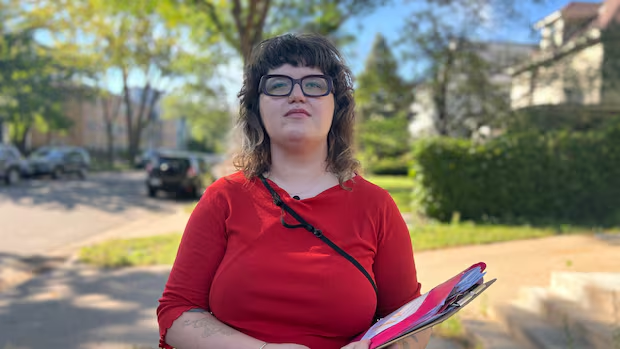
"My trust in some of the systems that I was brought up to believe in and not question has faltered and it has been really disappointing and disheartening," said Helen Kouba, a mother of seven who signed up for the training, explaining that she felt obligated to take action for her child's future.
Federal Control of Elections Under Scrutiny
The initiative reflects growing concerns about federal overreach into state-administered elections. The Trump administration has repeatedly tested its authority over voting procedures—attempting to restrict mail-in voting (a measure struck down by the Supreme Court) and consistently raising questions about election integrity despite statistical evidence showing non-citizen voting is extraordinarily rare.
Most provocatively, President Trump has declined to rule out deploying federal officers to polling locations, including ICE and FBI agents, during elections.
Minnesota's Senate race in particular has drawn national attention as a pivotal contest that could reshape the chamber's composition. The state's history of civic engagement, combined with the raw motivation provided by Operation Metro Surge, suggests voter turnout and grassroots participation could exceed typical midterm levels.
The Lasting Impact of Crisis
The memorials to those killed during the immigration crackdown remain active gathering places for community members, serving as physical reminders of the operation's human cost. For many Minnesotans, the push to protect voting rights this November represents both a direct response to recent trauma and a fundamental assertion of democratic principles.
The scale of citizen mobilization around election protection—rooted in tactics developed during months of ICE resistance—signals that Operation Metro Surge's consequences will reverberate well beyond immigration policy into the broader question of how Americans exercise the right to vote.
This article is based on reporting from CBC World's Katie Nicholson. Read the original story at CBC News World.