


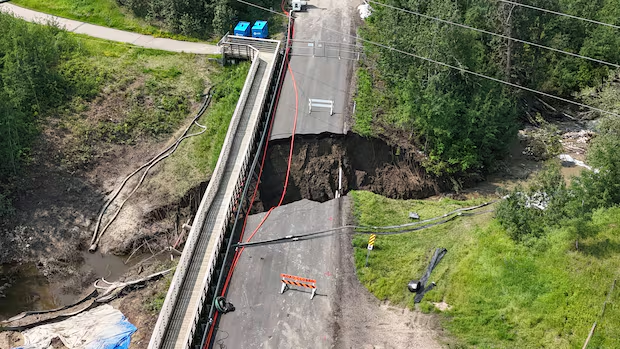
Edmonton is bracing for a staggering $42 million bill after record-breaking rainfall this summer devastated municipal infrastructure, public construction projects, and essential city services across the province's capital.
City councillors learned during a recent infrastructure committee meeting that since mid-July, Edmonton has managed more than 1,400 storm-related operational emergencies. The damage tells a grim story: flooded facilities, stalled transit expansions, compromised roadways, and construction sites turned into mud pits that may take weeks to recover.
The insurance gap
Here's the problem: most of this damage simply isn't covered by insurance. That $42 million in uninsurable public-sector losses represents a direct hit to Edmonton's budget—and ultimately, Alberta taxpayers.
The city is pursuing recovery through Alberta's Hazard Assistance and Resilience Program (HARP), which replaced the province's older disaster assistance framework. HARP is expected to cover 90 per cent of eligible costs, leaving Edmonton responsible for the remaining 10 per cent—roughly $4.2 million that the city must absorb on its own.
Major projects derailed
The damage extends to some of Edmonton's most critical infrastructure initiatives. Valley Line West and Capital Line South light rail expansions have both been hampered by flooding and waterlogged ground conditions. Land development projects in Goodridge Corners, the Exhibition Lands, and the ambitious Blatchford neighbourhood have suffered construction delays, pushing scheduled sales timelines into the future.
The Peter Hemingway Aquatic Centre and Telus World of Science both experienced flooding severe enough to force temporary closures. City officials have launched investigations to determine whether structural or design flaws contributed to the inundation—or if this was simply an unprecedented weather event.
When a site becomes saturated, work doesn't automatically return to normal once the sky clears. Access routes become too soft for equipment, excavations need to be pumped out, and trenches must be inspected before crews can resume work.
David Johnson, president of the Edmonton Construction Association, told councillors that this summer's conditions have been anything but typical. While contractors are accustomed to working in adverse weather and most projects include contingency plans, this season has shattered expectations.
Some projects push through
Not all news is bleak. The Yellowhead Trail Freeway Conversion and Terwillegar Drive construction work have remained largely on schedule despite the wet conditions. A landslide affecting the 76 Avenue trestle bridge replacement project in Mill Creek Ravine caused minor delays, but that work is still tracking toward completion.
The underlying issue facing Edmonton reflects a broader reality for prairie cities: climate patterns are shifting, and municipal infrastructure designed for historical rainfall averages may not be equipped for what modern summers now deliver. City council's utility committee is considering expedited measures to expand storm management systems—a conversation that will likely dominate budget discussions in the months ahead.
This article is based on reporting from CBC Edmonton.