


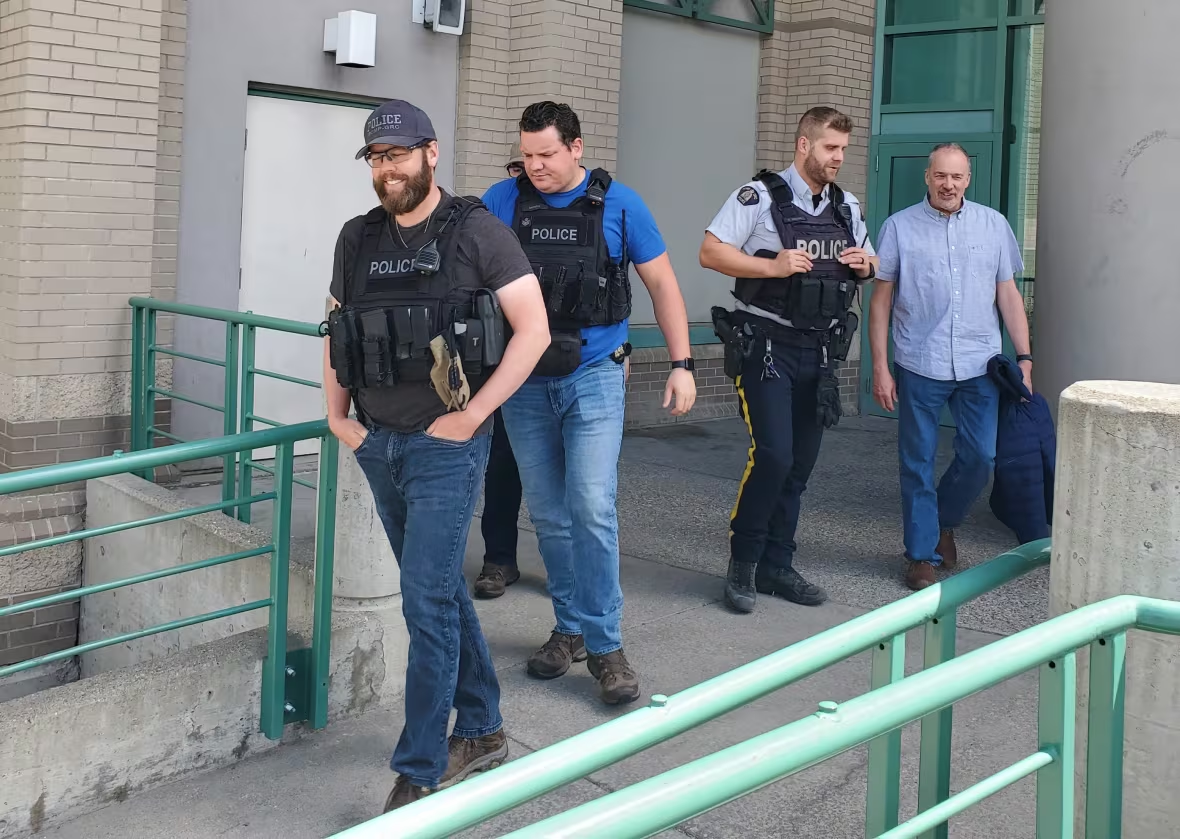
A Newfoundland and Labrador man charged with murdering his missing wife sat motionless in court Tuesday as the undercover RCMP officer he once considered his closest friend testified against him.
Dean Penney is accused of first-degree murder in the 2016 disappearance of his wife, Jennifer Hillier-Penney. He has pleaded not guilty, and his trial in Corner Brook is expected to continue throughout April.
The trial revealed the intricate details of a years-long undercover operation designed to extract a confession. The officer, identified only as "Vic" for security reasons, testified behind a protective black curtain while his face remained visible to the judge, jury, and Penney.
A Friendship Built on Deception
The undercover operative said he first approached Penney in September 2019 at a fish plant in St. Anthony with a simple cover story: he was interested in renting the man's cabin for a hunting trip.
What followed was a four-year relationship that blurred the lines between genuine companionship and strategic manipulation. The officer spent countless hours with Penney, learning to hunt and fish, cooking meals together, watching movies, and even meeting his family members.
"We spent a lot of time driving around the community and bonding," Vic testified. "We enjoyed cooking. We enjoyed watching movies."
During their time together, Penney unknowingly participated in a series of elaborate fictional criminal scenarios. He was asked to serve as a courier for stolen police computers and to scout locations for a fabricated fuel heist near the U.S. border in Alberta—all part of a fictitious criminal organization that never existed.
Strategic Scenarios and Emotional Investment
The undercover officer's testimony echoed similar accounts from another covert operative who went by the name "Joe." That officer served as the architect behind the scenarios, designing increasingly complex situations aimed at prompting Penney to reveal details about his wife's disappearance.
Vic spoke fondly of Penney during his testimony, recounting hunting trips, snowmobiling adventures, and the trust the accused man had placed in him. The emotional investment appeared genuine from Penney's perspective—a man seeking friendship and normalcy following his wife's death.
"He was very accommodating to me," Vic told the court. "I was not a proficient hunter or outdoorsman. I certainly learned a lot of things from Mr. Penney over the years in terms of what it takes to be a woodsman."
The trial continues to examine whether these undercover operations—spanning four years and involving multiple officers—constitute an ethically complex but legally justified investigative technique, or represent a troubling example of police manipulation of vulnerable individuals.
This story is based on reporting from CBC News covering Dean Penney's first-degree murder trial in Newfoundland and Labrador. Learn more at CBC News.