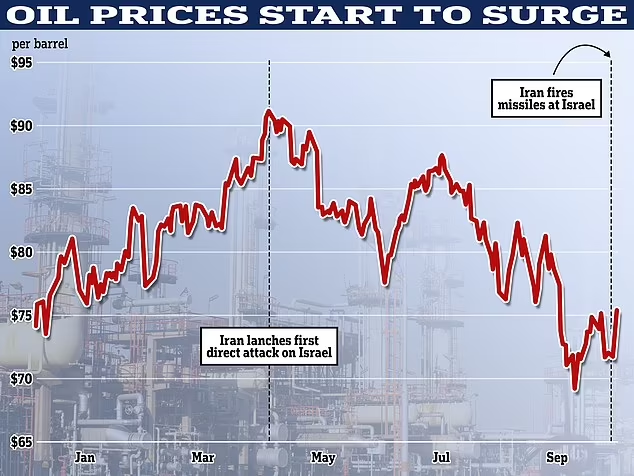


Iran launched fresh missile and drone strikes against Israeli cities and American military installations across the Middle East overnight, even as U.S. President Donald Trump claimed diplomatic talks are underway to resolve the escalating conflict.
The Iranian offensive targeted the Israeli cities of Eilat, Dimona and Tel Aviv, while also hitting U.S. bases throughout the region. The attacks prompted defensive responses from neighbouring countries, with Saudi Arabia intercepting a drone in its eastern provinces and Kuwait reporting power line damage from Iranian strikes. Emergency sirens were activated in Bahrain as the violence spread.
Iran's state-affiliated Fars news agency reported retaliatory strikes by U.S. and Israeli forces damaged critical infrastructure within Iranian territory. The attacks reportedly hit a gas pressure-regulation facility and administrative building in the central city of Isfahan, while a separate strike targeted a pipeline supplying the Khorramshahr Combined Cycle Power Plant in southwestern Iran.
The continued hostilities follow Trump's announcement that he had postponed planned strikes on Iran's energy infrastructure, citing what he described as "productive conversations" with Tehran. However, Iranian officials have widely denied the existence of any diplomatic engagement, creating confusion about potential peace negotiations and their scope.
Global energy markets responded immediately to the escalating conflict, with Brent crude prices jumping nearly three per cent during Tuesday morning trading amid concerns the violence could draw additional nations into the regional confrontation. Oil prices have surged more than 40 per cent since the conflict began on Feb. 28, reflecting growing market anxiety about supply disruptions.
The conflicting accounts between Washington and Tehran regarding diplomatic efforts have raised questions about the accuracy of Trump's claims and whether genuine negotiations are taking place behind the scenes. Iranian officials have consistently denied participating in any peace talks with the United States.
The expansion of attacks to include neighbouring countries signals a dangerous escalation that could destabilize the broader Middle East region. Energy markets remain on high alert as traders monitor developments that could further impact global oil supplies.
This article was adapted from reporting by Jennifer Blackwood in the Financial Post.