


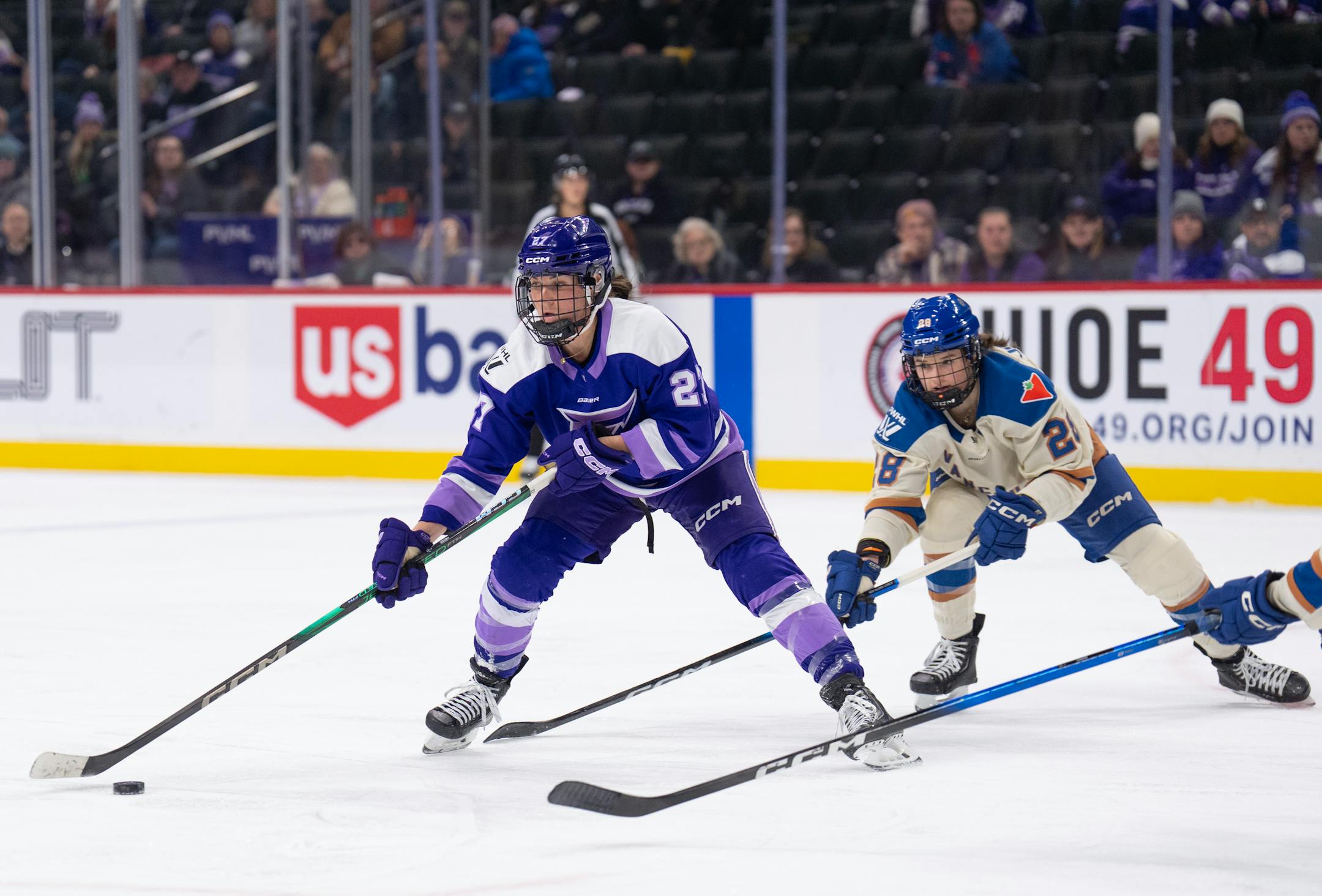
The Professional Women's Hockey League is riding an unprecedented wave of popularity following the 2026 Olympics, with sold-out arenas, skyrocketing merchandise sales, and household-name athletes who weren't household names just months ago. But there's a catch: the players fueling this cultural moment are earning salaries that lag dramatically behind the league's explosive growth.
Team Canada captain Marie-Philip Poulin shattered Olympic scoring records while leading the Montreal Victoire, and teammates Sarah Fillier, Emily Clark, and Claire Thompson became instant celebrities. Two months later, the momentum shows no signs of slowing. Ticket sales are projected to jump 70 per cent above last season, merchandise sales soared 101 per cent in February alone, and the league's 61 Olympic athletes collectively gained 760,000 new social media followers.
The numbers are staggering by any measure. The Seattle Torrent and New York Sirens drew 18,006 fans to Madison Square Garden for the league's Takeover Tour—a new U.S. attendance record. Canada's record stands at 21,105 fans at Montreal's Bell Centre. Even expansion teams Vancouver Goldeneyes and Seattle Torrent are averaging more than 11,000 fans per game, putting them at the top of league attendance rankings.
A Superstar Problem With Subpar Pay
Yet despite this explosive growth, most PWHL players are earning far less than you'd expect for athletes drawing crowds that rival established professional franchises.
Last month, The Hockey News published PWHL salary figures for the first time, revealing a stark reality: only a handful of players make more than $100,000 US. Marie-Philip Poulin, the league's top earner, made just $121,570 US last season. Brianne Jenner of Ottawa followed at $118,450 US, with Abby Roque of New York at $113,300 US. Stars like Hilary Knight, Renata Fast, and Emily Clark—athletes now appearing on Saturday Night Live and presenting at the Juno Awards—each earned $103,000 US.
The league's salary structure remains capped at just $1.34 million US per team. For perspective, the WNBA operates under a $7 million US salary cap—more than five times higher. The league's minimum salary sits at just $37,131.50 US, with an average of $58,349.50 US.
"The individual social profiles of those athletes really increased," says Cheri Bradish, director of the Future of Sport Lab at Toronto Metropolitan University. "And I think that's important because it helps grow the game and it helps grow the profile and recognition of these women as individual athletes."
Building While the Moment Lasts
Experts warn that the PWHL faces a critical juncture. The league's current popularity surge—driven by Olympic exposure and genuine athletic excellence—could either solidify women's hockey as a permanent fixture in Canadian sports culture or fizzle if the league fails to capitalize on momentum.
Bradish suggests the PWHL must rethink its pay structure to retain star talent and build sustainable growth. Without competitive salaries, rising stars could face pressure to pursue opportunities elsewhere or supplement income through other means, potentially diluting their focus on the sport that made them household names.
The 2023 collective agreement between the players association and management set the current salary framework. With attendance records being shattered and merchandise flying off shelves, pressure is mounting for a renegotiation that reflects the league's rapidly expanding commercial value.
For now, PWHL players are banking on their Olympic moment lasting longer than typical post-Games euphoria. Whether the league's management will match athlete ambition with athlete compensation remains the defining question as women's hockey enters what could be its most pivotal season.
This article is based on reporting by CBC News. Read the original story at CBC.ca.