


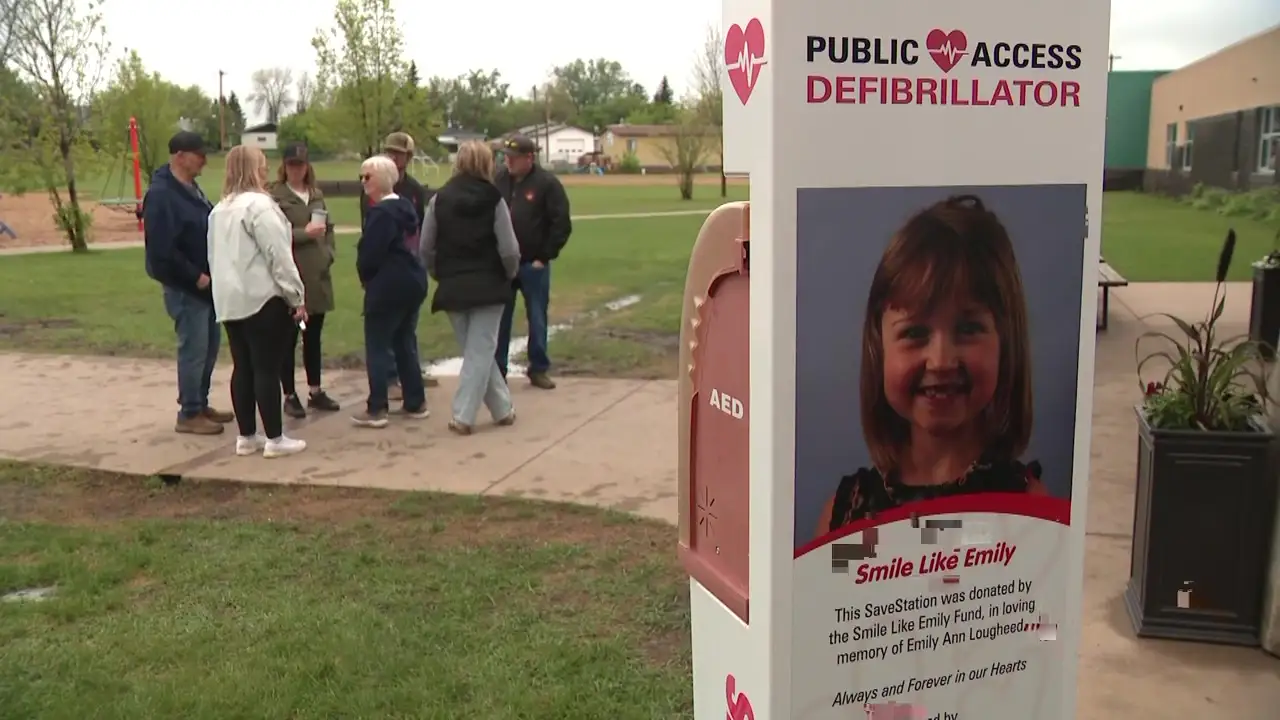
A grieving family's determination to prevent tragedy has sparked a life-saving initiative across rural Alberta, bringing automated external defibrillators (AEDs) to communities where cardiac emergency equipment was once scarce.
Emily Lougheed was seven years old when she collapsed suddenly on August 2, 2020, while playing at the beach. What began as a normal summer day ended in devastating loss for her parents, Leanne and her family, as Emily suffered sudden cardiac arrest from an undetected congenital heart condition.
"Our daughter Emily was a vibrant seven-year-old, she always had a smile on her face and a giggle in her voice," Leanne recalled. "Emily's condition was very rare — her heart was simply built differently."
Despite immediate family intervention and access to a defibrillator at the scene, Emily could not be saved. Her heart condition — a missing electrical node that prevented normal communication between chambers — made her cardiac arrest irreversible even with emergency intervention.
Rather than let Emily's memory fade, her family channeled their grief into action, establishing Smile Like Emily, a grassroots campaign dedicated to increasing AED accessibility across Paintearth County No. 18, located more than 200 kilometres southeast of Edmonton.
Eight Life-Saving Stations Now Operational
The campaign has already made tangible progress. Eight AEDs have been installed throughout the rural county, with the latest unveiled at Gus Wetter School in Castor — where Emily was a student. Additional SaveStations, as they're called, have been placed at schools, recreational facilities, a ball diamond, and Quality Fitness gym.
The cabinet-style AED stations, managed by Action First Aid, remain accessible 24 hours a day, seven days a week, ensuring that if another child or adult experiences sudden cardiac arrest, help is immediately within reach.
"If we can make our community heart safe and save one life, then I think that's all we can ask for," Leanne said.
According to medical data cited by MyHealth Alberta, sudden cardiac arrest — when the heart stops beating and blood flow to the body ceases — remains one of the leading causes of death, particularly among young athletes and students.
Why Rural Areas Matter
While AEDs have become increasingly common in urban centres across Canada, rural and remote regions of Alberta have lagged significantly behind in access to this critical emergency technology. Response times in rural areas can be lengthy, making public access to defibrillators even more crucial for survival.
"Cardiac arrest continues to be the number one cause of death of student athletes and as well as one of the number one causes of death in general," said Christine Drury, senior account manager with Action First Aid, which has partnered with Smile Like Emily.
Early intervention with CPR and rapid defibrillation can restore a normal heart rhythm and dramatically improve survival odds. Every minute matters — survival rates drop approximately 10 per cent for every minute defibrillation is delayed.
The Smile Like Emily campaign demonstrates how personal tragedy, when channeled constructively, can create community-wide health improvements. The initiative has opened conversations about cardiac health awareness and emergency preparedness in schools and public spaces across Paintearth County.
For parents and educators in rural Alberta, the presence of these SaveStations offers reassurance that if the unthinkable happens, the tools needed to save a life are nearby. For Emily's family, each AED installed represents hope — and a legacy that turns loss into lifesaving action.
This article is based on reporting by Global Calgary's Kyra Thompson.