


Southern Alberta is taking matters into its own hands to address a critical physician shortage. The newly launched Southern Alberta Medical Program, a partnership between the University of Lethbridge and the University of Calgary's Cumming School of Medicine, kicked off this summer with 20 eager medical students in its inaugural class—and early signs suggest the strategy is working.
The problem is real. According to the Alberta Medical Association's 2026 State of Health Care report, 16 per cent of adult Albertans lack a regular family physician. While that's a modest improvement from the previous year, the gap remains substantial, particularly in smaller communities outside Calgary and Edmonton.
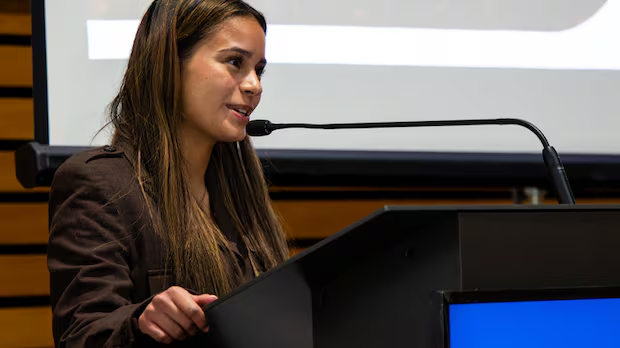
Andrea Monsalve, one of the program's first cohort members, embodies exactly what officials are banking on. The Lethbridge resident committed Monday to staying in her community after graduation—a pledge that reflects her deep local connections and her desire to serve where she's rooted.
A Three-Year Path to Community Medicine
The program's design is deliberately structured to build community ties. Students spend 18 months in classroom-based learning, followed by 18 months of hands-on clinical work in southern Alberta communities. It's a formula that research shows actually works: physicians trained in a region are significantly more likely to practise there long-term.
"It's a big need in our community right now," Monsalve explained during the official program launch, noting that the intimate class size creates invaluable one-on-one mentorship opportunities. "Because we're seeing the same preceptors over and over, we're able to build that better mentor-mentee relationship that will help us grow and help our skills eventually."
Dr. Rick Buck, associate dean of the program and an emergency room physician at Lethbridge's Chinook Regional Hospital, emphasized the research backing the initiative. "It is a much needed and necessary component of physician recruitment to have a program such as this," Buck told CBC News. "We see this across the country."
The Long Game
Officials and medical leaders are realistic about the timeline. The program will take a decade or more to fully demonstrate its success. After completing the three-year curriculum, graduates must pursue a residency lasting anywhere from three to 10 years. But the early momentum is promising.
Lethbridge Mayor Blaine Hyggen brought a lighter touch to the official launch, joking that students should enrol their future children in hockey, dance, and arts classes—"because you need to stay after. It's part of the rule." The humour masked a serious intent: building a community that attracts and retains physicians.
Buck underscored the psychological and professional benefits of staying put. "The longer learners stay in a community, the more they feel like they're integrated, and the more they feel like they're part of a team," he said. That sense of belonging, research suggests, translates into physicians who stay—solving a generational problem for Alberta's smaller regions.
As Southern Alberta's first cohort settles into their studies, the hope is clear: this program will become a model for physician recruitment that works, one locally trained doctor at a time.
This article is based on reporting by CBC Calgary. For more information on the Southern Alberta Medical Program, visit the University of Lethbridge website.