


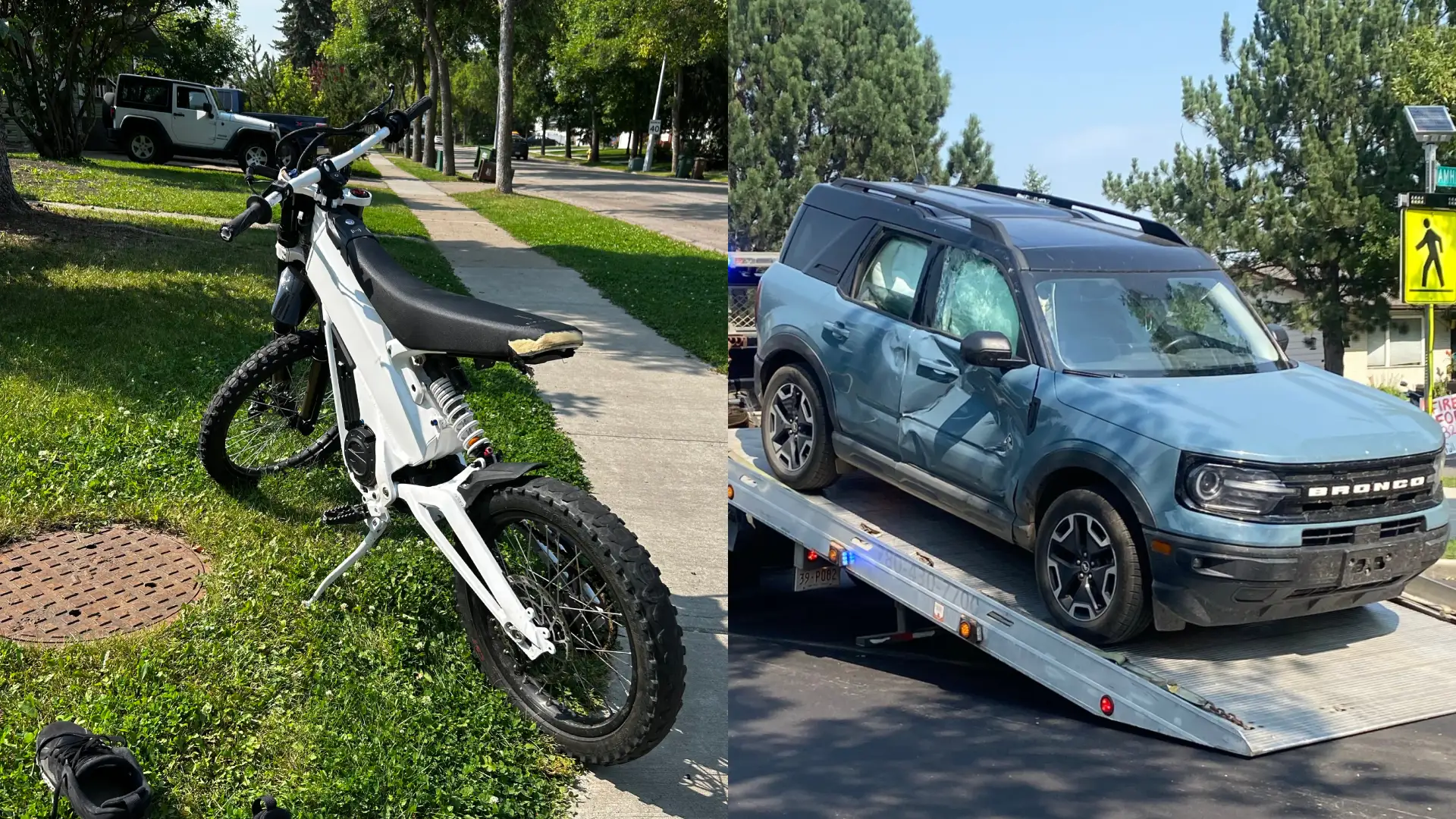
A serious collision between a high-speed electric dirt bike and a Ford Bronco SUV in St. Albert this week has put a spotlight on the growing public health concern surrounding e-mobility devices across Alberta.
The crash occurred Thursday afternoon on Akins Drive, between Alpine Boulevard and Amherst Crescent, leaving a 16-year-old rider with significant facial injuries. RCMP arrived to find the teenager bleeding beside a damaged e-bike, while the Bronco sustained extensive damage — including caved-in passenger doors, deployed airbags, and a shattered window.
"Judging by the damage done to the Bronco, it had to be going at a substantial speed," said St. Albert RCMP Cpl. Curtis Harsulla. The Bronco driver reported observing a sudden flash before impact.
Emergency Rooms Overwhelmed with E-Mobility Injuries
Emergency physicians across the Edmonton region are raising alarms about the spike in e-device injuries landing in hospital beds. Dr. Louis Hugo Francescutti, a University of Alberta public health professor and emergency physician at the Royal Alexandra Hospital, reported treating three e-scooter injuries in a single week alone.
"The technology is rapidly evolving and these vehicles are getting faster and faster," Francescutti explained. "The problem becomes not when they're driving — it's when they crash."
While rental companies like Lime and Bird govern their e-scooters and e-bikes to approximately 20 km/h, privately owned devices are a different story. Many commercial models can reach speeds of 50 km/h or higher — a difference that fundamentally changes crash physics.
"These things can go up to 50 km/h. What ends up happening is the energy transfer quadruples. So a helmet is good, but a helmet doesn't prevent a crash. A helmet may help prevent a brain injury."
Teen Brains Aren't Built for Risk Assessment
The medical community points to a troubling biological reality: the human brain doesn't fully develop its risk assessment capacity until age 25. This explains why car rental agencies enforce age restrictions — and why teenagers and children operating high-speed e-devices face disproportionate danger.
"It's not that these kids are stupid. It's just that they can't access risk. That part of the brain has not been formed properly," Francescutti said. "So what ends up happening is they take risk — because risk is fun."
Charges have been laid in connection with the St. Albert collision, though details remain under investigation by RCMP.
As e-mobility devices continue flooding Alberta streets, public health officials are pushing for stronger regulations, mandatory safety training, and age-appropriate speed restrictions on privately owned units.
This story is based on reporting by Global Calgary.