


The Trump administration is on a marketing blitz to showcase American manufacturers who say they're benefitting from sweeping global tariffs—and some executives are enthusiastically making the case that protective trade policies are finally giving domestic producers a fighting chance.
U.S. Trade Representative Jamieson Greer toured factories across Ohio and Michigan last week, highlighting companies positioned to capitalize on the tariff regime. The message was clear: American manufacturing is staging a comeback, and these tariffs are the catalyst.
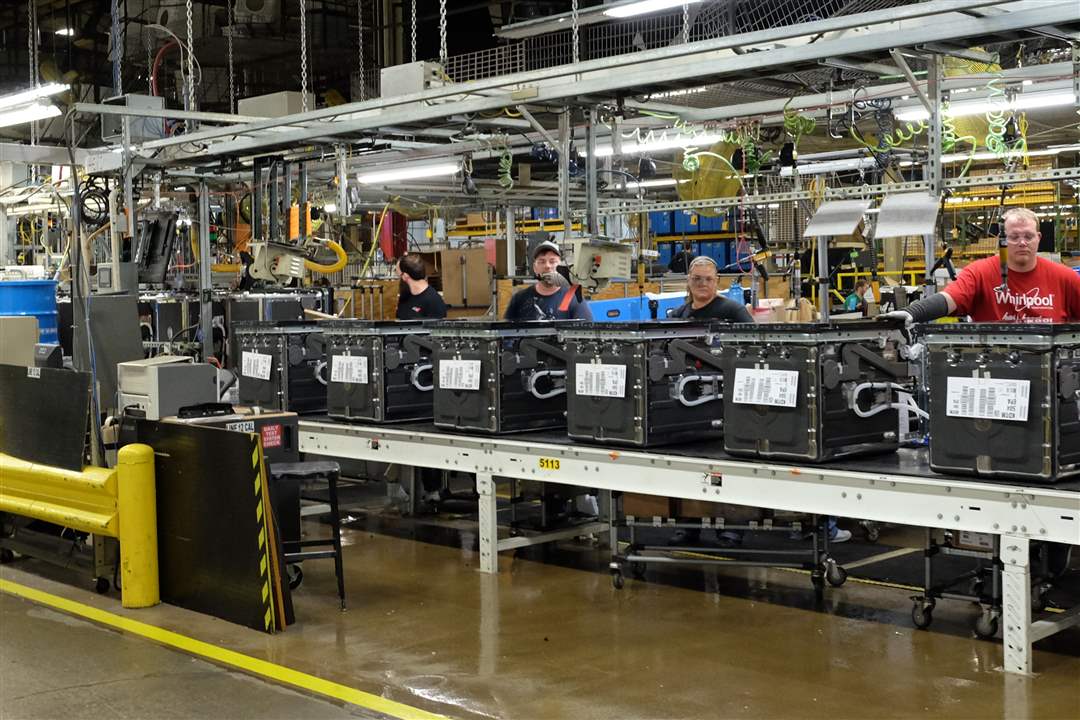
At a Whirlpool Corp. facility in Clyde, Ohio—capable of producing 22,000 washing machines daily—CEO Marc Bitzer announced a $60-million investment in a new plant near Perrysburg that would create 150 jobs. Bitzer was emphatic about the tariffs' impact on his company's competitiveness.
"It felt occasionally, being the last U.S.-based appliance manufacturer, like being in a boxing fight with three other guys in the ring, and you have one arm tied behind your back," Bitzer said, describing the challenges of competing against Asian competitors with access to cheap, subsidized materials.
The Whirlpool CEO credited Trump's tariff policies with levelling what he calls an uneven playing field. "Tariffs do create a level playing field, and that's a big deal," Bitzer told an audience of plant workers and elected officials—remarks that drew applause.
Greer's tour also included stops at a drone manufacturer near Detroit and the largest U.S. solar energy systems producer near Toledo. At each location, the administration's trade representative reinforced a consistent message: moving manufacturing back to American soil is the priority.
"Under other presidents, the job of the U.S. trade representative was usually to do trade deals to try to import as much as possible from China," Greer said. "Under President Trump, the job is to put tariffs on all that from China."
A notable pattern emerged during the tour: the companies Greer highlighted were already committed to domestic manufacturing before the tariffs were introduced. Whirlpool, for instance, had long maintained U.S.-based production despite competitive pressures—a fact the administration used to validate its tariff strategy.
The White House is clearly banking on these success stories to counter widespread criticism about rising consumer costs linked to tariff policies. While some manufacturers report renewed investment opportunities, the broader economic impact remains contested, with many American households facing higher prices on imported goods.
Greer articulated the administration's overarching objective plainly: "The ultimate goal is we want to make sure that we have more manufacturing in the United States."
This article is based on reporting by CBC News World.