


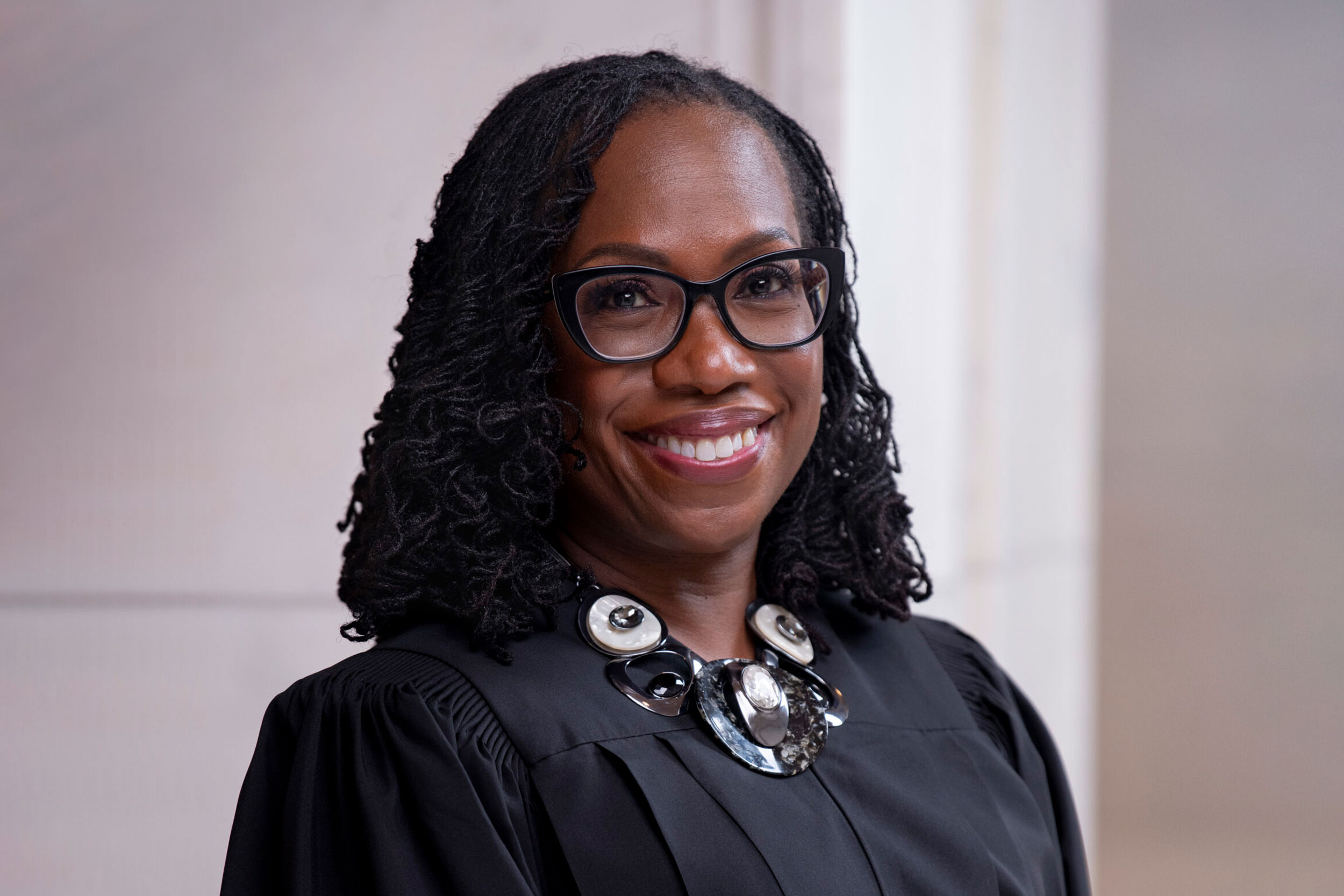
A senior U.S. Supreme Court justice has launched a forceful public challenge to her conservative colleagues' reliance on emergency orders, warning that the practice threatens the integrity of American law and the court itself.
Justice Ketanji Brown Jackson, the court's newest member, spent nearly an hour at Yale Law School on Monday denouncing what critics call the "shadow docket" — a process allowing judges to issue swift rulings with minimal explanation. She characterized these orders as "scratch-paper musings" and "back-of-the-envelope, first-blush impressions" that lack the rigour expected of the nation's highest court.
A Troubling Pattern Emerges
Jackson's concerns centre on roughly two dozen emergency orders issued over the past year, many allowing President Donald Trump to implement controversial policies on immigration and federal spending cuts despite lower courts finding them likely illegal. While theoretically temporary, these orders have effectively allowed the administration to proceed with significant portions of its agenda.
"There is a serious concern that the Supreme Court's modern stay practices are having an enormously disruptive and potentially corrosive effect," Jackson stated during the event, which was later posted online.
The justice noted that the problem extends beyond the initial rulings. Once issued, these hastily-drafted orders are then applied by lower courts to other cases, creating confusion and inconsistency throughout the American legal system.
Questioning Presidential Harm
Jackson directly challenged the reasoning used by her conservative colleagues to justify these emergency orders. The court has suggested that preventing the president from implementing his policies causes significant harm that often outweighs potential damage to those challenging those same policies.
"The president of the United States, though he may be harmed in an abstract way, he certainly isn't harmed if what he wants to do is illegal,"
Jackson said during a question-and-answer session with Yale Law School Dean Cristina Rodriguez.
A Historical Shift in Judicial Restraint
The justice highlighted a significant departure from historical Supreme Court practice. Traditionally, the court avoided intervening early in legal proceedings and was reluctant to inject itself into divisive policy debates.
"There is value in avoiding having the court continually touching the third rail of every divisive policy issue in American life," Jackson explained. However, she noted that in recent years, the Supreme Court has abandoned this restraint, becoming "noticeably less reluctant, especially with respect to pending cases that involve controversial matters."
Jackson's critique echoes concerns recently raised by Justice Sonia Sotomayor, who similarly addressed emergency orders at the University of Alabama last week. Both progressive justices have repeatedly dissented on these matters, often joined by Justice Elena Kagan.
Jackson's decision to address the public directly rather than confining her critique to dissenting opinions marks an unusual escalation in the long-running judicial disagreement over the appropriate scope and speed of Supreme Court intervention in contested policy matters.
This article is based on reporting from CBC World. Read the full CBC story.