


While President Trump has declared America possesses "virtually unlimited" munitions supplies and could wage war indefinitely, military leadership and defence analysts are painting a starkly different picture of U.S. arsenals.
Recent congressional testimony and strategic assessments reveal that advanced weapons systems—particularly long-range cruise missiles and air defence interceptors—are far more constrained than public rhetoric suggests, with troubling implications for future conflicts.
The Ammunition Reality Check
Following a five-week bombing campaign against Iran, the U.S. announced an indefinite ceasefire extension this week, providing a crucial window to replenish Middle Eastern stockpiles. Yet defence officials caution that supplies remain stretched.
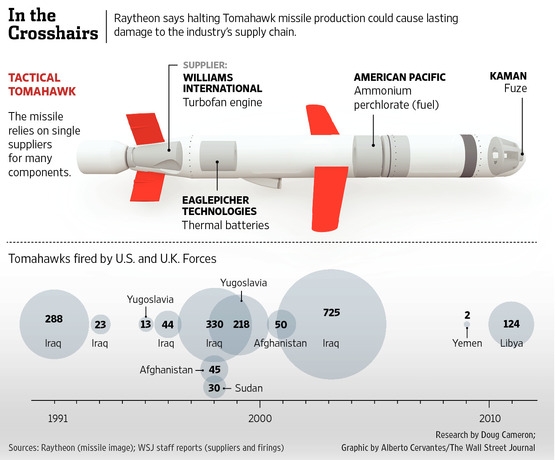
The Centre for Strategic and International Studies analysed U.S. munitions inventories and concluded the nation "may have expended more than half of the prewar inventory" of at least four critical weapons systems, including Tomahawk cruise missiles.
"The United States has enough missiles to continue fighting this war under any plausible scenario," the analysis stated. "The risk—which will persist for many years—lies in future wars."
Production Bottlenecks Threaten Future Readiness
Admiral Samuel Paparo, head of U.S. Indo-Pacific Command, told the Senate Armed Services Committee on Tuesday that scaling up production of advanced systems could take one to two years.
"I think it will take one to two years for them to scale," Paparo testified, referencing manufacturers like Lockheed Martin and Raytheon. "It won't be soon enough. There are finite limits to the magazine, and I have all the faith in the world that they're being employed judiciously."
The admiral's words underscore a critical distinction military planners make: the U.S. retains extraordinary technological capability, but the actual number of weapons available and the ability to replace them remain limited.
Stretched Thin Across the Globe
Defence officials have warned for years that key munition stockpiles face mounting strain as the United States manages multiple simultaneous operations. Air defence interceptors exemplify the problem—they're needed not just in the Middle East, but also in Europe and across the Indo-Pacific, where they're central to contingency planning for potential conflict with China.
These overlapping demands force difficult trade-offs. Weapons deployed to one theatre are drawn from inventories designated for another. Meanwhile, many advanced munitions rely on complex, fragile supply chains and specialized components that cannot be rapidly scaled.
"There's no walking away from the quantitative use of weapons," Paparo acknowledged when pressed by Connecticut Senator Richard Blumenthal about transferring munitions to the Middle East. "Our way forward is to supercharge our defence industrial base and equally important is to innovate with non-traditional primes."
The admiral referenced emerging defence contractors—tech startups like Palmer Luckey's Anduril, which manufactures lower-cost drone technology—as potential solutions to boost production capacity.
What It Means for Canada
For Canadian defence planners and policymakers, the U.S. munitions reality check carries significant implications. As a NATO ally with Pacific interests, Canada's own defence partnerships and interoperability assumptions may need reassessment if American munitions supplies become increasingly constrained during prolonged conflicts.
This article is based on reporting from CBS News.