| WestNet N.A.
Skip to the report
Cover Saddle Ridge CNG Bus Fire
Page 1 of 1 · print (est.)0%
Public Safety Recommendation Report · Draft for Review

Saddle Ridge
CNG Bus Fire

What happened on October 15, 2026, what is still unknown, and what must change
so a collision on a Calgary street never again becomes a fatal fire on a transit bus

Subject: Calgary Transit CNG bus collision and fire — Saddletowne Circle N.E. / Saddle Ridge, Calgary, Alberta
Incident: Thursday, October 15, 2026, about 1:11 p.m. MT · Facts current to: October 16, 2026
Jump to the recommendations →
Safety now

If you are at a bus fire or collision right now

Get out. Get away. Call 9-1-1.

  1. Get out first. Leave bags, phones and coats. Never go back for anyone.
  2. Move at least 100 m (330 ft) away from the bus and keep other people back. Stay upwind where you can.
  3. Do not shelter beside, behind or under the bus. Pressure-relief devices can release gas as a jet fire that may go out and re-ignite.
  4. No smoking, flares or sparks near the vehicle.
  5. Call 9-1-1 from a safe distance. Say it is a natural-gas (CNG) bus and where you are.
Minimum distance diagramA bus in the middle of a dashed circle marked at least 100 metres. People stand outside the circle on the windward side, with an arrow showing the wind blowing from them toward the bus. wind at least 100 m (330 ft) upwind, outside the ring
Original schematic, not to scale. The distance is a minimum.

Smell of rotten eggs, a loud hiss, or frost at a pipe or fitting? Treat it as a natural-gas leak: leave the area and report it. Natural gas is lighter than air and rises.

Call 9-1-1
Where these numbers come from, and what we do not claim
  • 100 m (330 ft) is the minimum safe perimeter in the Cummins Clean Technology First Responders Guide for CNG fuel systems (2025) and in the Transport Project CNG emergency response cards (Oct 2025). The U.S. Emergency Response Guidebook 2024, Guide 115 (natural gas, compressed), says to isolate a spill or leak area at least 100 m in all directions.
  • Sources differ. An older first-responder guide hosted by NHTSA cites a smaller perimeter of 25–31 m (80–100 ft) per NFPA; for ordinary vehicle fires the U.S. Fire Administration says 100 ft (30 m). We give the larger, more recent figure for a gas-fuelled bus.
  • Upwind: the Transport Project Canada Emergency First Responder Guide says, for a natural-gas vehicle accident, to keep the public away and keep all equipment and people upwind. Uphill: none of these sources gives an uphill rule, so none is stated here.
  • Jet fire and re-ignition, no flares or smoking, leak signs (hiss, frost, odour), and natural gas being lighter than air: the Cummins guide, the Transport Project cards and the NHTSA-hosted guide above.
  • Larger distances. The ERG gives much larger isolation and evacuation distances for large spills and for fires involving tanks, rail tank cars or highway tanks. Whether any of that applies is for the incident commander, not a bystander.
  • Calgary Fire. We did not find a Calgary Fire public page giving a distance for a CNG bus fire (checked October 17, 2026). Follow instructions from 9-1-1 and responders on scene.

These guides are written for responders; the minimum distance applies to everyone. This panel is general safety information, not a substitute for the instructions of 9-1-1 or emergency crews.

Executive Summary

On October 15, 2026, a chain-reaction collision involving eight vehicles and two Calgary Transit buses ended with one bus, a compressed natural gas (CNG) bus carrying 13 people, on fire. Three people died at the scene and more than a dozen were hurt, including a Calgary police officer.[1][2][3] Police say the cause of the collision and fire is under investigation.

Public information does not yet establish why the fire was so severe or whether a tank pressure relief device (TPRD) opened early, late, or at all. WestNet's engineering working theory is that the relief system may have played a role; this report treats that as a hypothesis to be tested, not a finding (§ 02). It then sets out evidence-based recommendations for vehicle design, fire-service response, passenger safety, driver and operator training, and fire detection and suppression, and identifies the parties who hold the answers (§ 08).

The recommendations are by Abdou Traya of WestNet. § 09 sets out ten levels of defence plus an accountability layer and fourteen specific ideas, each marked as a proposal and tested honestly: purpose, how it would work, its limits, the standards and testing it needs, and who should act. Detail tables follow in § 10 to § 13.

One caution up front: simply delaying a TPRD is not a safe fix. The device exists to vent gas before a fire-weakened cylinder ruptures. The better engineering question is how to keep passengers alive and the cylinders intact for longer, while directing any release away from people (§ 05).

3
Dead at Scene
8
Vehicles Involved
13
On the Burning Bus
246
CNG Buses in Fleet
For the people who ran toward this fire — see § 14 and the WestNet First Responder Field Guide
§ 01

What We Know

Verified facts, each tied to a named source

In brief

  • On October 15, 2026, a chain-reaction collision involving eight vehicles and two Calgary Transit buses ended with a CNG bus on fire in Saddle Ridge.[2][5]
  • Three people died at the scene. Thirteen people were on the burning bus; paramedics attended 19.[1][2][3]
  • The cause of the collision and the fire is still under investigation. Where outlets disagree, both versions are shown below.
3people died at the scene
13people on the burning bus
8vehicles in the chain
12Calgary Fire units sent

Figure A · October 15, 2026 · in the order reported

Timeline of the October 15, 2026 collision and bus fire, in the order reportedSix steps: collision chain, bus on fire, police called at 1:11 p.m., crews respond, fire knocked down, aftermath.1Collision chain8 vehicles · 2 buses2Bus on fireCNG bus · 13 aboard31:11 p.m.Police called to the fire4Crews respond12 Calgary Fire units5Fire knocked down“Relatively quick”6Aftermath3 dead · 19 attended
  1. Collision chain. A bus struck a white vehicle, which hit another vehicle and a cube van; the bus then struck a second bus at a stop and pushed it into three more vehicles.[2][5]
  2. Bus on fire. The bus that burned ran on compressed natural gas and carried 13 people.[1][2]
  3. 1:11 p.m. Calgary police were called to a vehicle fire in the 800 block of Saddletowne Circle N.E.[3]
  4. Crews respond. Twelve Calgary Fire units, including a hazardous-materials unit; a police officer ran toward the burning bus.[1][2]
  5. Knockdown. The fire chief called it “a relatively quick knockdown” and “a serious fire inside.”[5]
  6. Aftermath. Three people died at the scene. Paramedics attended 19 people, 10 of them taken to hospital; some outlets count 16.[1][4][5]
Order as reported. Apart from the 1:11 p.m. call, exact times have not been made public. Police and fire investigations are still open.
Standard of Evidence

Everything in this section is attributed to a named outlet or official statement as of October 16, 2026. Where outlets disagree, both versions are shown. WestNet has not independently inspected the vehicles or scene, and has not seen investigators' evidence.

At about 1:11 p.m. on Thursday, October 15, 2026, Calgary police were called to a vehicle fire involving a City of Calgary bus in the 800 block of Saddletowne Circle N.E., in the Saddle Ridge area.[3][1] Police describe it as the largest collision scene their traffic unit commander had attended in 36 years on the force.[2]

Early indications from police are that a Calgary Transit bus travelling northbound struck a white vehicle, which then hit another vehicle and a cube van. The bus continued through an intersection and struck a second bus stopped at a bus stop, pushing it across the road into three more vehicles — eight vehicles in all.[2][5] The bus that burned was powered by compressed natural gas.[1][2]

SCHEMATIC — SEQUENCE AS DESCRIBED BY CALGARY POLICE · NOT TO SCALE · NOT A RECONSTRUCTION BUS 1 1 · Northbound; strikeswhite vehicle car veh. cube van 2 · Chain reaction BUS 1 3 · Continues throughintersection CNG BUS 4 · Stationary at bus stop;struck by Bus 1 13 people aboard · fire pushed across road into 3 more vehicles
Figure 1. Original WestNet schematic of the sequence as described by Calgary Police Staff Sgt. Andy Woodward.[2] Vehicle positions, speeds and the exact order are for investigators to establish. No photograph is used here: news photographs are copyrighted and the City of Calgary and Calgary Transit marks are not used.
FactWhat officials and outlets reportedSource
DeathsThree people declared dead at the scene; police say they were on the burning bus.[1][2][3]
InjuriesParamedics attended to 19 people; 10 taken to hospital by ambulance (1 life-threatening, 9 non-life-threatening); 5 more “walking wounded” assessed. A female police officer had minor injuries after running toward the burning bus.[1][2]
Bus typeCompressed natural gas (CNG). Calgary Transit operates 246 forty-foot CNG buses (about 20% of its bus fleet) and has said it expects about 399 by 2027.[1][8]
People on burning bus13 (Calgary Herald, citing police).[2]
Fire responseTwelve Calgary Fire units, including a hazardous-materials unit to “secure those gas tanks.” The collision was near Saddle Ridge Fire Station No. 32. The fire chief called it “a relatively quick knockdown” and “a serious fire inside”; there was also a small fire in the other bus. The second bus's driver was trapped and had to be extricated.[1][2][5]
CausePolice: the cause of the fire “remains under investigation”; investigators are collecting neighbourhood video.[2][3]
UnionATU Local 583 president Mike Mahar: “I don't recall a bus burning like that”; the union had never had concerns about natural-gas buses “but we may now”; it is not clear why the fire was so extreme.[2][6]
Official responseMayor Jeromy Farkas promised “a full investigation into what happened, what caused this collision and what may need to change.”[2]
Discrepancies in Public Reporting

Fuel type. Some early reporting and one quoted statement described a “liquid natural gas” bus. CBC subsequently corrected its story: the bus runs on compressed natural gas.[1] This report uses CNG.

Location. City and CBC reports say Saddletowne Circle N.E.; the Herald's first paragraph says Saddle Ridge Circle. This report uses the City's wording.[3]

Injury counts. 16 (CBC, UPI) vs. 19 (AP, Herald) depending on whether people assessed at the scene are counted.[1][4][5]

“Explosion.” Some outlets use the word. Police and fire officials quoted by the Herald and CBC describe a serious fire; the fire chief said it “wasn't a catastrophic fire.” A small outlet reports a later explosion as a bystander approached; WestNet has not seen this confirmed by officials.[7]

§ 02

What We Don’t Know

…and the working hypothesis, labelled as a hypothesis

In brief

  • Not yet public: which bus burned, who made its cylinders and relief valves, and whether any relief valve opened.
  • How each victim died is not public, so this report does not describe it.
  • WestNet’s relief-system idea is a hypothesis to test, not a finding.

As of October 16, 2026 the following have not been made public by any official source WestNet can find:

  • The cause of the initial collision, or whether anything about the bus or its driver contributed.
  • The bus's manufacturer, model, model year, and fleet number. Calgary Transit's CNG fleet is almost entirely Nova Bus LFS Natural Gas units, with two New Flyer XN40s, according to enthusiast fleet rosters — but which bus burned is unconfirmed (see § 03).[9][10]
  • The cylinder, valve and TPRD makers, their ages, and their inspection history.
  • Whether any TPRD activated, when, where it vented, and whether the cylinders stayed intact.
  • The cause of death of each victim. Public statements confirm three deaths; they do not say how each person died. This report therefore does not characterize the manner of death.
  • Where the fire started, and how fast it spread through the passenger compartment.

The three failure paths below are the ones this report asks investigators to test, because each leads to a different fix:

PathWhat would have happenedDifferent fix
A. Crash leakCollision damage broke a line, fitting, valve or cylinder; gas leaked and ignited. TPRD irrelevant or secondary.Crash-triggered fuel shutoff; better line and valve protection; mounting and shielding.
B. Early or spurious TPRD releaseA relief device opened at lower than design temperature, or on damage, or from a defect, releasing gas into a fire or an ignition source. Historical precedent: a 1990s U.S. Department of Energy-listed study examined repeated, nearly identical failures of one PRD design on U.S. CNG bus fleets, testing a theory that cooling during fuelling was thermally cycling the device.[14]Device design, qualification, inspection and replacement intervals.
C. Correct release, wrong directionThe TPRD opened as designed, but its vent jet or the jet fire it produced impinged on the cabin, exits, or the other bus. Vehicle damage and position can change vent direction.[20]Vent-line routing, protection and outlet position; cabin fire barriers; exit placement.
D. Late or no releaseLocalized fire remote from a TPRD weakened a cylinder before any device saw enough heat. Documented in CNG vehicles elsewhere.[11][12]Thermal shielding; more or remote-sensing TPRDs; localized-fire test requirements.
§ 03

The Fleet

Buses, fuel systems and what is not public

In brief

  • Calgary Transit lists 246 forty-foot CNG buses, about 20% of its fleet, with about 399 expected by 2027.[8]
  • 244 of the 246 are Nova Bus LFS Natural Gas units, according to enthusiast rosters. Nova’s specification lists nine roof-mounted cylinders.[9][29]
  • Not public: which bus burned, and who made its cylinders, valves and relief devices.
246forty-foot CNG buses
244are Nova LFS units (rosters)
9roof cylinders per bus (Nova spec)
399expected by 2027

Figure 3 · Where the CNG system sits · schematic, not to scale

Where the CNG fuel system sits on a 40-foot transit busSide view of a bus. Nine cylinders lie along the roof, each with a valve and a thermally activated relief device. Vent tubes rise at the rear of the roof. A gas line runs from the fill point to the cylinders and on to the engine at the rear.123456← REARFRONT →
  1. Nine roof cylinders. Nova’s specification lists nine roof-mounted Type 3 tanks (18,765 standard cubic feet).[29]
  2. Valves with relief devices. Supplier manuals describe a remote TPRD on each cylinder valve that opens at 110 °C. Calgary’s models are not public.[34]
  3. Vent tubes. On roof-mount transit systems they are typically at the rear of the roof, venting rearward or upward. Calgary’s layout is unverified.[21]
  4. Gas line. Carries fuel from the fill point to the cylinders and on to the engine. A solenoid valve should shut it off when the ignition is off or power is lost.
  5. Engine bay. Cummins Westport L9N on current units (rear-mounted on this class of bus).[9][31]
  6. Fill point and fuel management module. Nova’s CNG buses use one at the fill point; a 2025 Transport Canada recall covers an O-ring in it.[36]
Figure 3. Original WestNet schematic of a typical 40-foot CNG transit bus. Positions are approximate; the flowing dashes show gas moving from the fill point to the cylinders and on to the engine. Items marked “typical” are industry norms, not confirmed for the bus that burned (see § 03).
Evidence Status

Calgary Transit's own page confirms the CNG fleet size and that the buses are 40-foot.[8] Bus makes, engines and fleet-number ranges below come from enthusiast-maintained rosters, cross-checked against the bus maker's specification page.[9][31][32][29] The cylinder, valve and relief-device makers and models on Calgary's buses are not publicly confirmed. Anything about them below is industry-typical information, labelled as such.

How many CNG buses? — about 246 (official), possibly more now

Calgary Transit's website states the fleet includes 246 forty-foot CNG buses, about 20 per cent of its buses, with about 399 expected by 2027.[8] The Calgary Herald repeated the 246 figure on October 15.[2] The fleet-number blocks in the enthusiast rosters add up to exactly 246 (2 + 2 + 40 + 70 + 25 + 32 + 75), which supports the figure.[9][32] The same sources report a further 60 Nova CNG buses (8597–8656) delivered from November 2025 to spring 2026, which would take the in-service total to roughly 306 — unverified, because the official page is undated and does not list them.[32]

Fleet numbersCountBuiltBus (chassis/body)Engine
8201–820222012New Flyer XN40Cummins Westport ISL G
8203–820422013Nova Bus LFS Natural GasCummins Westport ISL G
8355–8394402018–19Nova Bus LFS Natural GasCummins Westport L9N
8395–8464702019–20Nova Bus LFS Natural GasCummins Westport L9N
8465–8489252022Nova Bus LFS Natural GasCummins Westport L9N
8490–8521322022–23Nova Bus LFS Natural GasCummins Westport L9N
8522–8596752024 (in service Dec. 2024–Apr. 2025)Nova Bus LFS Natural GasCummins Westport L9N
8597–865660 unverified2025–26Nova Bus LFS Natural GasCummins Westport L9N (per roster)

Sources: CPTDB fleet roster and model pages; Transit55; Kevin's Bus Rail gallery.[9][10][31][32] Calgary Transit's page says CNG buses were introduced in 2014; the rosters show the first two Nova units in service in 2013.[8][32]

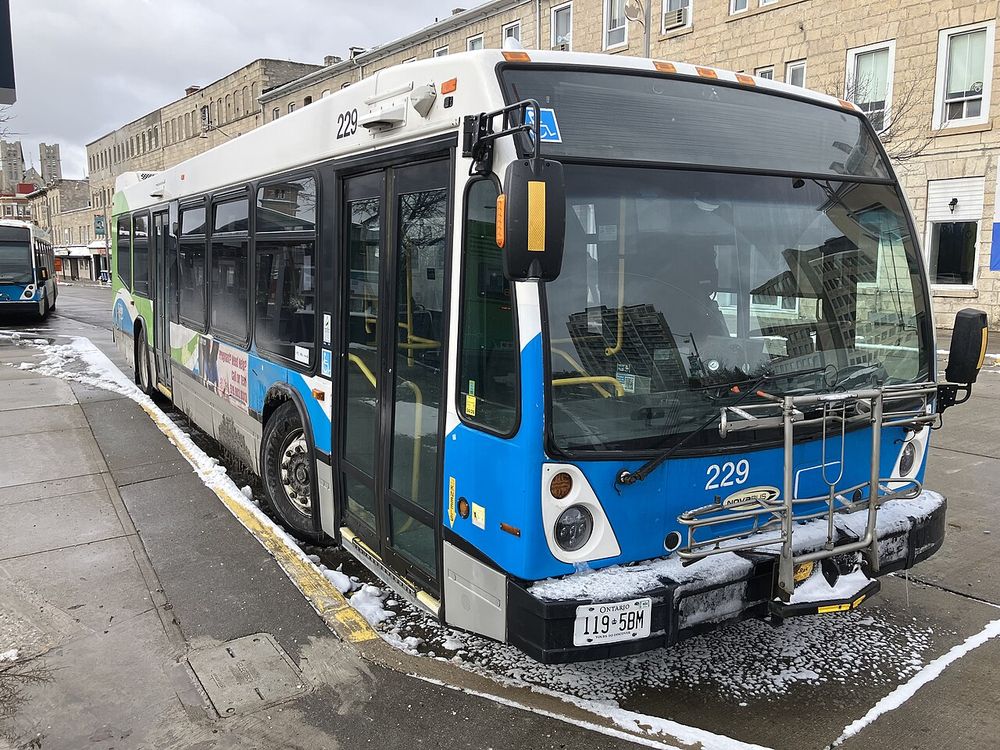
A Nova Bus LFS low-floor transit bus in blue and white at a stop in Guelph, Ontario
Nova Bus LFS: the body style behind most of Calgary’s CNG fleet. This unit is in Guelph, Ontario — not a Calgary bus, and not necessarily a CNG model. Photo: Gogerr, Wikimedia Commons, CC BY 4.0.[54]

Vehicle maker vs. fuel-system maker

ItemWhat is knownStatus
Bus (body, chassis)Nova Bus LFS Natural Gas, 40 ft, up to 41 seats; stainless-steel structure; ZF or Allison transmission options.[29][31]Maker's specification page; Calgary's exact option set not published.
EngineCummins (Westport) L9N 8.9 L, 280 hp on current units; ISL G on the first units.[29][31]Confirmed for the model; the engine is not the fuel-storage system.
Cylinders (tanks)Nova's specification: nine roof-mounted Type 3 tanks, 18,765 standard cubic feet, with Type 4 offered as an option;[30] the roster says nine Type 3 cylinders certified to 20 years.[29][31] Nova highlights a roof “catwalk” for visual inspection of tanks, piping and valves.[29]Maker not publicly identified. Industry suppliers of transit CNG fuel systems/cylinders include Hexagon Agility (which says its systems are on 80% of North American clean-fuel buses) and Luxfer (which sells Type 3 and Type 4 CNG cylinders); WestNet found no source tying either to Calgary's buses.[33][42] Worthington and Quantum were not researched.
Fuel management moduleNova's CNG buses use a “fuel management module” at the fill point.[29] A 2025 Transport Canada recall covers a failing O-ring in this module on 2022–2025 LFS CNG buses.[36]Recall confirmed; no link to October 15 has been reported.
Service pressureNova's page gives capacity but not pressure. North American CNG bus systems are nominally 3,600 psi (about 250 bar); one major supplier's roof-mount manual lists service pressure 3,626 psi at 15 °C.[20][34]Typical value, not confirmed for Calgary's tanks.
Relief device (TPRD) modelNot public.Unverified. For context only: that supplier's roof-mount manual describes remote PRDs on each cylinder valve, activation 230 °F / 110 °C, built to CSA/ANSI PRD 1.[34] Roof-mount transit PRD vent tubes in that supplier's first-responder guide are located at the rear of the roof and vent rearward or upward.[21]
Cylinder mountingRoof (Nova specification).[29] Rear-roof cylinders with rear vents are typical of this class of bus.[21]Roof: confirmed for the model. Vent location on Calgary's buses: unverified.
Known Equipment Issues — Context, Not Cause

Nova Bus CNG recalls (Transport Canada). 2024-343 (published June 14, 2024): a software fault could make the natural-gas detection system falsely read high gas and shut the engine down; affects 2018–2024 LFS CNG buses.[37] 2025-540 (published Oct. 9, 2025): the fuel-management-module O-ring could fail and leak CNG, triggering the gas-detection alarm and engine shutdown; affects 2022–2025 LFS CNG buses.[36] Neither concerns cylinders or relief devices. They do show that these buses carry gas detection tied to engine shutdown, and that false alarms and small leaks have been recognized problems.

Relief-device recall at another supplier's customers. In 2020 Agility Fuel Solutions reported NHTSA Recall 20E-019: Emer-brand PRDs (parts PRD2322T-001 and PRD2102T) “may fail to operate as designed” in CNG systems built Oct. 6, 2016–Apr. 1, 2020; the replacement instructions name Gillig and ElDorado National buses.[35] There is no public evidence these parts are on any Calgary bus; it is cited because it is a documented industry case of relief-device failure, in the fail-to-operate direction, not release-too-soon.

§ 04

How a CNG Bus Is Protected

Cylinders, relief devices, and why location matters

In brief

  • CNG is stored at a nominal 3,600 psi. If a cylinder ruptures, the stored energy is the hazard.[34]
  • A relief device (TPRD) opens only when it gets hot. A fire far from the device can weaken a cylinder first.[11]
  • Water sprayed on a TPRD can stop it opening, so firefighters are told not to spray CNG cylinders.[13][21]

CNG is mostly methane, stored on the vehicle at a nominal 3,600 psi (about 25 MPa). It is lighter than air and has a higher ignition temperature than gasoline, but at that pressure the stored energy in a ruptured cylinder is the hazard, not just the fuel.[20] On many transit buses the cylinders are roof-mounted, which keeps gas away from passengers in a leak but puts the cylinders and their vent lines above the cabin ceiling.[20]

Cylinder types
Type 1–4
All-metal (1) to carbon-fibre wrapped with plastic liner (4). Composite cylinders lose strength when the liner and resin heat.[15][13]
TPRD trigger
110 ± 10 °C
UN R110 temperature for the fuse to open; U.S. industry guidance cites 212–220 °F.[19][20]
Test fire in standards
1.65 m
Bonfire length used to qualify tanks and PRDs — far larger than many real, localized fires.[11]
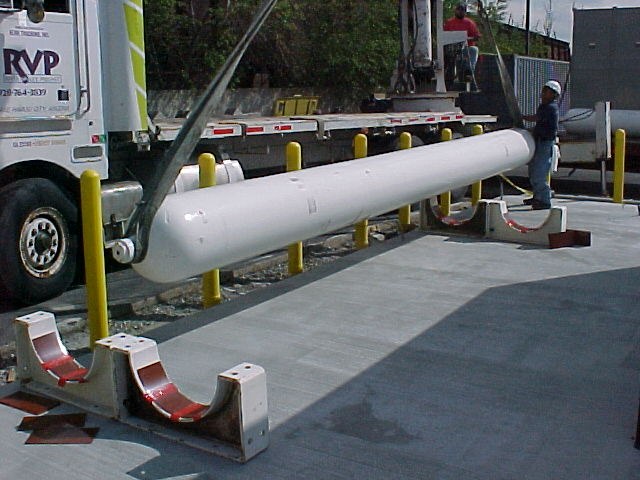
A long white steel CNG storage cylinder being lowered onto supports by a crane while a worker guides it
What a CNG cylinder looks like. This is a large stationary storage cylinder (rated 5,500 psi) being installed, not a bus cylinder. Bus cylinders are smaller and run at about 3,600 psi, but the principle is the same: a steel or composite pressure vessel holds the energy. Photo: Jerry Myers, P.E., via Wikimedia Commons (uploaded by CheMechanical), public domain.[55]

What the pressure relief device does

A TPRD is a one-time device that opens when it is heated, venting the cylinder's contents through a vent line so the cylinder cannot rupture. A thermally activated device does not sense a fire nearby: it must itself get hot.[11] Common designs include eutectic (melting) elements, spring-loaded poppets, and remote PRDs with vent lines.[20] When one opens, the escaping gas often ignites into a jet fire that can extinguish and re-ignite several times.[20]

SCHEMATIC — WHY LOCATION MATTERS · ORIGINAL WESTNET GRAPHIC · NOT TO SCALE CNG cylinder · 3,600 psi TPRD vent line Localized fire here heats this part of the cylinder TPRD is far from the heat — it may stay cool while the cylinder wall weakens Standards test with a 1.65 m fire that engulfs the device. Real fires are often smaller and elsewhere. Mitigations studied for NHTSA: insulation, coatings, and remote heat detection.
Figure 2. The localized-fire problem identified in NHTSA-sponsored research: composite cylinders can rupture before a TPRD that is remote from the flame ever activates.[11]
Why Firefighters Are Told Not to Spray the Tanks

Cooling a TPRD with water can stop it from opening and lead to catastrophic cylinder failure. Swedish tests found it “easy to cool the TPRD” with water application.[13] Industry and fire-service guidance is not to apply water to CNG cylinders in a fire.[20][21] Whether crews applied water to this bus's cylinders is not public and must not be assumed.

§ 05

The Valve Question

Early, late, or misdirected?

In brief

  • Delaying the valve is not a safe fix. Without a working relief device, a composite cylinder can rupture within about 6–20 minutes in a fire.[13]
  • The documented danger is the localized fire: flames far from the device.[11]
  • Better questions: how to sense heat sooner, anywhere on the cylinder, and how to point any release away from people.

The question WestNet has been asked is whether the relief valve could be changed to release a little later — but not so late that the tank explodes. The research says the real design problem is narrower and different, and that a blunt delay is dangerous.

Why “Just Delay the Valve” Is Not a Safe Recommendation

• Without a working TPRD, the fire-resistance time of a composite CNG or hydrogen cylinder — time from fire start to rupture — is only about 6–20 minutes depending on fire intensity.[13] In a vehicle bonfire test reviewed in a U.S. DOT analysis of hydrogen vehicle research (a car, not a bus), the interior became untenable about 4 minutes in, while the cylinder did not rupture until after 12 minutes — a reminder that occupants can be in danger long before a tank fails.[12]

• Between 2000 and 2008 there were over 20 failures of CNG tanks on vehicles, more than half fire-related. Some were attributed to slow-reacting TPRDs, but the majority were caused by localized flames far from the TPRD. Failures included OEM transit buses.[11] That is a case for relief that reacts to heat sooner and more broadly, not later.

• Raising the activation temperature or adding a time delay would move in the wrong direction on the localized-fire failure mode documented in other CNG vehicle incidents.

What WestNet proposes engineers examine instead

The legitimate goal behind the question is to buy passengers time and keep a release from becoming the thing that kills them. That can be done without delaying the relief of a cylinder that is actually failing:

01
Delay the heating, not the relief. Thermal insulation and shielding on cylinders and valves slows heat transfer so a cylinder survives longer while the TPRD still opens at its design temperature. A comparable fix — insulation behind the rear seat — was applied by Honda after a 2007 Seattle Civic GX CNG tank rupture investigated by NHTSA (a car, not a bus).[27]
02
Make the device see the fire. More TPRDs along long cylinders and remote heat detection, as evaluated in the NHTSA localized-fire study, so that a fire anywhere on the tank triggers relief.[11]
03
Point the release away from people. Route vent lines upward and away from the cabin, exits and adjacent traffic; protect them from crash damage; verify through testing where the jet flame goes if the bus is damaged or on its side.
04
Test whether a staggered or restricted release is safer. Releasing all cylinders at once may create a larger, longer jet fire. Whether a sequenced or throttled release reduces cabin thermal load without risking rupture is an engineering test question, not an established fix.
05
Check the early-release failure mode. Inspect for damaged, aged, thermally cycled or defective PRDs on the entire fleet; a 1990s study of recurring PRD failures on U.S. CNG buses tested whether fuelling-cycle cooling was stressing the devices; whether anything similar applies in Calgary is unknown.[14]
06
Stop the leak before the fire. If the cause was crash damage rather than relief, the key control is automatic shutoff of cylinder flow on impact, which is outside the TPRD entirely.
§ 06

Detection & Suppression

What works, and what does not

In brief

  • No single device is enough. Fixed suppression on buses mostly protects the engine compartment.[38][39]
  • The hazard that matters most — a fire reaching the roof cylinders or the passenger cabin — is where today’s fixed suppression helps least.[40]
  • Gas detection warns of leaks. It does not stop a fire.[38]

If the goal is to keep this from happening again, no single device does it. Each option below has a job it does well and a job it cannot do. The honest summary: suppression systems on a bus mostly protect the engine compartment; the hazard that matters most on a CNG bus is a fire reaching roof-mounted cylinders or the passenger cabin, where today's fixed suppression offers little. A 2017 engineering review of CNG bus fires puts it directly: fire safety should not rest solely on cylinder behaviour but also on “additional and upstream fire safety barriers,” and thermal fuses can no longer be seen as the ultimate option to control cylinder burst in a fire.[40]

MeasureWhat it genuinely doesHonest limitsOn Calgary's buses
Engine-compartment automatic fire suppression (AFSS) — thermal detectors plus dry-chemical or water-mist agentDetects and attacks the most common bus fire location. Reference CNG-bus installations: three spot thermal detectors, one extinguisher and a four-nozzle distribution in the engine compartment (BC Transit New Flyer CNG buses).[38] Water-mist systems are UN R107 type-approved and designed to cool and prevent re-ignition.[39]Protects only the engine-compartment volume; the BC Transit system is “1 zone, 1 shot”.[38] It does not stop a jet fire from a relief vent, a crash-started fire elsewhere, or a roof-cylinder fire. A vendor itself notes a suppression system cannot protect against collisions (said of electric buses).[39] Detection depends on wiring and sensors that a severe crash can destroy.Nova service bulletins show Kidde suppression and Amerex heat sensors on some Nova buses; whether Calgary's CNG buses are so equipped is unverified.[41]
Methane (gas) detection in roof-tank area, engine compartment, fill areaWarns of leaks before ignition; two-stage alarms at 20% and 50% of the lower explosive limit, with automatic response such as engine shutdown.[38] Calgary's Nova CNG buses have a gas-detection system tied to engine shutdown (shown by the recalls).[37]Detects leaks, not fires. Fast, large releases after a crash may exceed what an alarm can usefully act on. Engine shutdown can itself cause sudden loss of power, which Transport Canada flagged as a crash risk.[36][37]Present (confirmed by recalls); sensor placement and alarm-to-action logic not public.
Thermal / flame detection in the roof-cylinder enclosure (linear heat, optical)Would give early warning and could trigger relief or shutoff; the localized-fire research names remote heat detection as a mitigation.[11] Industry practice mixes thermal and optical sensors.[40]Not standard practice on all buses; WestNet found no evidence it is fitted on Calgary's. A detector that triggers release must be as crash-proof as the cylinders.Unverified.
Suppression or water on the roof cylindersNone proven. Firefighters are taught not to apply water to CNG cylinders; a fixed system that cools a TPRD could defeat it, as tests showed it is “easy to cool the TPRD.”[13][20]Any agent delivered to the cylinder zone needs full-scale testing against the TPRD-defeat risk before use. WestNet does not recommend it today.Not applicable.
TPRD vent routingDirects the jet away from people. Roof-mount transit systems typically vent rearward or upward.[21]Vehicle damage and position can change vent direction; a rear vent can still point at a following bus, a bus stop, or exits at the rear.[20]Location unverified; should be disclosed.
Fire-blocking between roof/engine and cabin (barriers, fire-resistant liners, windows)Slows flame and heat into the passenger space, buying evacuation time. Smoke can fill a bus in one to two minutes, so even a few minutes matters.[23]Evidence specific to CNG buses is thin; WestNet found no published full-scale test of cabin tenability in a CNG-roof jet-fire scenario. A barrier does not stop smoke through open doors or broken windows.Cabin fire-performance of Calgary's buses not public.
Passive cylinder insulationSlows heating so the TPRD still opens at design temperature but the cylinder survives longer. Studied for NHTSA; used after a Honda tank rupture.[11][27]Adds weight and cost; must not insulate the TPRD itself.Unverified.
Crash-triggered fuel shutoffStops the supply of fuel to a leak from the lines; the isolation solenoid already closes when ignition is switched off.[20]Cannot empty gas already in cylinders; a leak at the cylinder valve or in a vent line is not stopped.Unverified for impact-activation.
#RecommendationOwnerWhenBasis
S-1Publish a fire-protection inventory for every CNG bus model: engine-compartment detection and suppression, gas detectors and their locations, thermal detection near the cylinders, vent outlet position.Calgary TransitImmediate[38][41]
S-2Retrofit engine-compartment AFSS on any CNG bus that lacks it, and verify detectors, nozzles and wiring routing on those that have it.Calgary TransitShort[38][39]
S-3Evaluate thermal detection in the roof-cylinder enclosure linked to fuel shutoff and driver alarm.Bus OEM, fuel-system makerShort[11][40]
S-4Full-scale test of a roof-cylinder jet fire and a crash-started fire for cabin tenability and evacuation time on the actual bus; use the result to specify fire-blocking.Transport Canada with OEM; independent labMedium[12][23]
S-5Review alarm-to-action logic. Gas alarm should warn the driver and shut off fuel in a controlled way without an uncontrolled loss of power in traffic.Bus OEM, Calgary TransitShort[36][37]
S-6No fixed water or agent on the cylinders unless testing proves it cannot defeat the TPRD.OEMs, standards bodiesOngoing[13][20]
§ 07

Standards & Regulation

Which rule covers which part of the bus

In brief

  • Different rules cover different parts: cylinders, relief devices, installation and fuelling.
  • The NGV 4.x standards named in the brief cover fuelling stations, not the bus’s relief device.[17]
  • Every cylinder standard reviewed qualifies the relief system with an engulfing bonfire test. Whether Calgary’s buses met a localized-fire test is unknown.[11]

Figure C · Which rule covers which part

Standards map: which rule covers which part of a CNG busFour layers: cylinders, relief devices, installation on the bus, and fuelling stations, each with the standards that apply, and the engulfing bonfire test used to qualify the relief system.CylindersNGV 2 · FMVSS 304 · CSA B51Relief devicesPRD 1 · UN R110Installed on the busCSA B109.1 · NFPA 52 · FMVSS 303Fuelling stationNGV 4.1–4.4 · not on-boardEvery test: engulfing 1.65 m bonfireReal fires are often smaller and local
The gap to examine. Each cylinder standard reviewed qualifies the relief system with an engulfing bonfire. Whether Calgary’s buses were qualified against a localized-fire test is unknown.[11][15][16][19]

Which rule governs which part of a CNG bus matters, because it determines who can be asked what. A common point of confusion: the NGV 4.x standards named in the brief cover fuelling stations, not on-board relief devices.

StandardCoversRelevance to this incident
CSA/ANSI NGV 2-2023Design, manufacture and testing of permanently attached refillable CNG containers up to 1,000 L; Types 1–4.[15]The cylinders themselves. Includes fire tests (bonfire).
CSA/ANSI PRD 1-2020 (R2025)Minimum requirements for PRDs on containers meeting NGV 2, FMVSS 304, CSA B51 Part 2 or ISO 11439.[16]The standard for the valve at the center of the question. Excludes devices incorporated at original manufacture of vehicles compliant with FMVSS/CMVSS for natural gas vehicles — so which regime applied to this bus must be confirmed.
CSA B51, Part 2Canadian requirements for natural gas fuel containers (named in PRD 1 scope).[16]Provincial-law basis for containers in Canada; text not reviewed by WestNet.
CSA B109.1:21Compressed natural gas vehicle installation code — in force in Alberta since September 1, 2022 under the Safety Codes Act.[26]How cylinders, valves, vent lines and PRDs are installed on the vehicle.
CSA/ANSI NGV 4.1, 4.2, 4.3, 4.4Dispensing systems, hoses, temperature compensation, breakaway devices — fuelling equipment.[17]Not the bus's relief device. Relevant only to fuelling practice at the Stoney Transit Facility.
FMVSS 303 / 304 (U.S.)303: fuel-system integrity after crash — applies to vehicles of 10,000 lb GVWR or less and CNG school buses. 304: CNG container integrity for any motor vehicle, including pressure cycling, burst and bonfire/PRD tests.[18]Gap to examine: crash-integrity testing in 303 does not by its terms cover heavy transit buses. Whether an equivalent Canadian requirement applies to a 40-ft transit bus is unverified.
UN Regulation 110CNG/LNG components; PRD fuse opens at 110 ± 10 °C; activation bench test at 600 °C.[19]The temperature basis for relief; widely used outside North America.
NFPA 52 (2023)Vehicular natural gas fuel systems code: installation and fuelling facilities. Scope excludes aspects covered by federal motor-vehicle safety standards.[22]Source of fire-service perimeter guidance cited in training; full text is paywalled and was not reviewed.
The Regulatory Gap WestNet Asks Regulators to Examine

Every CNG cylinder standard WestNet reviewed qualifies the relief system with an engulfing bonfire test. NHTSA-sponsored research warns that real fires are often localized and that current standards and regulations may not ensure safety for the larger cylinders used on vehicles.[11][12] Whether the buses in Calgary's fleet were qualified against a localized-fire test is unknown.

§ 08

Who Is Accountable

Who holds the evidence and the duty — not a finding of fault

In brief

  • Listing a party means it holds evidence or a safety duty. It is not a finding of fault.
  • Ten parties are listed, from the operator and the makers to police, fire, regulators and the union.
  • Each is asked specific questions, publicly and in writing.

Figure B · Who holds the answers

Who holds the answers: owner and operator, makers, investigators and regulatorsFour groups connected to the October 15 bus fire: owner and operator, makers, investigators, regulators.Oct 15bus fireOwner & operatorCalgary Transit · ATU 5831MakersBus · cylinders · valves2InvestigatorsPolice · Fire · Coroner3RegulatorsProvincial · Federal4Listing a party is not a finding of fault
  1. Owner & operator. City of Calgary / Calgary Transit own and run the buses; ATU Local 583 represents the operators.
  2. Makers. The bus manufacturer and the cylinder, valve and TPRD makers — none publicly identified for this bus.
  3. Investigators. Calgary Police (collision), Calgary Fire (cause and origin) and Alberta’s Chief Medical Examiner (role unverified).
  4. Regulators. Alberta Municipal Affairs (Safety Codes) and Transport Canada. The TSB is not expected to lead.[25][26]
How to read this. A party appears here because it holds evidence or a safety duty. The table below gives the questions WestNet asks each one.
Read This Before the Table

Listing a party here means it holds evidence or a safety duty. It is not a finding of fault. Responsibility, if any, will be established by the police, fire, coroner and regulatory investigations. Until then, WestNet asks each party the questions below publicly and in writing.

PartyRoleWhat the public should ask
City of Calgary / Calgary TransitOwns and operates the buses; employs drivers and maintenance staff; buys the vehicles; stores and fuels CNG buses at its Stoney Transit Facility.[8]Which bus, model and age burned? Inspection, PRD and cylinder-service history? Emergency procedures and training for CNG fire and evacuation? Pre-incident plans shared with Calgary Fire? Will planned CNG purchases (up to 153 more buses through 2026) continue before findings are public?
Bus manufacturerDesigns the vehicle, locates cylinders and vent lines, selects suppliers. Not publicly identified for this bus; nearly all of Calgary's CNG buses are Nova Bus LFS Natural Gas (§ 03).[31]Where are vent outlets and how was jet direction tested? Crash and localized-fire testing? Any service bulletins or known incidents?
Cylinder, valve and TPRD manufacturersQualify the components to NGV 2 / PRD 1 / FMVSS 304 / UN R110. Not publicly identified for Calgary's buses (§ 03).Qualification results; field failure data; service-life and replacement instructions; any prior early-release reports.
Calgary Police ServiceLeads the collision investigation; gathering neighbourhood video.[2]Cause of the initial collision; timeline from first impact to ignition.
Calgary Fire DepartmentFire response, hazardous-materials unit, and fire cause-and-origin work.[1][2]Fire origin; when and how the cylinders were made safe; whether any PRD vented; lessons for CNG tactics.
Alberta Municipal Affairs — Safety Codes (gas discipline)Administers the Safety Codes Act, including natural-gas vehicle fuel-system codes (CSA B109.1/B109.2) and the Gas incident and Product malfunction reporting forms.[26]Has an incident or product-malfunction report been filed? Who inspects and certifies municipal CNG bus fuel systems?
Transport CanadaRegulates the safety of new vehicles under the Motor Vehicle Safety Act; its Collision Investigations and Research Division can investigate significant road collisions, lists transit buses as a priority, and shares findings with coroners and manufacturers. Its reports are internal.[25]Will it investigate? Will it examine the CNG fuel system against regulatory standards and consider recalls or rule changes?
Transportation Safety Board of CanadaInvestigates air, marine, rail and pipeline occurrences. Does not investigate road collisions unless they implicate another mode.[25]Not expected to lead this investigation; it should not be the assumed venue for answers.
Alberta Office of the Chief Medical Examiner unverified roleDetermines cause and manner of death in sudden or violent deaths in Alberta (general knowledge; not confirmed from a source for this incident).Causes of death; whether smoke inhalation, impact or burn injuries were involved — findings that shape the evacuation recommendations in § 12.
Amalgamated Transit Union Local 583Represents operators; says it never had concerns about natural-gas buses “but we may now.”[2]Training records; operator input to vehicle procurement and emergency procedures.
Chain

Chain of Custody & Command

Who owns, runs, responds to, investigates and answers for the bus — and how information and authority flow

In brief

  • This maps roles and duties, not blame. Each line is tied to a source or marked unverified.
  • The City owns and runs the bus through Calgary Transit; fire, police and paramedics respond; police and fire hold the evidence; Council is accountable.
  • The same City structure handled the 2024 Bearspaw water main break. Shared lessons are at the end of this section.

Figure D · Who acts, who decides, who answers

Chain of custody and command for a Calgary transit bus collision and fireSchematic in four layers. Riders and bystanders call 9-1-1. On scene, Calgary Fire, police and paramedics respond; Calgary Transit, part of the City of Calgary, owns and operates the bus. Large emergencies are coordinated from the City’s Emergency Operations Centre run by the Calgary Emergency Management Agency; whether it was activated for this fire has not been reported. Police, fire and other bodies investigate and regulate; City Council is accountable.PUBLICRiders & bystanderscall 9-1-1 · get updatesON SCENEFire · Police · EMSrescue · scene · careOWNER & OPERATORCalgary TransitCity of Calgary · ATU 583CITY COORDINATIONCEMA · Emergency Operations Centreactivation for this fire not reportedUNVERIFIEDINVESTIGATORSPolice · Fire · TCSafety Codes · coronerACCOUNTABLECity Councilinvestigations · reviewAuthority / commandInformationEmergency call (9-1-1)Schematic · not an org chart
How to read this. Gold arrows carry authority, blue dashed arrows carry information, red is the emergency call. Based on the City’s Municipal Emergency Plan; individual decisions in this incident are not public.[59][60]

Roles, parties and status

Chain of custody and command: roles, parties, evidence and status
RoleWhoWhat the record showsStatus
Owns the assetCity of Calgary / Calgary TransitOwns and operates the buses; buys, stores and fuels the CNG fleet at its Stoney Transit Facility.[8]Verified
OperatesCalgary Transit operators; ATU Local 583Operators drive the buses; the union represents them.[2]Verified
Takes the call9-1-1Calgary police were called at 1:11 p.m. to a vehicle fire on Saddletowne Circle N.E.[3][63]Verified
Responds on sceneCalgary Fire; Calgary Police; paramedicsTwelve fire units, including a hazardous-materials unit; paramedics attended 19 people.[1][2][4][5] Who held incident command is not public.Response: verified Command: unverified
CoordinatesCEMA, from the Emergency Operations CentreCEMA coordinates more than 50 agencies from the EOC in large emergencies.[59][60] Whether the EOC was opened for this fire has not been reported.Role: verified Activation: unverified
Holds the evidence & investigatesCalgary Police; Calgary Fire; Chief Medical Examiner; Transport CanadaPolice lead the collision investigation; fire does cause and origin (§ 08).[1][2] The Chief Medical Examiner’s role and any Transport Canada investigation are not confirmed.[25]Police & fire: verified Others: unverified
RegulatesAlberta Safety Codes (gas); Transport CanadaSafety Codes cover natural-gas vehicle fuel systems (CSA B109); Transport Canada regulates new vehicles.[26][25]Roles: verified Involvement here: unverified
Informs the publicCalgary Police, via the City newsroomThe first official statement came from police on the City newsroom.[3] A single public information and family liaison channel has not been announced; this report proposes one (P-6).Verified
Is accountableCity CouncilCouncil keeps its authorities and oversight role in emergency management under the 2026 plan updates.[61] Findings of the open investigations will show who must act; this report proposes an independent review with published deadlines (AT-14a).Role: verified Outcome: pending

How information and authority flow after a bus fire

  1. The call. 9-1-1 is for life-threatening emergencies. Police were called at 1:11 p.m.[63][3]
  2. On scene. Fire crews knock down the fire and a hazardous-materials unit deals with the gas cylinders; paramedics treat and transport the injured.[1][2][5]
  3. Custody of the evidence. Police lead the collision investigation and gather video; fire investigates cause and origin. The bus and its fuel system are evidence.[1][2]
  4. Command. When the Municipal Emergency Plan is active, each agency’s representative links its own operations centre with the City’s EOC, inside the Incident Command System that Alberta prescribes (AIMS). Whether that happened here is not reported.[60]
  5. Public information. The first official word came from police on the City newsroom.[3]
  6. Afterwards. Investigation findings go to the City, Calgary Transit and regulators; Council answers for City services. This report asks for the findings and deadlines to be published (AT-14a).[61]

Shared lessons with the water main report

Two different incidents, the same City structure. Read side by side, they point to the same four questions.

Asset care

Bus fire: which bus burned, and its fuel-system inspection and service history, are not public (§ 02, § 08).

Water main: the risk was known from 2004; inspections were delayed and findings not escalated, the independent review found.[58]

Response

Bus fire: 12 Calgary Fire units, including hazardous materials.[1][2] EOC activation: not reported (unverified).

Water main: the City enacted its Municipal Emergency Plan in June 2024.[62]

Public communication

Bus fire: one police statement so far; this report proposes a single information and family liaison channel (P-6).

Water main: one set of channels: media, social media, 3-1-1 and calgary.ca/wateroutages.[62]

Accountability

Bus fire: investigations are open; this report proposes an independent review with published deadlines (AT-14a).

Water main: an independent panel reported in public to Council in January 2026.[58]

Sources for this section: [1]–[8], [25], [26] and the City of Calgary pages [59]–[63] in § 16. Checked October 29, 2026.

§ 09

The Fix: 10 Levels of Defence

§ 09 · The recommendations

The Fix: 10 Levels of Defence

One crash. One fire. Three people lost. This section follows the chain of events and asks, at every link: what safety net should have been there — and how do we make it stronger?

Abdou’s proposal new idea, to be testedEstablished practice already used elsewhereMostly rejected with reasonsUnverified not confirmed
In plain language

A bus crashed, a bus burned, and three people died. What investigators have not yet told us is which protections on a compressed-natural-gas (CNG) bus held, which failed, and which were never fitted.

One thing is already clear: no single device should be all that stands between a crash and a fatal fire. Safety works in layers. This section sets out ten layers, plus one for learning from what happened, and fourteen specific ideas. Each idea says what it is for, how it would work, what it cannot do, what testing it needs, and who should act. Some will not survive testing. That is the point of testing.

City decision-makersStart with the 0–30 day column of the priority table. Most items are low-cost.
EngineersRead the “Limits” and “Testing and standards” lines. They say where each idea could fail.
MediaSee the chain of events, the “Idea Court” and the “Never Again” list.
Everyone who rides a busGo to Level 10 and Figure 6: how to get out.

Cost and difficulty ratings are Abdou Traya’s relative estimates ($ low, $$ moderate, $$$ high; no quotes were obtained). Time frames: 0–30 days, 6 months, 1–3 years. All content is current to October 16, 2026 and will be corrected as official sources publish.

The chain of events — and the safety nets that matter at each link

Every serious accident is a chain. Break any link and the outcome changes. Here is what officials and outlets have reported, in order, and the safety layer that matters at each link. WestNet does not claim that any layer failed. Which held, which failed and which were never fitted is for investigators to establish.

  1. About 1:11 p.m., October 15: Calgary police are called to a vehicle fire involving a City of Calgary bus in the 800 block of Saddletowne Circle N.E.[3][1]

    Net: detection and notification (Level 2). Whether any on-board system alerted the driver, dispatch or 911 before the calls is not public.

  2. Police describe a Calgary Transit bus travelling northbound striking a white vehicle, which then hit another vehicle and a cube van.[2][5]

    Net: design and cylinder protection (Levels 1 and 4). How the crash forces reached the fuel system is not public.

  3. The bus continued through an intersection and struck a second bus stopped at a bus stop, pushing it across the road into three more vehicles: eight vehicles in all.[2][5]

    Net: operators and vehicle operations (Levels 5 and 6). Operator training and emergency procedures are not public.

  4. The bus that burned was powered by compressed natural gas; police say 13 people were on the burning bus.[1][2]

    Net: suppression, evacuation, passenger knowledge (Levels 3 and 10). How people got out is not public.

  5. Twelve Calgary Fire units responded, including a hazardous-materials unit “to secure those gas tanks.” The fire chief called it “a relatively quick knockdown” and “a serious fire inside.” The second bus’s driver was trapped and had to be extricated.[1][2][5]

    Net: first responders (Level 9). The crews’ actions are for the official review; this report honours them.

  6. Three people were declared dead at the scene. Paramedics attended 19 people; a police officer had minor injuries after running toward the burning bus.[1][2][3]

    Net: every layer, and the last one: learning (the capstone).

What is still unknown (see § 02 and the unverified box in the references): where the fire started; whether any relief valve opened; whether the bus had engine-bay suppression or roof-zone detection; why the fire grew so fast. Nothing below depends on guessing those answers: each recommendation stands on engineering that is already known.

Eleven layers of defence between a collision and a fatal fire A vertical stack of eleven protection layers. From top to bottom: 1 design and shielding, 2 detection and alarms, 3 suppression, 4 cylinders and relief valves, 5 labels and vehicle operations, 6 operators, 7 maintenance, 8 procurement and regulation, 9 first responders, 10 public and passenger education, and a capstone layer for data and accountability. A hazard marker travels down the stack; each layer lights up in turn. The goal is that no single layer is the only thing between a crash and a fatal fire. THE HAZARD: collision damage + a fuel-fed fire 1Design & shieldingslow the fire; protect the cylinders 2Detection & alarmsknow in seconds, tell everyone 3Suppressionfight the fire early, safely 4Cylinders & relief valvesvent safely, away from people 5Labels & vehicle operationsshow where the danger is 6Operatorsevacuate first, then help 7Maintenancekeep every safety device ready 8Procurement & regulationbuy and certify for real fires 9First respondersarrive trained and informed 10Public & passengerseveryone knows how to get out +Data & accountabilitylearn from every incident THE GOAL: people get out alive, whatever fails
Figure 3. Eleven layers of defence (original WestNet diagram; animated unless you prefer reduced motion). A hazard moves down the stack; every layer is a chance to stop it. The goal is that no single layer is the only thing between a crash and a fatal fire. Text alternative: the layers, in order, are design and shielding; detection and alarms; suppression; cylinders and relief valves; labels and vehicle operations; operators; maintenance; procurement and regulation; first responders; public and passenger education; and data and accountability.

Next → Eleven layers stand between a crash and a fatal fire. Start with the first one: the metal itself.

Design and Shielding

Make the fire slower, and the cylinders tougher
The safety net: what it is for

The first net is built in the factory: how a fire starts, how it spreads, and how quickly it heats the cylinders. Cylinders are approved with a bonfire test; research shows a localized fire can be harder to survive than an engulfing one.[11][13]

On October 15: what is public

The incident bus has not been identified. For the Nova LFS CNG model, the maker lists nine roof-mounted Type 3 cylinders.[30] What thermal protection sits around them on Calgary’s buses is not public.

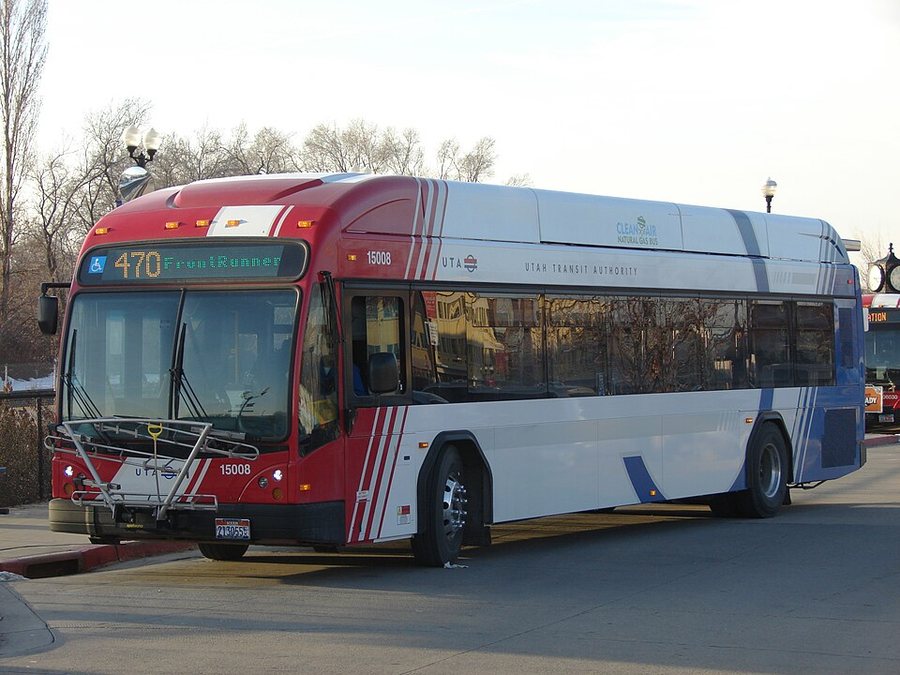
A low-floor Utah Transit Authority CNG bus at a station; a raised fairing runs along the roof
A low-floor CNG transit bus. The raised roof fairing is where roof-mounted designs carry their cylinders. Photo: An Errant Knight, Wikimedia Commons, CC BY-SA 4.0. Not a Calgary bus.[53]
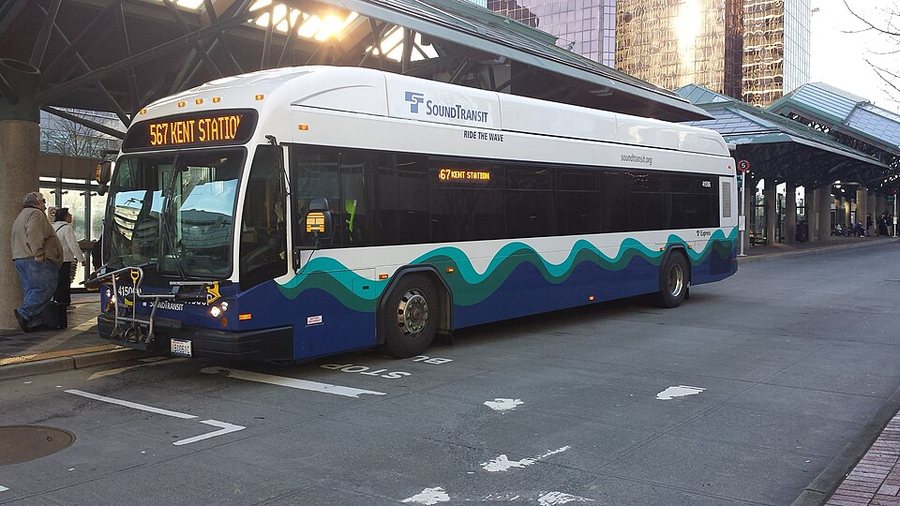
A Sound Transit Gillig 40-foot low-floor CNG bus in Seattle, with a roof fairing along the top
Another make, same layout idea. Photo: Atomic Taco, Wikimedia Commons, CC BY-SA 2.0. Not a Calgary bus.[53]
Why a localized fire can beat a heat-triggered relief valve: three illustrative cases Top: a long gas cylinder with a small flame under its left end and the thermal relief valve at the far right end. Heat spreads from left to right. Below, three lanes compare time to valve opening against time to wall weakening. Lane A, flames all around the cylinder: the valve opens first. Lane B, a localized fire far from the valve: the cylinder wall can weaken before the valve gets hot enough. Lane C, with shielding and a remote heat sensor: the valve opens early and the wall weakens late. All timings are illustrative and are not test data. One long cylinder, one small fire TPRD (relief valve end) Local fire under one end heat soaks in from the left → ILLUSTRATIVE ONLY: bar lengths show the idea, not test data time since fire starts → A · Flames all around(like the bonfire test) VENTS FIRST valve opens wall weakens ◀◀ B · Fire far from valve(localized fire) WALL WEAKENS FIRST valve opens wall weakens ◀◀ C · Shield + sensor(Abdou's proposal) VENTS FIRST, MORE TIME valve opens wall weakens ◀◀
Figure 4. Why a localized fire can beat a heat-triggered valve (original WestNet schematic; illustrative, not test data; compare Figure 2 in § 05). Text alternative: lane A, flames all around the cylinder, shows the valve opening before the wall weakens. Lane B, a fire far from the valve, shows the wall weakening first. Lane C, with shielding and a remote heat sensor, shows the valve opening early and the wall weakening late.[11][13]
AT-1

Insulate and shield the cylinders (thermal barriers)

Abdou’s proposal
Purpose
Buy time. Slow the rate at which a fire heats the cylinders and valves, so the relief valve and the people on board have longer before a fire-weakened cylinder can fail.
How it would work
Fire-resistant coatings (intumescent paint), ceramic-fibre wraps or metal heat shields on cylinders and valves; a fire-rated barrier between the roof fairing and the passenger cabin; in future designs, insulated or thicker-walled cylinders. The shield must be paired with a relief trigger that can still “feel” the fire (remote-sensing trigger or heat detector), see AT-7.
Limits — what it cannot do
Insulation also slows heat reaching a relief valve that sits inside the shielded zone, so it can delay venting unless the trigger is designed for it.[11] It adds roof weight (a higher centre of gravity), can hide corrosion or impact damage from inspectors, and coatings age. No published full-scale test of this idea on this bus roof was found unverified.
Testing and standards it needs
Full-scale localized-fire and engulfing-fire tests on the real roof arrangement, beyond the bonfire test used for cylinder approval (CSA/ANSI NGV 2, UN R110).[15][19] Any change to a relief trigger must still meet CSA/ANSI PRD 1.[16] Installation rules: NFPA 52.[22] Transport Canada approval route for a design change: unverified.
Priority and who acts
Medium priority  1–3 years (design change).  Cost (estimate) $$–$$$ · Difficulty (estimate) High.
Bus maker, cylinder maker, Transport Canada; Calgary Transit as buyer. Immediate step: ask the makers in writing what thermal protection exists on the roof cylinders today.
Lesson learned

A test that matches the real fire is worth more than a certificate that matches an easy one. Cylinder approval and real roof fires are not the same test.[11][15]

Next → Shielding buys minutes. But minutes of what, if nobody knows the fire has started?

Detection and Alarms

Know in seconds. Tell everyone at once
The safety net: what it is for

A fire that is noticed in 20 seconds is a different fire from one noticed in 3 minutes. This net covers sensors, the driver’s alert, the passenger alarm, and the automatic call to dispatch and 911.

On October 15: what is public

Calgary’s fleet-level answer is not public. Nova’s CNG buses have gas detection,[37] and this class of bus is often fitted with engine-bay detection and suppression.[38][41] Roof-zone heat detection unverified.

Cutaway of a generic roof-tank CNG bus: cylinders, sensors and suppression zones Side view of a low-floor transit bus facing left. Nine gas cylinders sit in a roof fairing, with a vent at the rear. Heat sensors marked H and gas sensors marked G are placed in three zones. The roof cylinder zone is outlined in blue, the rear engine bay in orange and the underfloor in purple. The passenger cabin is shown in green: it is the zone where people are, so fire-fighting agents there must be safe to breathe. A driver dash alert connects to the sensors. This is a generic schematic, not the layout of any Calgary bus. DRIVER ALERT 9 ROOF CYLINDERS (as on the Nova LFS CNG spec) VENT ↑ OCCUPIED CABIN ENGINEBAY HHHGHGH DASH Roof cylinder zone — heat detection; suppression only after testing Engine bay — automatic suppression is established practice Underfloor / wheel wells — detection first; suppression to be evaluated H heat sensor    G gas sensor    GENERIC SCHEMATIC — not any Calgary bus
Figure 5. Cutaway of a generic roof-tank CNG bus: sensors and suppression zones (original WestNet schematic, not any Calgary bus). Nine roof cylinders sit in a fairing, as on the Nova LFS CNG specification.[30] Text alternative: heat sensors (H) sit in the roof zone, engine bay and underfloor; gas sensors (G) in the engine bay and underfloor; a dash alert tells the driver; the green cabin is the zone where any agent must be safe to breathe.
AT-2

Detect early, and tell everyone at once (detection + notification)

Abdou’s proposal
Purpose
Shrink the minutes between ignition and action. The driver, the passengers, dispatch and 911 should all learn about a fire in seconds, from the same information.
How it would work
1. Detect: heat/flame detection in the roof-cylinder zone, engine bay and underfloor, plus gas sensors where a leak would collect (gas detection and engine-bay detection already exist on this class of bus).[37][38]
2. Driver: a dash alarm that names the zone in plain words (“ROOF FIRE — STOP — EVACUATE”).
3. Passengers: loud tone plus a recorded voice message in English and French, with flashing lights for riders who cannot hear.
4. Remote: telematics sends bus number, GPS position, alarm zone and a “CNG” flag to dispatch, and by prior agreement to the 911 call-taker. Precedent for an automatic emergency call with location: the EU eCall system for cars.[50]
Limits — what it cannot do
False alarms breed alarm fatigue: a software fault on this class of bus has already produced false high-gas readings and engine shutdowns.[37] A detector destroyed in the crash cannot alarm, so the loop must fail safe (a cut wire should raise the alarm). A loud passenger alarm can cause crowding or panic if badly designed. An automatic 911 link needs an agreement with Calgary’s 911 centre, and risks false-call load and privacy questions; how Calgary 911 would receive such data is unverified. eCall covers cars, not buses.
Testing and standards it needs
Vehicle-grade performance testing (vibration, crash, heat, electromagnetic interference); human-factors testing of the passenger message; integration testing with Calgary Transit dispatch and 911 systems. Detector performance principles in NFPA 72 may help as a benchmark (WestNet view; applicability to vehicles to be confirmed).
Priority and who acts
HIGH priority  6 months (dash alert + dispatch link); 1–3 years (roof-zone detection).  Cost (estimate) $$ · Difficulty (estimate) Medium.
Calgary Transit (telematics, dispatch); bus maker (detection); Calgary Fire and 911 (the interface).
Lesson learned

An alarm only the driver hears protects the driver. An alarm everyone hears, in two languages, with the dispatcher and 911 told automatically, protects the bus.[50]

Next → Everyone now knows. The harder question: what actually fights the fire, and what must never be used on people?

Suppression

Fight the fire early, and safely
The safety net: what it is for

Suppression is the net that actually puts fire out: engine-bay systems, possible underfloor and roof-zone coverage, and what is safe inside a cabin full of people. This is also where the most tempting ideas live, and where honesty matters most.

On October 15: what is public

Whether Calgary’s buses carry engine-bay suppression, roof-zone detection or crash-triggered shutoff is not public. The cabin fire was described as “a serious fire inside.”[2]

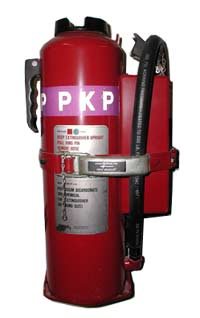
A red 18-pound U.S. Navy Purple-K dry-chemical extinguisher on a wall bracket
Purple-K (potassium bicarbonate) extinguisher. Photo: U.S. Navy, public domain, Wikimedia Commons.[53]

Three rules guide this level: (1) match the agent to the fire; (2) never put an agent that harms people in a space where people are; (3) never claim a suppression idea works until a full-scale test says so. Zones are shown in Figure 5.

The Idea Court: three ideas on trial

Verdict: rejected

Roll-over roof tarp

Could block the relief vent, must survive a gas jet, covers only the roof, and is another thing to break in a crash. See AT-6.

What survives: blankets for small, isolated fires at depots.[47]

Verdict: rejected for cabins

Oxygen-reducing or CO2 cabin gas

CO2 at fire-fighting strength is lethal in about a minute; inert gases lower oxygen to dangerous levels.[43][44][45] See AT-4.

What survives: water mist and in-cavity protection, after testing.

Verdict: reworked

Operator with on-board hose

Untrained hose work at a CNG fire is dangerous and contested; qualification standards exist for good reason.[49] See AT-9.

What survives: evacuate first, hydrant knowledge, route hydrant maps, scene support.

AT-3

Fight the fire where it starts: suppression zones

Abdou’s proposal
Purpose
Knock down or contain a fire in the first minutes in the places buses actually catch fire, before it reaches fuel lines, cylinders or the cabin.
How it would work
Engine bay: automatic suppression is established practice on CNG buses (Kidde systems with detection on BC Transit and Miami-Dade CNG buses; Fogmaker water mist; Nova service bulletins list Kidde and Amerex kits).[38][39][41] Abdou’s proposal: (1) audit that every Calgary CNG bus has a working, in-date system; (2) add manual discharge from the driver’s seat; (3) tie discharge to engine shutdown and fuel isolation; (4) evaluate nozzle coverage for the underfloor and wheel wells; (5) evaluate a roof-zone system that cools and blankets the valves and vent lines inside the cylinder fairing — never as a way to cool a cylinder under direct flame.
Limits — what it cannot do
Suppression stops a leaking-gas flame only if the gas is cut off; otherwise it re-ignites. The roof zone is open and windy, so agent escapes. No standard or full-scale test for roof-zone suppression on CNG buses was found unverified. Lines and nozzles can be severed in a crash; bottles need regular weighing and discharge-test checks; every system adds weight and cost.
Testing and standards it needs
Listing/approval of the agent system for vehicle use (applicable standards to be confirmed: NFPA 17 dry chemical, NFPA 750 water mist, NFPA 2001 clean agent[43]); full-scale roof-zone fire tests; maintenance records.
Priority and who acts
HIGH priority  0–30 days (audit); 6 months (evaluate underfloor/roof); 1–3 years (fit).  Cost (estimate) $$ (fleet-wide $$$) · Difficulty (estimate) Medium.
Calgary Transit (audit and retrofit), bus maker and suppression vendors.
AT-4

Cabin protection: only what is safe to breathe

Abdou’s proposal
Purpose
Slow smoke and fire spread in the occupied cabin to give more escape time, without adding a second hazard to the people inside.
How it would work
Ranked options.
1. Fine water mist (or in-cavity mist in the void between roof and cabin liner): water cools, is non-toxic, and is breathable.
2. Clean agents designed to stay at or below the NOAEL (no-observed-adverse-effect level): NFPA 2001 lists HFC-227ea at 9.0% NOAEL / 10.5% LOAEL and FK-5-1-12 at 10.0% NOAEL, and limits exposure time above the NOAEL.[43]
3. Targeted application to hidden voids rather than flooding the passenger space.
Not suitable where people are: CO2 (its minimum fire-fighting design concentration is about 34%; 17–30% causes unconsciousness and death within about a minute; NFPA 12 bars new total-flooding CO2 systems in normally occupied spaces)[44][45] and nitrogen/argon “inert gas” or oxygen-reduction systems (they work by lowering oxygen, and NFPA 2001 limits exposure to minutes at the lowest oxygen levels).[43]
Limits — what it cannot do
A bus cabin is not a sealed room: doors open to evacuate, so a design concentration cannot be held. Clean agents break down into hazardous by-products in a fire and do not cool well. Mist can make floors slippery. No standard for occupant-safe cabin suppression on transit buses was found unverified.
Testing and standards it needs
NFPA 2001 exposure limits;[43] full-scale cabin fire tests with human-factors review (can people still see, breathe and find exits?); Transport Canada approval of any new equipment unverified path.
Priority and who acts
Low–Medium priority  1–3 years (test programme first; do not field before testing).  Cost (estimate) $$$ · Difficulty (estimate) High.
Bus makers, suppression vendors, research bodies, Transport Canada.
AT-5

Rapid sodium bicarbonate (dry chemical) discharge: supplementary only

Abdou’s proposal
Purpose
Very fast knockdown of a flaming fuel, oil or gas fire at its source (engine bay, fuel line, wheel well), buying seconds for evacuation.
How it would work
Sodium bicarbonate is the base of ordinary BC dry-chemical agents; Purple-K (potassium bicarbonate) is a stronger variant, roughly twice as effective on flammable-liquid fires.[46] The agent interrupts the chain reaction of the flame. A cartridge or stored-pressure system with nozzles in the engine bay and underfloor, fired automatically or by the driver.
Limits — what it cannot do
Honest assessment: useful, but not a cure. It does not cool, so fires can re-flash while gas keeps flowing or surfaces stay hot.[46] It does not cool a pressurized cylinder and cannot stop a gas-fed jet from a relief-valve vent; fire-service guidance for CNG vents is to let them burn off while protecting exposures.[20][21] The cloud blocks vision and irritates the airways, and leaves residue.[46] A fixed discharge inside the cabin would slow evacuation. Verdict: engine bay and underfloor only; hand extinguishers in the cabin; not for roof cylinders.
Testing and standards it needs
Listing for vehicle engine compartments (NFPA 17 and ULC/UL extinguisher ratings; to be confirmed); testing against the suppression systems already fitted. Many existing engine-bay systems may already use dry chemical or foam unverified.
Priority and who acts
Low–Medium priority  6 months (evaluate within the AT-3 audit).  Cost (estimate) $–$$ · Difficulty (estimate) Low–Medium.
Calgary Transit and the bus maker, within the AT-3 audit.
AT-6

Fire blankets and a roll-over roof tarp: assessed, mostly rejected

Assessed — mostly rejected
Purpose
Smother a fire from outside by cutting off its air, like the roll-over tarp on a garbage truck or a fire blanket thrown over a car.
How it would work
(i) An automatic roll-over tarp along the bus roof. (ii) Fire blankets, as sold for electric-vehicle fires, carried on apparatus or at depots.
Limits — what it cannot do
Roof tarp, rejected for six reasons: (1) the relief valve must vent freely; a cover that blocks or traps the discharge could raise rupture risk or trap gas that then ignites. (2) A gas jet burns well above 1,000 °C (engineering estimate); a tarp must survive that for minutes. (3) A 40-ft roof is roughly 12 m × 2.6 m, about 30 m² (WestNet estimate from nominal bus dimensions), plus motor, rails and cabling on a roof already carrying nine cylinders. (4) Most fires start in the engine bay, underfloor or cabin, which a roof tarp does not cover. (5) A motorised tarp can be wrecked in the crash that starts the fire. (6) A cover does not cool.
Blankets generally: they can extinguish flames but gas can accumulate under them (explosion risk), and heat release has risen after removal in tests.[47]
Testing and standards it needs
Nothing further recommended for the roof tarp. For blankets on small, isolated fires: manufacturer ratings and the U.S. Fire Administration’s safety advisory on EV blankets.[47]
Priority and who acts
Reject / Low priority  Not recommended (roof tarp). Blankets at depots: low priority.  Cost (estimate) $ (blankets) · Difficulty (estimate) Low.
Calgary Fire and depot safety officers, for blankets only.
Lesson learned

If a fire-fighting gas is dangerous to breathe, it does not belong where people are. Put the agent where the fire is, and keep people out of the cloud.[43][44]

Next → Suppression can fight a flame. It cannot fight physics inside a pressurized cylinder. That is the next layer.

Cylinders and Relief Valves

Vent in time, and away from people
The safety net: what it is for

The relief valve (TPRD) opens when heated, to vent a fire-weakened cylinder before it ruptures. It is a last resort, and everything above exists so it is rarely needed. The question this report keeps asking is whether it opens early, late or in the wrong direction (§ 05).

On October 15: what is public

Whether any relief device opened on October 15 is not public. This report treats an early, late or misdirected release only as a hypothesis (§ 02).

AT-7

Keep the safety valve honest: vent in time, in the right direction

Abdou’s proposal
Purpose
Make sure the relief valve opens in time on a localized fire as well as an engulfing one, and that the jet points away from people.
How it would work
Do not delay or lengthen TPRD activation on this incident alone (E-4 in § 10). Instead: review where each valve and trigger sits on long roof cylinders; consider additional or remote-sensing triggers; document vent position and jet direction in normal, tilted and rolled positions; route vent lines up and rearward, away from exits and traffic; protect them from crash damage.
Limits — what it cannot do
More triggers mean more places an unintended release could occur. Nine cylinders venting at once make a long flame that endangers crews.[20][21] Not proven on Calgary’s bus unverified: whether any relief valve activated on October 15 is not public.
Testing and standards it needs
CSA/ANSI PRD 1,[16] NGV 2,[15] UN R110;[19] localized-fire research;[11] reliability of thermal triggers (a federal study found casting flaws in eutectic trigger material).[51]
Priority and who acts
HIGH priority  0–30 days (inspection, E-2); 1–3 years (redesign).  Cost (estimate) $$ · Difficulty (estimate) Medium–High.
Bus and cylinder makers, standards bodies; Calgary Transit for the inspection.
Lesson learned

Do not “fix” the valve by delaying it. Fix the system around it: shielding, sensing, direction and inspection.[11]

Next → Even a perfect valve is invisible if no one knows it is there. Can a stranger read the danger on the side of the bus?

Labels and Vehicle Operations

Make the danger readable in two seconds
The safety net: what it is for

A firefighter arriving in the dark, a passer-by, or a rider in smoke needs to see what is on the bus, where the cylinders and vents are, and where the exits are.

On October 15: what is public

What labels Calgary’s buses carry on the roof, rear and doors is not public. Canadian bus exits must carry bilingual identification and instructions.[52]

AT-8

Warning labels and signage that work in two seconds

Abdou’s proposal
Purpose
Anyone — a firefighter, a passer-by, a rider — should see at a glance what is on this bus and where the danger is.
How it would work
Outside: a reflective CNG diamond (U.S. federal rules require a blue-and-white reflective diamond at the right rear)[48]; “CNG CYLINDERS ON ROOF” pictograms; arrows at each vent outlet with a keep-clear symbol; the location of the emergency fuel shut-off; a very large bus number on the roof and sides for 911 and air units.
Inside: larger exit pictograms, photoluminescent strips that still glow in smoke, plain instruction labels at every door release and emergency exit, English and French plus pictograms, with tactile and Braille labels at the exits.
Limits — what it cannot do
Labels do not stop a fire, and clutter gets ignored. Stickers fade and peel; use heat-resistant materials. The U.S. diamond rule is not Canadian law, and the Canadian equivalent is unverified. The wording of vent warnings must be agreed with the fire service.
Testing and standards it needs
Canadian bus-exit standard CMVSS 217 (bilingual exit identification and operating instructions);[52] CNG marking rules in NFPA 52, CSA B109 and UN R110;[22][19] ISO 7010 pictograms as a design benchmark (WestNet suggestion; to be confirmed).
Priority and who acts
HIGH priority  0–30 days (exterior); 6 months (interior).  Cost (estimate) $ · Difficulty (estimate) Low.
Calgary Transit; Calgary Fire to approve the wording.
Lesson learned

If it takes more than two seconds to read, it will not be read in a fire. Use pictograms, large type and two languages.[52]

Next → Labels inform. Someone has to act in the first sixty seconds. Who?

Operators

Evacuate first. Then help.
The safety net: what it is for

The operator is the first and often the only trained person on the bus. The best thing an operator can do in a fire is get people out and get help coming.

On October 15: what is public

Operator training content is not public. A union leader said the union has not had concerns about natural-gas buses “but we may now.”[2][6] The second bus’s driver was trapped.[2]

Four-step evacuation sequence for a CNG bus fire: stop, open, get out, call 911 Four panels. One: stop in a safe place, engine off, hazard lights on. Two: open all doors and emergency exits and say clearly, evacuate now. Three: walk or run well away, staying clear of the roof and rear of the bus; the safe distance is for Calgary Fire to set. Four: call 911, say CNG bus fire, and give the bus number and location. People first, equipment second. 1234STOPOPENGET OUTCALL 911Stop in a safeplace. Engine off,brake set, hazardlights on.Open all doorsand emergencyexits. Say clearly:“EVACUATE NOW.”Help others out.Walk or run wellaway. Keep clearof the roof and rear.Distance: CalgaryFire to set (§ 11).911Call 911. Say:“CNG bus fire.”Give the bus numberand the exactlocation.
Figure 6. Four steps: Stop, Open, Get out, Call 911 (original WestNet diagram; Abdou’s proposal; Calgary Transit’s actual procedure is not public). After a collision the steps may compress or change order: people first, equipment second. Text alternative: 1 stop in a safe place with the engine off; 2 open all doors and emergency exits and tell everyone to evacuate; 3 move well away, clear of the roof and rear, to a distance set by Calgary Fire; 4 call 911, say “CNG bus fire,” and give the bus number and location.
AT-9

Operators: evacuate first, then support the firefighters

Abdou’s proposal
Purpose
The operator is the first, and often the only, trained person on the bus. Make the first sixty seconds count.
How it would work
Annual hands-on drills for the Stop – Open – Get out – Call sequence (Figure 6). Hand extinguishers only for a small fire, with the exit clear, and never near the roof cylinders or a hissing leak. Each operator knows the bus: exits, shut-off, cylinder locations.
Hydrant knowledge: operators learn the hydrants along their routes, report blocked ones, and give 911 the nearest hydrant and address; Calgary Transit gives Calgary Fire route hydrant maps. After evacuation, the operator becomes scene support: headcount, meet the crews, tell them “CNG bus, cylinders on the roof.”
Limits — what it cannot do
Training fades without refreshers, and drills cost schedule time. An operator may be hurt or trapped (the second bus’s driver was trapped on October 15),[2] so the system cannot depend on the operator alone; it must work with automatic systems (AT-2, AT-3) and informed passengers (AT-13).
Testing and standards it needs
A curriculum built with Calgary Fire; occupational health and safety review; consultation with ATU Local 583;[2][6] competence benchmarks such as NFPA 1001/1002 for anything beyond basic extinguisher use.[49]
Priority and who acts
HIGH priority  0–30 days (protocol); 6 months (training).  Cost (estimate) $–$$ · Difficulty (estimate) Low–Medium.
Calgary Transit, ATU Local 583, Calgary Fire.
Lesson learned

Never ask an untrained person to fight a fire that trained firefighters approach with caution. Ask them to save lives first.[49]

Next → A trained operator cannot help if the safety kit is not ready. Who checks the checkers?

Maintenance

Every safety device ready, every day
The safety net: what it is for

A relief valve past its date, a suppression bottle that is empty, or a cylinder with unseen impact damage is a net with a hole in it. Maintenance is the layer that keeps all the others real.

On October 15: what is public

Recalls on this equipment class exist: Nova Bus 2024-343 (gas-detection software) and 2025-540 (fuel-module O-ring).[36][37] They are context, not cause. Calgary’s inspection records are not public.

AT-10

Maintenance: every safety device ready, every day

Abdou’s proposal
Purpose
A suppression system or relief valve that is expired, damaged or mis-fitted is no protection at all.
How it would work
Certified CNG technicians with refreshers; documented cylinder inspection and a fleet database of cylinder expiry dates; scheduled relief-valve inspection and replacement (a PRD replacement recall exists on this equipment class;[35] a federal study found flaws in eutectic trigger material);[51] leak testing after any work and after any collision, even a minor one; garage methane detection and ventilation (NFPA 52);[22] logged tests of suppression bottles and detectors. On expiry: cylinder labels carry an expiry date; a fleet roster lists nine Type 3 cylinders certified to 20 years on the Nova model.[31] Some designs carry 15-year lives, and a 2012–13 bus[9] would reach 15 years in 2027–28. illustrative — check actual labels
Limits — what it cannot do
Inspection only finds what can be seen; impact damage inside composite cylinders needs professional inspection. Paperwork is not safety; records must be audited. Staff turnover erodes skill.
Testing and standards it needs
CSA B51 and B109 as applied in Alberta (WestNet understanding; to be confirmed),[26] FMVSS 304 inspection labelling,[18] NFPA 52,[22] manufacturer manuals.[34]
Priority and who acts
HIGH priority  0–30 days (fleet audit); 6 months (training and database).  Cost (estimate) $–$$ · Difficulty (estimate) Low–Medium.
Calgary Transit maintenance, bus and cylinder makers, Alberta Safety Codes.
Lesson learned

A safety device is only as good as its last inspection. Track expiry dates like a drug store tracks expiry dates.[35][51]

Next → Maintenance can only keep what was built. Who decided what was built?

Procurement and Regulation

Buy it, certify it, hold the vendor to it
The safety net: what it is for

Every bus starts as a specification. The cheapest time to fix a safety gap is before the order, and the City is about to buy many more.

On October 15: what is public

Calgary Transit expects about 399 CNG buses by 2027.[8] The standards that apply today are NGV 2, PRD 1, FMVSS 303/304 and UN R110;[15][16][18][19] none requires a localized-fire test for CNG cylinders in our review.[11]

AT-11

Procurement: write the safety into the contract

Abdou’s proposal
Purpose
Fix it at the purchase order so every future bus is better. Calgary Transit expects about 399 CNG buses by 2027:[8] that is real buying power.
How it would work
Specify: (a) automatic engine-bay suppression and underfloor detection as standard; (b) roof-zone heat detection with a dash alarm; (c) a relief-valve design proved by a localized-fire test, with documented vent routing; (d) cylinder shielding or thermal barriers; (e) independent third-party fire testing of the whole fuel-system arrangement; (f) vendor accountability: warranty, fast recall response, a duty to notify; (g) a lifecycle inspection plan in the contract; (h) incident data sharing, both from the vendor and between transit agencies.
Limits — what it cannot do
Raises price and may delay delivery. The market for CNG transit buses is small, so vendors may push back. It does not fix the 246 buses already running; those need retrofits (AT-2, AT-3). Independent test-lab capacity for full-size roof fire tests is unverified.
Testing and standards it needs
Existing baselines (CMVSS, NGV 2, PRD 1, UN R110);[15][16][19] an accredited independent laboratory; City procurement rules unverified.
Priority and who acts
Medium–HIGH priority  6 months (write the specification language); 1–3 years (next orders).  Cost (estimate) $–$$ (spec); per-bus cost $$ · Difficulty (estimate) Medium.
City of Calgary procurement and Calgary Transit, bus makers, Transport Canada.
Lesson learned

The strongest safety tool a city owns is its purchase order.[8]

Next → A better bus still burns sometimes. Then the people who run toward it matter.

First Responders

Arrive informed, trained, and ready
The safety net: what it is for

Firefighters, paramedics and police arrive in minutes. What they know before they arrive, and what they have practised, decides what they can do.

On October 15: what is public

Twelve Calgary Fire units responded, including hazmat.[1][2] The fire chief described “a relatively quick knockdown.”[2] Detailed training for these crews is covered in § 11, and their wellbeing in § 14.

AT-12

First responders: arrive informed, trained, and ready

Abdou’s proposal
Purpose
Crews should arrive knowing what the bus is, where the cylinders are, and what not to do.
How it would work
A Calgary Fire CNG-bus module: roof cylinder layout, vent direction, “let the vent burn, protect exposures, keep clear” (consistent with published guidance);[20][21] hands-on drills with a defuelled transit bus; rapid-reference cards on every apparatus; 911 flags “CNG bus” and sends hazmat on the first alarm (needs AT-2); route hydrant maps; thermal-imaging cameras to read cylinder temperature from a distance (WestNet proposal; effectiveness unverified); a shared after-action review. See § 11 and § 14.
Limits — what it cannot do
Fire-service doctrine belongs to Calgary Fire, not WestNet. Published sources differ on water and exclusion distances, and an official body must reconcile them. Drills cost overtime; skills fade.
Testing and standards it needs
NFPA 1010 (which now consolidates NFPA 1001 and 1002) as a competency framework;[49] NFPA 52;[22] NVFC/NGVi training materials.[20]
Priority and who acts
HIGH priority  0–30 days (reference card); 6 months (drills).  Cost (estimate) $ · Difficulty (estimate) Low.
Calgary Fire, Calgary Transit, Calgary 911.
Lesson learned

Training is the cheapest layer to improve and the first to be cut. Protect it.[20][21]

Next → Responders arrive in minutes. The people on board have seconds.

Public and Passenger Education

The last layer is the rider
The safety net: what it is for

If the operator is hurt, passengers have to get themselves out. They can only do what they know how to do.

On October 15: what is public

Thirteen people were aboard the burning bus.[2] How people exited is not public. Passenger guidance for this fire is in § 12.

AT-13

Public and passenger education: the last layer is the rider

Abdou’s proposal
Purpose
If the operator is hurt, riders have to get themselves out. Give them the knowledge and the tools.
How it would work
Seat-back safety cards (pictograms in English and French, with a QR code to a large-type and audio version for blind and low-vision riders); a short announcement and looping screen video on how to open emergency exits; evacuation demonstrations at transit centres and community events; school programmes with Calgary Fire; app and social alerts; clear advice for riders who cannot self-evacuate, with on-board help and assistance plans designed with disability groups.
Limits — what it cannot do
Attention fades. The evidence for how well public campaigns change behaviour in a transit fire is thin unverified; measure it with drills and surveys. Education never replaces engineering; it is the last net, not the first.
Testing and standards it needs
CMVSS 217 exit requirements;[52] an accessible-format review with disability community groups; bilingual review.
Priority and who acts
HIGH priority  0–30 days (cards and announcements); 6 months (video, schools).  Cost (estimate) $ · Difficulty (estimate) Low.
Calgary Transit, Calgary Fire, school boards, disability organisations.
Lesson learned

People cannot use an exit they do not know exists. Teach it at the seat, on the screen, at school.[52]

Next → Every layer fails if nobody learns from the last one. So the final layer is memory.

Data and Accountability

Make the lessons stick
The safety net: what it is for

Every layer above improves only if the evidence is kept, the findings are published and someone is accountable for the deadlines.

On October 15: what is public

Police say the cause “remains under investigation.”[2][3] Transport Canada’s role in major road collisions is described in its binder note.[25]

AT-14

Data and accountability: make the lessons stick

Abdou’s proposal
Purpose
Make sure this fire changes what happens next, and that the public can check.
How it would work
Preserve the evidence (E-1); commission an independent technical review; publish findings, recommendations, owners and deadlines in a public tracker; a fleet-wide incident and near-miss log (every thermal event, relief-valve activation and false alarm), shared with Transport Canada and other transit agencies; an annual public report to council; a protected channel for staff to report concerns.
Limits — what it cannot do
Investigations take time; legal or privacy limits may restrict what can be published; data is only as good as the reporting culture.
Testing and standards it needs
Transport Canada’s role in major road collisions;[25] U.S. practice such as FTA safety guidance[23] and NTSB bus-fire recommendations[24] as models.
Priority and who acts
HIGH priority  0–30 days (public commitment); 6 months (tracker).  Cost (estimate) $ · Difficulty (estimate) Low–Medium.
City Council, Calgary Transit, Transport Canada, Province of Alberta.
Lesson learned

A report that is not tracked is a report that is forgotten. Publish the owners and the dates.[23][24]

Next → And now, the whole picture on one page.

The whole picture: priority, time frame, cost and who acts

One page for decision-makers. 0–30 days items are mostly audits, protocols, labels and commitments: low-cost, and they do not wait for the investigation. Cost and difficulty are Abdou Traya’s relative estimates, not quotes.

Priority and responsibility matrix (estimates)
#RecommendationWho is responsibleWhenCost* / difficulty*
Level 1 — Design and shielding
AT-1Insulate and shield cylinders; add a roof-to-cabin fire barrier
Evidence: Proposal; localized-fire research supports the need[11]
Bus maker; cylinder maker; Transport Canada1–3 yr$$–$$$
High
Level 2 — Detection and alarms
AT-2aDriver dash alert plus automatic notification to dispatch
Evidence: Proposal; precedent in car eCall[50]
Calgary Transit6 mo$–$$
Medium
AT-2bRoof-zone and underfloor heat detection
Evidence: Proposal; unverified for this roof
Bus maker; Calgary Transit1–3 yr$$
Medium
AT-2cPassenger alarm (tone, voice, lights; English and French) and automatic 911 link
Evidence: Proposal; needs human-factors tests
Calgary Transit; Calgary 9111–3 yr$$
Medium
Level 3 — Suppression
AT-3aAudit that every CNG bus has a working, in-date engine-bay system
Evidence: Established practice[38][41]
Calgary Transit0–30 d$
Low
AT-3bEvaluate underfloor and roof-zone suppression
Evidence: Proposal; no standard found
Bus maker; vendors6 mo (study)$$
Medium
AT-4Cabin protection: water mist or in-cavity only; no CO2 or hypoxic gas
Evidence: Proposal; occupant-safety limits[43][44]
Bus maker; vendors; Transport Canada1–3 yr$$$
High
AT-5Dry-chemical in engine bay/underfloor, supplementary
Evidence: Established agent; limited role[46]
Calgary Transit; bus maker6 mo$–$$
Low–Med
AT-6Roof tarp: do not pursue. Blankets for small fires at depots
Evidence: Rejected with reasons[47]
Calgary Fire; depotsLow priority$
Low
Level 4 — Cylinders and relief valves
AT-7aInspect valves, vents and mounting on same-model buses; publish results
Evidence: Precautionary (E-2 in § 10)
Calgary Transit0–30 d$
Low
AT-7bLocalized-fire-capable relief arrangement; vent routing; no delay to TPRD
Evidence: Proposal; needs full-scale tests[11][16]
Bus maker; cylinder maker; standards bodies1–3 yr$$
Med–High
Level 5 — Labels and vehicle operations
AT-8aExterior labels: CNG diamond, roof-cylinder and vent pictograms, large bus number
Evidence: Proposal; U.S. rule as model[48]
Calgary Transit; Calgary Fire0–30 d$
Low
AT-8bInterior upgrade: photoluminescent exit strips, bilingual and Braille labels
Evidence: Builds on CMVSS 217[52]
Calgary Transit6 mo$
Low
Level 6 — Operators
AT-9aEvacuate-first protocol; extinguisher only for small fires
Evidence: Proposal; consult union
Calgary Transit; ATU 583; Calgary Fire0–30 d$
Low
AT-9bDrills; hydrant knowledge; route hydrant maps; no on-board hose
Evidence: Reworked from the hose idea[49]
Calgary Transit; Calgary Fire6 mo$–$$
Low–Med
Level 7 — Maintenance
AT-10aCylinder expiry, relief valve and suppression records audit
Evidence: Precautionary[35][51]
Calgary Transit0–30 d$
Low
AT-10bCertified technicians; leak test after any collision; garage methane detection
Evidence: Established practice (NFPA 52)[22]
Calgary Transit; Alberta Safety Codes6 mo$–$$
Low–Med
Level 8 — Procurement and regulation
AT-11aSpecification language for suppression, detection, relief valve and shielding
Evidence: Proposal
City procurement; Calgary Transit6 mo$–$$
Medium
AT-11bIndependent fire testing; vendor accountability; lifecycle inspection
Evidence: Proposal; lab capacity unverified
City; makers; Transport Canada1–3 yr$$
Medium
Level 9 — First responders
AT-12aRapid-reference card on every apparatus; 911 flags “CNG bus”
Evidence: Consistent with published guidance[20][21]
Calgary Fire; 9110–30 d$
Low
AT-12bHands-on drills with a defuelled bus; pre-incident plans
Evidence: Proposal
Calgary Fire; Calgary Transit6 mo$
Low
Level 10 — Public and passenger education
AT-13aSeat cards and announcements, English and French, with audio/large-print version
Evidence: Proposal
Calgary Transit0–30 d$
Low
AT-13bScreen video; school programmes; evacuation demos
Evidence: Proposal; measure the effect
Calgary Transit; Calgary Fire; schools6 mo$
Low
Capstone — Data and accountability
AT-14aPublic commitment: independent review; publish findings and deadlines
Evidence: Proposal
City Council; Calgary Transit0–30 d$
Low
AT-14bPublic tracker; fleet-wide incident log shared with other agencies
Evidence: Proposal[23][24]
Calgary Transit; Transport Canada6 mo$–$$
Low–Med

* Relative estimates by Abdou Traya; no cost quotes were obtained. “Who is responsible” is WestNet’s suggestion: Calgary Transit and the City of Calgary, bus and cylinder manufacturers, regulators (Transport Canada, Alberta Safety Codes), Calgary Fire, 911, the union, and Province of Alberta. Detailed first-responder, passenger, operator and engineering tables follow in § 10 to § 13.

Never Again

Three people died on October 15, and many more were hurt. The people who ran toward the fire did what they are trained to do. This is what we owe them.

  1. Never again let one safety device be all that stands between a crash and a fatal fire.
  2. Never again let a bus fire go unnoticed: heat and gas sensors, a driver alert, and an automatic call, in seconds.
  3. Never again leave roof cylinders untested against a localized fire.[11]
  4. Never again put a gas that harms people into a space where people are.[43][44]
  5. Never again leave an operator guessing: evacuate first, then help.
  6. Never again let a safety device expire unseen.[35][51]
  7. Never again buy a bus without proof that it survives a real fire.
  8. Never again send crews in blind: informed, trained, practised.[20]
  9. Never again assume riders know the exits.[52]
  10. Never again keep the lessons private: publish them, track them, finish them.

These are proposals by Abdou Traya of WestNet North America Inc., offered in good faith for investigators, engineers and the City of Calgary to test, correct and improve. They are not findings of the investigation.

§ 10

Engineering Detail

Recommendations: valve and fuel system

In brief

  • This is the detailed engineering table behind § 09. The first three items are precautionary and should not wait.[8][11][14]
  • “Owner” is who WestNet believes should act. Immediate = within 30 days; Short = 1–6 months; Medium = 6–24 months.

This is the detailed engineering table behind Levels 1–5 and 7–8 of § 09 The Fix.

These recommendations are conditional on what the investigation finds, except the first three, which are precautionary and should not wait. “Owner” is who WestNet believes should act. Timeframes: Immediate = within 30 days; Short = 1–6 months; Medium = 6–24 months.

#RecommendationOwnerWhenBasis
E-1Preserve and examine the fuel system. Quarantine the burned bus and every cylinder, valve, TPRD, vent line and solenoid. Independent, documented examination (including CT or metallurgical analysis of TPRDs) before anything is cleaned, moved or re-used.Police, CFD, Transport Canada, Alberta Safety CodesImmediateEvidence integrity
E-2Precautionary fleet inspection. Inspect PRDs, vent lines, cylinder valves, shutoff solenoids and cylinder mounting on all CNG buses of the same make and vintage as the burned bus, prioritizing buses with prior collision damage. Publish the results.Calgary TransitImmediate[8][11][14]
E-3Interim operating conditions. Review whether CNG buses can remain in service while investigators work, and adopt a published interim protocol (inspection, driver briefing, fire-service notification) if they do.City of CalgaryImmediatePublic trust
E-4Do not lengthen TPRD activation or add a time delay on the strength of this incident alone. Any change to relief timing requires independent, full-scale testing on the actual bus configuration, including localized-fire exposure.OEMs, standards bodiesOngoing[11][13] § 05
E-5Add localized-fire protection. Thermal shielding on cylinders and valves; additional or remote-sensing TPRDs on long cylinders; evaluate remote heat detection that triggers relief.Bus OEM, cylinder makerMedium[11]
E-6Vent-system design review. Document vent outlet position and jet direction for the roof and any other mounting, including crashed, tilted or rolled positions. Route vent lines upward, away from cabin, exits and adjacent vehicles; protect them from crash damage and caps/clogs.Bus OEM, Calgary TransitShort[20]
E-7Crash-triggered shutoff. Evaluate automatic isolation of cylinder flow on impact or loss of vehicle power, over and above the ignition-off solenoid closure. Confirm what exists on Calgary's buses today.Bus OEM, valve makerShort[20]
E-8Cabin fire barrier and egress review. Evaluate roof-to-cabin fire barriers, interior material fire performance, and the number, size and release access of emergency exits relative to the cylinder vent layout.Bus OEM, Transport CanadaMedium[23]
E-9Close the heavy-bus crash-integrity gap. Confirm whether a crash fuel-system-integrity requirement applies to transit buses in Canada; if not, ask Transport Canada to consider one. Add a localized-fire test to cylinder and PRD qualification.Transport Canada, CSA GroupMedium[11][16][18]
E-10Reporting. File and publish gas-incident and product-malfunction reports under Alberta's Safety Codes framework; require manufacturers to share field-failure data on PRD and valve early or late activation.Alberta Safety Codes, OEMsShort[26]
§ 11

Fire Service Detail

Recommendations: fire department training

In brief

  • Calgary Fire crews were on scene within minutes, freed a trapped driver and brought a hazmat unit to secure the cylinders.[2][5]
  • The aim is a response that is repeatable, rehearsed and safe for crews, including the hardest call: when to commit to rescue near pressurized cylinders.
  • First rule in the table: do not apply water to CNG cylinders in a fire.[21]

This is the detailed fire-service table behind Level 9 of § 09 The Fix.

Calgary Fire acted quickly: crews were on scene within minutes, extricated a trapped driver and brought a hazardous-materials unit to secure the cylinders.[2][5] The recommendations below are about making that response repeatable, rehearsed, and safe for crews — and about the hardest decision: when to commit to rescue near pressurized cylinders.

#RecommendationOwnerWhenBasis
F-1Standardize CNG bus fire doctrine. Train every company on: identify CNG; assume cylinders are under pressure; do not apply water to CNG cylinders in a fire; if fire impinges on cylinders, is fuelled by an active leak, or cylinders are burning, do not approach — protect exposures and let it burn and vent; approach at a 45-degree angle when it is safe; expect jet fire that extinguishes and re-ignites.Calgary FireShort[20][21]
F-2Settle the perimeter number. Published guidance differs: NVFC/NGVi cites a minimum of 80–100 ft per NFPA recommendation; an industry first-responder guide cites about 100 m (330 ft) for a CNG vehicle fire. Calgary Fire should set one evidence-based distance for buses and train to it, with a stated rule for adjusting it.Calgary FireShort[20][21]
F-3Rapid-rescue decision framework. A written, drilled decision model for the moment when people are inside a burning CNG bus: how long, from where, with what protection, and who calls it. Interiors can become deadly within minutes while cylinders can fail minutes later — crews need a rule, not a guess.Calgary Fire, with fire-science advisorsShort[12][13][23]
F-4Bus-specific pre-incident plans. For each bus model in the fleet: cylinder and TPRD locations, vent directions, manual shutoff valve and battery disconnect locations, isolation steps, and what not to cut (never cut fuel tubing). Kept on apparatus tablets and at the Stoney Transit Facility.Calgary Fire & Calgary TransitShort[20]
F-5Joint live-fire and tabletop exercises with Calgary Transit operators, police and EMS at Stoney and on-street scenarios, including a driver trapped in a CNG bus and multi-vehicle collisions that feed the fire.CFD, Calgary Transit, CPS, AHS EMSShort[23]
F-6Extrication near cylinders. Procedures for stabilizing and extricating a trapped operator when the cab is near pressurized equipment; gas-meter monitoring; ignition-source control; chocking wheels.Calgary FireShort[20]
F-7Bystander and officer safety. Public information on keeping back from a burning CNG vehicle; officer guidance not to approach a burning CNG bus without gas-meter and perimeter protocol. (A police officer was hurt running toward the burning bus.[2])CPS, CFDShort[2][20]
F-8Post-incident debrief and public lessons-learned from Oct. 15, shared with other Canadian fire services using CNG fleets.Calgary FireMediumTransparency
§ 12

Passenger Detail

Recommendations: passengers on board

In brief

  • Smoke can fill a bus in one to two minutes.[23]
  • If there is fire or smoke: get out first, leave belongings, stay low, move well away, and do not go back.
  • Passengers may be the only ones who can act in the first minutes.

This is the detailed passenger table behind Level 10 of § 09 The Fix.

Passengers cannot be expected to know what the driver, fire department and engineers know. If the driver is injured or the bus is hit, riders may be the only ones who can act in the first minutes. Smoke from a bus fire can fill a bus in one to two minutes, seriously reducing visibility.[23]

If You Ride a Bus: Five Things to Do Today

1. Note the nearest two exits when you sit down, including the emergency windows and roof hatches, and how they open.

2. If there is a fire or smoke, get out first. Leave bags, phones and coats.

3. Stay low where the air is better; smoke and toxic gases rise to the ceiling.[23]

4. Move well away from the bus — far enough to be out of range of a jet fire or flying debris — and keep others back. Do not go back for anyone.

5. Call 911; tell them it is a natural-gas bus.

#RecommendationOwnerWhenBasis
P-1Plain-language safety card and decal set on every CNG bus: “Natural-gas bus — if fire or smoke, exit immediately, move far away, call 911.” Diagrams of exits and how to open them; multilingual and pictorial; Braille/tactile where practical.Calgary TransitImmediate[23]
P-2Visible, tested emergency exits. Verify every emergency exit, window release and hatch on CNG buses works, is unobstructed and is clearly marked and lit. Confirm access for riders with mobility devices.Calgary TransitImmediate[23]
P-3Rider education campaign (video on screens, social media, schools, ADA/accessibility partner groups) explaining how to self-evacuate if the operator is incapacitated.Calgary Transit with accessibility groupsShort[23]
P-4Priority seating and securement near exits for mobility-device users, without blocking aisles or exits.Calgary Transit, bus OEMMedium[23]
P-5Publish evacuation time targets and test them in drills with volunteers (including seniors, children and wheelchair users) on actual CNG buses.Calgary Transit, independent safety assessorMedium[24]
P-6Fix victim support and information. A single public information and family liaison channel; trauma support for survivors and witnesses.City of Calgary, AHSImmediateDuty of care
§ 13

Driver & Operator Detail

Recommendations: drivers and operators

In brief

  • Bus operators are the first responders on their own vehicle.[23]
  • Nothing public says the burning bus’s driver did anything wrong. The point is to equip every operator for the worst day.
  • Evacuate first. Extinguishers are for protecting or clearing an exit path, not for fighting the fire.

This is the detailed operator table behind Levels 5–6 of § 09 The Fix.

The FTA's bus-safety guidance states it plainly: bus operators are the first responders on their own vehicle. Training must be hands-on, not only classroom, and repeated.[23] Nothing public says the burning bus's driver did anything wrong; the point is to equip every operator for the worst day.

#RecommendationOwnerWhenBasis
D-1Hands-on CNG fire and evacuation training with fog machines and mannequins; refresher at least annually; documented with signatures and dates; local fire department instructors.Calgary Transit, Calgary FireShort[23]
D-2Evacuate first. Fire extinguishers are to protect or clear an exit path, not to fight the fire; operators trained to stay low and to use clothing or shoulder drags rather than strap drags.Calgary TransitShort[23]
D-3CNG-specific emergency steps in the operator manual: ignition off, parking brake, battery disconnect, manual fuel shutoff where safe, keep people and traffic away, tell responders it is CNG, never cut fuel lines.Calgary TransitShort[20]
D-4Collision protocol. After any collision — even if it looks minor — a defined sequence for CNG buses: stop, shut down, evacuate to a safe distance, report as “CNG bus collision,” dispatcher checklist, supervisor response.Calgary TransitShort[23]
D-5Incapacitated-operator plan. Emergency exit release access reachable by passengers; remote or dispatcher-triggered alerts; training supervisors and dispatchers.Calgary Transit, OEMMedium[23]
D-6Maintenance and fuelling staff. Qualification, PRD/cylinder inspection and replacement intervals, defueling and post-collision inspection, record-keeping; independent audit of the CNG program. FMVSS 304 requires periodic container inspection labelling (annual for heavy vehicles); confirm the equivalent Canadian practice.Calgary Transit, Alberta Safety CodesShort[18][26]
D-7Operator wellbeing. Peer support and trauma care for operators involved in or witnessing the incident, including the injured driver and colleagues.Calgary Transit, ATU 583Immediate[2][28]
D-8Include operators and the union in procurement and procedure design; the FTA guidance recommends operations and maintenance employees give input on vehicle configuration.City of Calgary, ATU 583Medium[23]
§ 14

Responder Wellbeing

Support for the people who worked the scene

In brief

  • Responders and operators who worked this scene should be offered peer support and professional care as routine.[28]
  • WestNet publishes a free First Responder Field Guide on occupational stress injury and recovery.[28]
  • In Canada call or text 988. In an emergency, call 911.

The firefighters, paramedics, police and bus operators who worked this scene saw what the public will only read about. WestNet publishes a free field guide for exactly this: Responding in a Post-2020 World — WestNet First Responder Field Guide, Calgary Edition (No. 01). It covers occupational stress injury, decompression after hard calls, peer and family support, and crisis lines for Canada and the United States.[28]

If You Need Help Now

In Canada, call or text 988 (Suicide Crisis Helpline). In an emergency, call 911. Responders and witnesses affected by October 15 should be offered peer support and professional care as a matter of routine, not as an exception.

R-1
Recommendation: Calgary Fire, Calgary Police, AHS EMS and Calgary Transit provide structured peer support and clinician access to every responder and operator who attended, with follow-up at 1, 3 and 6 months. Owner: each agency. When: Immediate.[28]
§ 15

Questions for Investigators

Ten questions whose answers would show whether the valve theory holds

In brief

  • Ten questions whose answers would show whether the valve theory holds.
  • Where the fire started, whether any relief device opened, whether the cylinders stayed intact, and whether the shutoff valves closed come first.
  • WestNet will update this report as official information is released.

WestNet will update this report as official information is released. These are the questions that, once answered, would let the public and engineers know whether the valve theory holds.

Q1
Where, in the first minutes, did the fire start — engine compartment, rear, roof, or cabin?
Q2
Did any TPRD activate? If so, when relative to ignition, and in which direction did gas vent?
Q3
Did the cylinders remain intact? Were any fuel lines, valves or fittings damaged by the collision?
Q4
Did the isolation solenoid and shutoff valves close? Was there fuel flow after impact?
Q5
What were the make, model, year and service history of the bus, cylinders, valves and TPRDs?
Q6
How many people were able to exit, by which exits, and how long did evacuation take? Were any exits blocked or inoperable?
Q7
What was the cause of death for each victim?
Q8
What did the second (struck) bus's driver do, and what protective equipment or training was available?
Q9
Has the same CNG bus model had earlier fires, venting events or service bulletins, in Calgary or elsewhere?
Q10
When will an interim public report be released, and by whom?
Author

About the Author

Who wrote the recommendations, and who stands behind them

Abdou Traya

Abdou Traya

Founder, WestNet North America Inc. · Calgary, Alberta

Abdou Traya wrote the recommendations in § 09 of this report. He is the founder of WestNet, a Calgary-based telecommunications and technology company that has served Calgary subscribers since 1998.[57]

He offers them as proposals for qualified engineers, regulators and investigators to test. They are not findings of the investigation, and WestNet has not inspected the vehicles or seen the evidence.

  • The companyWestNet is vertically integrated: it builds and runs its own networks and hosting, and also develops software, a digital-health platform, media services and learning materials.[56][57]
  • The non-profitWestNet Humanitarian Services (westnet.ngo) is an affiliated registered Canadian charity. Its website says it is funded by the company’s operations and describes emergency Wi-Fi after the 2013 Calgary floods and protective equipment during COVID-19.[56]
  • Public-interest reportsWestNet also publishes reports on public-safety questions, including its investigative report on the 2024–2026 Bearspaw water main failure and a free First Responder Field Guide.[58][28]
  • Why this reportThe aim is simple: that a collision on a Calgary street never again becomes a fatal fire on a transit bus.

WestNet will update this report as official information is released. Corrections and additional documents are welcome through the contact details on westnet.ca. This report is published in the public interest and is not endorsed by the City of Calgary, Calgary Transit or any investigating agency.

Ref

Sources & References

Every numbered marker in the text links here

Each numbered marker in the text ([1]) links to its entry below, and each entry shows its full URL. All links were opened or returned by search on October 16, 2026. Paywalled standards were not read in full; where WestNet relies on a standards body's public summary, that is stated. Enthusiast-run and vendor sources are labelled as such. Where outlets disagree or a claim is not confirmed by an official source, the text says so rather than guessing.

1CBC News — “3 dead, several injured after fiery bus crash in Calgary,” Kelsea Arnett, Oct. 15, 2026Casualties, CNG correction, fire response, witness accounthttps://www.cbc.ca/news/canada/calgary/calgary-fatal-bus-fire-saddle-ridge-9.7382481
2Calgary Herald — “Three dead, 10 injured in northeast transit bus crash and fire,” Dekuyper & Gonzalez, Oct. 15, 2026Collision sequence, 13 on bus, fire chief, ATU 583, 246 CNG buseshttps://calgaryherald.com/news/vehicle-fire
3City of Calgary Newsroom (Calgary Police) — “Police respond to serious bus fire,” Oct. 15, 2026, 3:08 p.m. MTTime, location, deaths, “cause under investigation”https://newsroom.calgary.ca/police-respond-to-serious-bus-fire/
4Associated Press — “Bus crash in Canada leaves 3 dead and 19 people injured,” Oct. 15, 2026Injury counthttps://apnews.com/article/bus-crash-canada-calgary-15f1376cec9c4c4b179be3897706d45a
5UPI — “3 dead, 16 injured in fiery bus crash in Calgary, Canada,” Oct. 16, 2026Eight vehicles; fire chief quoteshttps://www.upi.com/Top_News/World-News/2026/10/16/canada-fatal-Calgary-bus-crash/3741792114183/
6The Globe and Mail — “Three dead after fiery transit bus crash in Calgary,” Oct. 2026Union comments; “not clear why the fire was so extreme”https://www.theglobeandmail.com/canada/article-transit-bus-crash-calgary/
7Calgary Post — “3 Dead as bus explodes on busy Calgary street,” Oct. 16, 2026Lower-reliability outlet; cited only for a claim WestNet could not confirmhttps://calgarypost.org/news/3-dead-and-19-injured-after-explosive-multi-bus-collision-rocks-intersection/
8Calgary Transit — Compressed Natural Gas (CNG) Buses246 CNG buses, Stoney Transit Facility, 399 by 2027https://www.calgarytransit.com/plans---projects/compressed-natural-gas-buses.html
9CPTDB Wiki — Calgary Transit All-Time Fleet Roster (enthusiast-maintained)CNG fleet makes and engines; not officialhttps://cptdb.ca/wiki/index.php?title=Calgary_Transit_All-Time_Fleet_Roster
10Transit55 — Calgary bus fleetFleet breakdown; not official. Link host corrected: the www. address fails its security certificate check.https://transit55.ca/calgary/buses
11NHTSA / Powertech Labs — Localized Fire Protection Assessment for Vehicle Compressed Hydrogen Containers, DOT HS 811 303 (Webster) · PDF copyLocalized-fire failure mode; 20+ CNG tank failures 2000–2008; mitigation optionshttps://rosap.ntl.bts.gov/view/dot/34572https://www.mvfri.org/Library/NHTSA%20Reports/DOT%20HS%20%20811%20303%20Fire%20Protection%20of%20Compressed%20H2%20Containers.pdf
12U.S. DOT NTL — Analysis of Published Hydrogen Vehicle Safety ResearchVehicle bonfire timing; CNG incident experiencehttp://ntlsearch.bts.gov/ntl/md.do?id=43874
13ScienceDirect (2024) — Uneven exposure of CNG and H2 cylinders: fire and extinguishment tests6–20 min fire resistance; water cooling defeats TPRDhttps://www.sciencedirect.com/science/article/pii/S0379711224000833
14U.S. DOE OSTI — Experimental verification of PRD operation in CNG bus properties (1996)Historic PRD failures on CNG buseshttp://osti.gov/scitech/biblio/620584
15CSA/ANSI NGV 2-2023 (ANSI Webstore scope page)Container types and scopehttps://webstore.ansi.org/standards/csa/csaansingv2023-2504990
16CSA/ANSI PRD 1-2020 (R2025) — Pressure relief devices (ANSI Webstore)PRD standard scope; reference to CSA B51 Part 2https://webstore.ansi.org/standards/csa/CSAANSIPRD2020
17CSA Group — CSA/ANSI NGV 4.1 (dispensing) · NGV 4.2NGV 4.x scope (fuelling, not on-board)https://www.csagroup.org/store/product/2425345/https://webstore.ansi.org/standards/csa/csaansingv2022
18eCFR — 49 CFR 571.303 · 571.304FMVSS 303 and 304 scope and testshttps://www.ecfr.gov/current/title-49/subtitle-B/chapter-V/part-571/subpart-B/section-571.303https://www.ecfr.gov/current/title-49/subtitle-B/chapter-V/part-571/subpart-B/section-571.304
19UNECE — Regulation No. 110 (CNG/LNG specific components)PRD activation 110 ± 10 °Chttps://unece.org/sites/default/files/2024-01/R110r6am5e.pdf
20National Volunteer Fire Council / NGVi / Hexagon Agility — CNG Vehicles: Fundamentals for FirefightersPRD types and vent behavior; fire tactics; manual shutoff stepshttps://transportproject.org/wp-content/uploads/2023/08/NVFC-NGV-Training.pdf
21Agility Fuel Solutions — First Responder Guide: CNG and LNG Vehicle Fuel Systems (ENP-084)Perimeter guidance; water-cooling warninghttps://transportproject.org/wp-content/uploads/2020/04/Agility-Manual-ENP-084-Rev-C-First-Responder-Guide.pdf
22NFPA 52 (2023) — Vehicular Natural Gas Fuel Systems CodeScope (text not reviewed in full)https://link.nfpa.org/publications/52/2023
23U.S. FTA — Effective Practices in Bus Transit Safety: Emergency Response (Aug. 2018)Driver training, smoke timing, evacuation practicehttps://www.transit.dot.gov/sites/fta.dot.gov/files/docs/regulations-and-guidance/safety/117621/effective-practices-bus-transit-safety-emergency-response.pdf
24NTSB — Recommendations H-19-003 to -012 · School bus fire, Oakland, Iowa (HAR-19/01)Evacuation drills and exit operation (school-bus context)https://www.ntsb.gov/safety/safety-recs/recletters/H-19-003-012.pdfhttps://www-s.ntsb.gov/investigations/AccidentReports/Reports/HAR1901.pdf
25Transport Canada — Role in Major Road Collisions · TSB — About investigationsWhich federal body investigates road collisionshttps://tc.canada.ca/en/binder/7-transport-canada-s-role-major-road-collisionshttps://www.tsb.gc.ca/eng/qui-about/enq-inv.html
26Government of Alberta — Gas codes and standardsCSA B109.1:21 in force Sept. 1, 2022; incident-report formshttps://www.alberta.ca/gas-codes-and-standards
27NHTSA investigation PE07028 summary (mirror site) · Hansen presentation2007 Honda Civic GX tank rupture and insulation fix; mirror site, lower reliabilityhttps://www.carproblemzoo.com/docdef/invpe07028.phphttps://mvfri.org/Presentations/HansenCNGAutoFire.pdf
28WestNet — Responding in a Post-2020 World: First Responder Field Guide, Calgary EditionResponder wellbeing resourceshttps://medical.westnet.ca/training/first-responders/
29Nova Bus — Nova LFS CNG (specifications)Bus specification: Cummins L9N, 9 roof-mounted Type 3 tanks, 18,765 SCF, roof catwalkhttps://novabus.com/en/blog/bus/lfs-cng/
30Nova Bus — Bus models and optionsType 4 tanks as an option; engine options. The original page (novabus.com/buses/bus-models/) returned 404 on October 17, 2026; the Nova LFS CNG page lists the same tank option and engine.https://novabus.com/en/blog/bus/lfs-cng/
31CPTDB Wiki — Nova Bus LFS Natural Gas (enthusiast-maintained)Model history, engines, 9 Type 3 cylinders certified to 20 years; Calgary as launch customerhttps://www.cptdb.ca/wiki/index.php/Nova_Bus_LFS_Natural_Gas
32Kevin's Bus Rail — Calgary Transit Nova Bus LFS CNG gallery · CPTDB Wiki 8522–8596Fleet-number blocks and delivery years (enthusiast sources)https://kevinsbusrail.com/calgary_transit_novabus-cng.htmlhttps://www.cptdb.ca/wiki/index.php/Calgary_Transit_8522-8596
33Hexagon Agility — Transit (CNG fuel systems for buses)Supplier claim: systems on 80% of North American clean-fuel buses; roof-mount systemshttps://hexagonagility.com/solutions/bus-and-coach
34Hexagon Agility — CNG Fuel System Operation Manual (NHTSA filing)Remote PRDs, 110 °C activation, 3,626 psi service pressure, built to PRD 1 (that supplier only)https://static.oemdtc.com/NHTSA-PDFs/MC-10234358-9999.pdf
35Agility Fuel Solutions — Emer PRD Replacement (ENP-741; NHTSA Recall 20E-019)PRDs that “may fail to operate as designed”; Gillig / ElDorado systemshttps://static.oemdtc.com/Recall/20E019/RCRIT-20E019-1731.pdf
36Transport Canada Recall 2025540 — Nova Bus (CNG fuel management module O-ring)CNG leak, gas alarm and engine shutdown; 2022–2025 LFS CNGhttps://recalls-rappels.canada.ca/en/alert-recall/transport-canada-recall-2025540-nova-bus
37Transport Canada Recall 2024343 — Nova Bus (natural gas detection software)False high-gas reading and engine shutdown; 2018–2024 LFS CNGhttps://recalls-rappels.canada.ca/en/alert-recall/transport-canada-recall-2024343-nova-bus
38Kidde AFSS & GDS manual (BC Transit NFI CNG buses) · Miami-Dade County scope (192 New Flyer CNG buses)Reference engine-compartment suppression and gas-detector layouthttps://manualesdeusuario.es/kidde-technologies/smoke-alarm/sr2033/manual/1qq0fhttps://www.miamidade.gov/Apps/ISD/StratProc/ProcurementNAS/pdf_Files/WaiveCompetitions/Future_Non-Competitive_Kidde_Fire_Suppression_System_DRAFT.pdf
39Fogmaker — Protect passengers and buses from fire · FAQ electric vehiclesWater-mist engine-compartment suppression, UN R107 (vendor claims)https://fogmaker.com/en/business/bus/https://fogmaker.com/en/faq-electric-vehicles/
40Milojević S., Pešić R., Taranović D. — Fire Safety of CNG Buses – Proper Experiences, Mobility & Vehicle Mechanics, 2017Cylinder bursts in CNG bus fires; need for upstream barriers (abstract read; full text not reviewed)https://doi.org/10.24874/mvm.2017.43.04.03
41Nova Bus service bulletins — Kidde fire suppression; Amerex fire detectionShows suppression/detection hardware on some Nova buseshttps://static.oemdtc.com/NHTSA-PDFs/SB-10056663-8456.pdfhttps://dot.report/bulletins/MC-10227046-0001.pdf
42Luxfer Gas Cylinders — Transit and school bus (G-Stor Pro Type 3, G-Stor Go Type 4)Example of a CNG cylinder supplier; no link to Calgary foundhttps://www.luxfercylinders.com/application/transit-buses/
43NFPA 2001 — Standard on Clean Agent Fire Extinguishing Systems (NOAEL/LOAEL; occupied-space exposure limits) · NFPA committee report on inert-gas exposure limitsNOAEL/LOAEL: HFC-227ea 9.0 / 10.5%; FK-5-1-12 10.0 / >10.0%; exposure-time limits for clean and inert agents. Also: docinfofiles.nfpa.org/files/AboutTheCodes/2001/2001_F2024_GFE_AAA_FD_CIReport.pdf. The copy first cited (fire-gas.com) returned 404 on October 17, 2026; the NFPA standard page is linked instead (it confirms the standard and its 2025 edition, but the NOAEL/LOAEL figures are not on that page).https://www.nfpa.org/codes-and-standards/nfpa-2001-standard-development/2001
44NFPA 12 (2025 preview) — Standard on Carbon Dioxide Extinguishing SystemsNo new total-flooding CO₂ in normally occupied enclosures; safety provisions. Also: nfpa.org clean-agent-system-basics bloghttps://nfpanorm.com/wp-content/preview/12%202025.pdf
45U.S. EPA — Carbon dioxide as a fire suppressant: acute effects (Appendix B)Design concentration 34% or more; 17–30% causes loss of consciousness and death within about one minutehttps://www.epa.gov/sites/default/files/2015-06/documents/co2appendixb.pdf
46Fire Equipment Manufacturers’ Association (Coffee Break Training) · San Diego Fire-Rescue drill manual ch. 10 · NOAA/OSHA course notes · Amerex Purple-K SDSDry chemical (BC): interrupts the chain reaction, no cooling, effective on Class B/C, obscures vision, respiratory irritant, residue; Purple-K about twice as effective on Class B. Also: sandiego.gov/sites/default/files/2025-03/fire-rescue-drill-manual-chapter-10.pdf; labtrain.noaa.gov/osha600/refer/menu05a.pdf; amerex-fire.com/upl/downloads/safety-data-sheets/english/purple-k-95d82c25.pdfhttps://femalifesafety.org/wp-content/uploads/2020/07/cb_fp_2011_43.pdf
47U.S. Fire Administration — Urgent safety advisory on fire blankets for EV fire suppression · FSRI fire-blanket experiments · Univ. of Zaragoza full-scale blanket testsBlankets can extinguish flames but gases accumulate beneath (explosion risk); heat release can rise on removal. Also: fsri.org/research-update/experiments-studying-fire-blanket-effectiveness-control-electric-vehicle-fires-are; zaguan.unizar.es/record/162576/files/texto_completo.pdfhttps://www.usfa.fema.gov/blog/urgent-safety-advisory-on-hazards-involving-fire-blankets-for-electric-vehicle-fire-suppression/
48U.S. DOE Alternative Fuels Data Center — Alternative fuel labeling requirement · Natural gas safety after a traffic accidentBlue-and-white reflective CNG diamond at the right rear (U.S. federal practice; Canadian equivalent unverified). Also: afdc.energy.gov/vehicles/natural-gas-after-accidenthttps://afdc.energy.gov/laws/6329
49NFPA 1002 (Fire Apparatus Driver/Operator Professional Qualifications) · NFPA 1001 · NFPA 1010 (consolidates 1001, 1002, 1003, 1005)Qualification standards for those who fight fire and drive/operate fire apparatus. Also: nfpa.org/product/nfpa-1010-standard/p1010codehttps://www.nfpa.org/codes-and-standards/nfpa-1002-standard-development/1002
50EUR-Lex — eCall in-vehicle system type-approval (Regulation (EU) 2015/758) · Your Europe — eCall 112-based emergency assistanceSince 31 March 2018 new types of EU cars and light vans must have automatic 112 calling with location after a serious crash (cars, not buses). Also: europa.eu/youreurope/citizens/travel/security-and-emergencies/emergency-assistance-vehicles-ecall/index_en.htmhttps://eur-lex.europa.eu/EN/legal-content/summary/ecall-in-vehicle-system-type-approval.html
51Rolander N., Matson D., Chernicoff W.P. — Materials Investigation of Thermal Triggers Used in Pressure Relief Devices on Transit Buses (FTA / Volpe, July 2003)Examined eutectic trigger material composition, flaws and reliability on CNG transit-bus PRDshttps://rosap.ntl.bts.gov/view/dot/8527
52Motor Vehicle Safety Regulations (C.R.C., c. 1038), Schedule III — CMVSS 217, Bus emergency exits and window retention and releaseEmergency exit performance, release forces, and bilingual identification and operating instructions for buseshttps://laws-lois.justice.gc.ca/eng/regulations/C.R.C.,_c._1038/section-sched479050.html
53Wikimedia Commons — image sources and licences used in § 09Utah Transit Authority CNG bus (An Errant Knight, CC BY-SA 4.0); Sound Transit Gillig 40′ Low Floor CNG (Atomic Taco, CC BY-SA 2.0): commons.wikimedia.org/wiki/File:Sound_Transit_Gillig_40%27_Low_Floor_CNG_(24333018094).jpg; Potassium bicarbonate purple-K (U.S. Navy, public domain): commons.wikimedia.org/wiki/File:Potassium_bicarbonate_purple-K.jpghttps://commons.wikimedia.org/wiki/File:Utah_Transit_Authority_CNG_bus_at_the_Layton_station,_Layton,_Utah,_Jan.jpg
54Wikimedia Commons — “Nova Bus LFS in Guelph.jpg” by Gogerr (CC BY 4.0)Photograph used in § 03; a Guelph, Ontario bus, not a Calgary bushttps://commons.wikimedia.org/wiki/File:Nova_Bus_LFS_in_Guelph.jpg
55Wikimedia Commons — “CNG Storage Cylinders and Micarta.jpg” by Jerry Myers, P.E. (public domain)Photograph used in § 04; a stationary storage cylinder rated 5,500 psi, not a bus cylinderhttps://commons.wikimedia.org/wiki/File:CNG_Storage_Cylinders_and_Micarta.jpg
56WestNet Humanitarian Services (westnet.ngo) — about the organizationRegistered charity, funding model, 2013 Calgary flood and COVID-19 response, affiliation with WestNet North America (the organization’s own statements)https://www.westnet.ngo
57WestNet N.A. — press releases and company historyFounding year, Calgary subscriber service since 1998 and company lines of business (WestNet’s own statements)https://www.westnet.ca/press.htm
58WestNet — Calgary Bearspaw Water Main Catastrophe, Investigative Report 2024–2026Companion WestNet report; shared lessons in Chain of Custody & Commandhttps://www.westnet.ca/Reports/Calgary-Water-Main-Report-2024.htm
59City of Calgary — Calgary Emergency Management Agency (CEMA)More than 50 member organizations; Emergency Operations Centrehttps://www.calgary.ca/our-services/about-calgary-emergency-management-agency.html
60City of Calgary — Municipal Emergency Plan v.08 (updated May 2026), Council agenda documentCEMA’s role; EOC; agency representatives; Incident Command System and AIMShttps://pub-calgary.escribemeetings.com/filestream.ashx?DocumentId=369611
61City of Calgary — Update to the Emergency Management Bylaw and Municipal Emergency Plan (2026), Council reportUpdates do not alter Council’s authorities or oversight role in emergency managementhttps://pub-calgary.escribemeetings.com/filestream.ashx?DocumentId=369609
62City of Calgary Newsroom — “City issues boil water advisory for Bowness and Stage 4 outdoor watering ban” (June 6, 2024)Water main break: Municipal Emergency Plan enacted; public channels; AHS and AEPA partnershttps://newsroom.calgary.ca/city-issues-boil-water-advisory-for-bowness-and-stage-4-outdoor-watering-ban-for-all-residents-and-businesses/
63City of Calgary — 311 CalgaryCall 9-1-1 for life-threatening emergencies; 3-1-1 for City serviceshttps://www.calgary.ca/311.html
Not Publicly Confirmed — Treat as Unverified

The incident bus's fleet number, model and maker • the cylinder, valve and TPRD makers and models, service pressure, and vent location on Calgary's buses • whether any TPRD activated • where the fire started • the causes of death • the cause of the initial collision • whether Calgary's CNG buses have engine-compartment suppression, roof-zone thermal detection, or crash-triggered shutoff • the 60 additional CNG buses (8597–8656) • the Alberta Chief Medical Examiner's role in this case • any explosion after the initial fire (one small outlet[7]) • any report that the city's CNG fleet remains in service (seen only in an aggregator site). WestNet's valve hypothesis (§ 02) is a hypothesis, not a finding.

Added with § 09 (unverified or estimated): whether roof-zone suppression, cabin water mist or an occupant-safe clean-agent system is effective on a CNG bus (no standard or full-scale test found) • the Canadian equivalent of the U.S. CNG diamond-label rule • how Calgary 911 would receive automatic bus alerts • Calgary Transit’s actual operator emergency procedure and training content • actual cylinder label and expiry dates on Calgary’s buses (the 15-year example is illustrative) • the effectiveness of passenger education in transit fires • the roof area of a 40-ft bus (WestNet estimate from nominal dimensions) • all cost and difficulty ratings (Abdou Traya’s relative estimates, no quotes) • independent test-laboratory capacity.

About This Report

Prepared by WestNet North America Inc. (Calgary, since 1996) as a public-interest safety analysis. The recommendations in § 09 are by Abdou Traya, WestNet. It is a recommendation report, not an accident investigation. WestNet has no access to the vehicles, scene or evidence. Facts will be corrected as official sources publish. Corrections and information: engineering@westnet.ca.

Gloss.

Glossary

Plain-language definitions

CNG
Compressed natural gas. Natural gas stored at roughly 3,600 psi (25 MPa) in on-board cylinders. Not the same as LNG (liquefied natural gas, stored as a cryogenic liquid).
TPRD / PRD
(Thermally activated) pressure relief device. A one-time device that opens when heated to vent a cylinder before it ruptures.
Jet fire
A high-velocity, sustained flame produced by gas escaping under pressure and igniting; may extinguish and re-ignite.
Localized fire
A fire that heats only part of a cylinder, often far from the TPRD, so the device may not activate in time.
Type 1–4
Cylinder construction classes, from all-metal (1) to fully composite-wrapped with a plastic liner (4).
NGV 2 / PRD 1
CSA/ANSI standards for CNG containers and for their relief devices.
FMVSS / CMVSS
U.S. Federal / Canadian Motor Vehicle Safety Standards.
UN R110
UN Regulation No. 110 on CNG/LNG vehicle components.
Solenoid isolation valve
An electrically operated valve that closes when the ignition is turned off or power is lost to stop fuel flow.
OSI
Occupational stress injury — psychological injury from work exposure to trauma, including post-traumatic stress.