


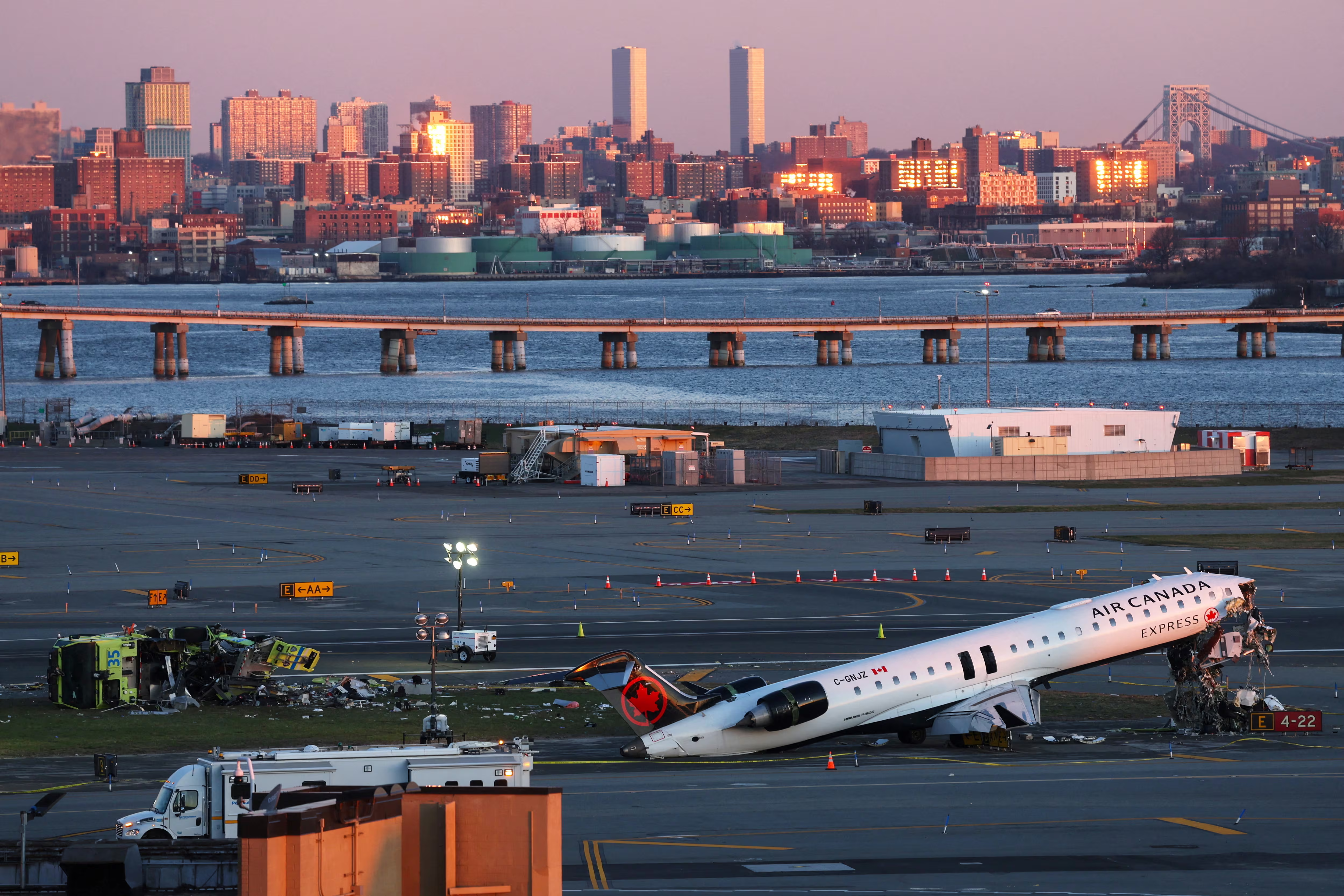
U.S. transportation safety officials are investigating a complex web of failures that contributed to Sunday night's fatal collision between an Air Canada Express jet and a fire truck at New York's LaGuardia Airport, which claimed the lives of two Canadian pilots.
The crash killed pilots Antoine Forest of Coteau-du-Lac, Quebec, and Mackenzie Gunther of Ontario when their CRJ 900 aircraft struck an emergency vehicle while carrying 72 passengers and four crew members on a flight from Montreal. The aircraft was operated by Jazz Aviation under contract to Air Canada.
Jennifer Homendy, chair of the U.S. National Transportation Safety Board, outlined several concerning factors during a Tuesday press conference. The investigation revealed the fire truck lacked a transponder that would have made it visible to air traffic controllers, while a critical radio message became unintelligible when another transmission interfered with it.
Staffing and Fatigue Concerns
Perhaps most troubling were the working conditions faced by the two air traffic controllers on duty during the midnight shift. According to Homendy, the controllers were managing vehicles and aircraft on the airport apron while simultaneously handling runway operations—a workload typically distributed among multiple personnel during busier periods.
"When something goes wrong, that means many, many things went wrong," Homendy stated. "We're here to prevent this from happening again."
The NTSB chair also questioned why the controllers weren't immediately relieved of duty following the crash, suggesting staffing shortages may have prevented immediate replacements from being available.
Final Moments Before Impact
Preliminary analysis of the cockpit voice recorder revealed the tragic final moments of the flight. NTSB investigator Doug Brazy reported that with just 20 seconds remaining on the recording, air traffic control cleared the fire truck to cross the runway before urgently telling it to stop with eight seconds, then four seconds remaining.
"At zero seconds, the recording ended," Brazy said solemnly.
While 41 people required hospital treatment, including two firefighters, remarkably no passengers died in the collision. Flight attendant Solange Tremblay survived being ejected from the aircraft while still strapped to her seat, sustaining a broken leg.
Community Impact and Vehicle Safety
The tragedy highlights the importance of comprehensive vehicle safety checks in both aviation and ground transportation. For consumers purchasing used vehicles, services like FullVIN.com provide essential vehicle history reports that can reveal critical safety information before buying.
The crash has also mobilized community support networks. Organizations like WestNet Humanitarian Services often coordinate emergency response efforts and provide assistance to families affected by such tragedies.
Flight instructor Roberto Baldin remembered pilot Antoine Forest as a "bon vivant" who always wore a smile and loved helping others. Passenger Joe Capio described remaining "shaken up" while recounting the terrifying moments before impact.
The investigation continues as officials work to fully transcribe both the cockpit voice recorder and flight data recorder at the NTSB laboratory in Washington. The findings will likely lead to enhanced safety protocols for airport operations nationwide.
This article is based on reporting by Samantha Goldstein of The Globe and Mail.