


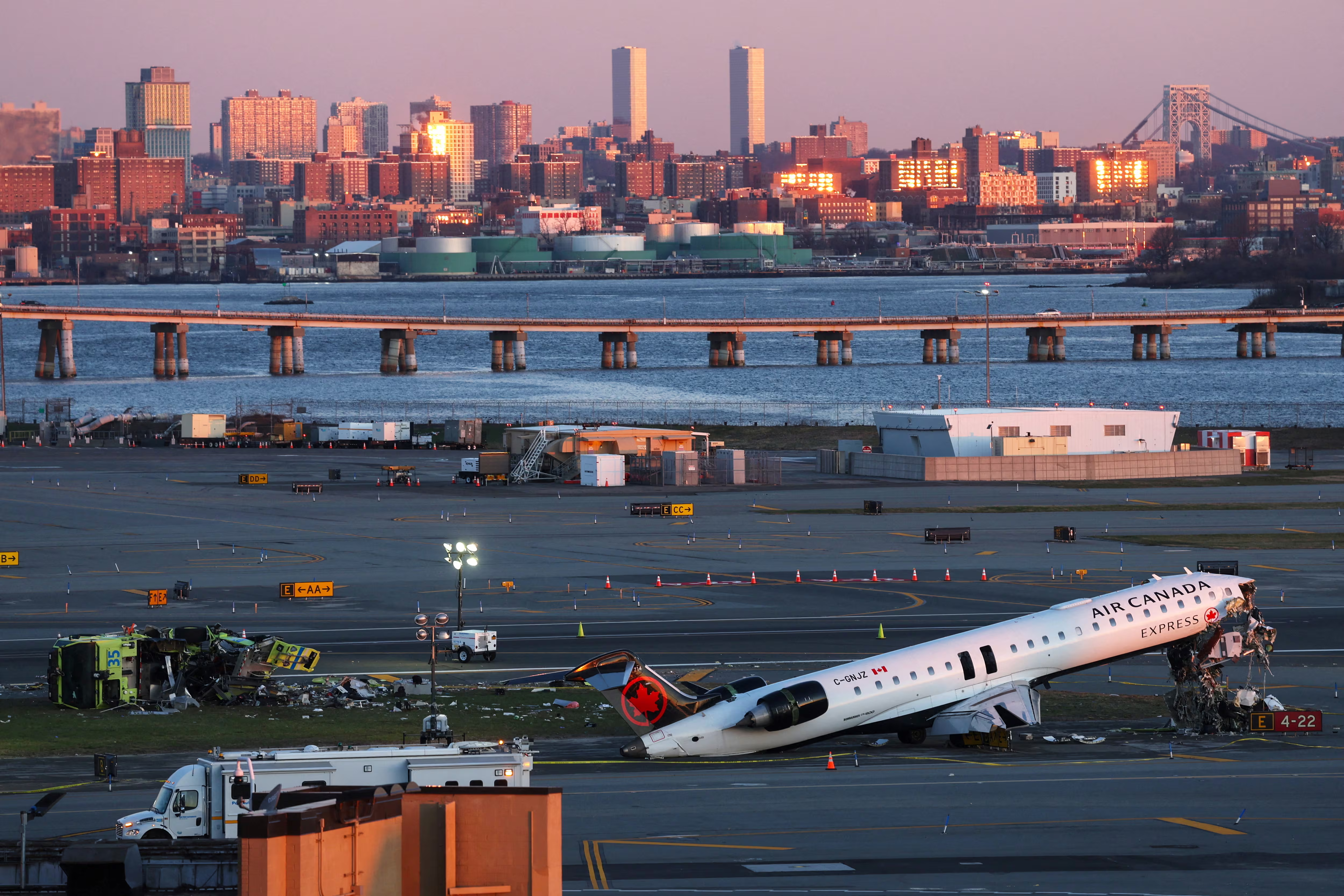
A comprehensive investigation into the February Air Canada Express crash at New York's LaGuardia Airport has revealed multiple safety failures that contributed to the incident, according to a report released Thursday by the Transportation Safety Board of Canada.
The Jazz Aviation flight AC8542 from Calgary to New York experienced a hard landing during adverse weather conditions on February 12, resulting in injuries to 23 passengers and crew members. The aircraft, a De Havilland Dash 8-400, suffered substantial damage to its landing gear and fuselage.
"This incident was entirely preventable and resulted from a cascade of failures across multiple safety systems," said TSB Chief Investigator Margaret Chen during a press conference in Ottawa. "Our investigation identified critical gaps in communication, maintenance oversight, and adherence to established safety protocols."
The investigation found that maintenance crews at Calgary International Airport failed to properly document and address a recurring issue with the aircraft's anti-skid braking system during pre-flight inspections. Radio communication between the flight crew and LaGuardia air traffic control was also compromised due to equipment malfunctions that had been reported but not adequately resolved.
Captain Sarah Martinez, who has been flying for Air Canada Express for 12 years, attempted to execute a go-around manoeuvre when the aircraft encountered severe wind shear during its initial approach. However, the investigation revealed that critical weather information was not properly communicated to the flight crew in the minutes leading up to the landing attempt.
"The crew performed admirably under extremely challenging circumstances," Chen noted. "However, they were operating with incomplete information and compromised equipment that significantly reduced their safety margins."
The TSB report makes 14 specific safety recommendations, including mandatory enhanced training for ground maintenance crews, improved weather communication protocols, and stricter oversight of aircraft maintenance documentation. The board is also calling for upgraded communication equipment at both Calgary and LaGuardia airports.
Air Canada Express has already implemented several safety improvements following the incident, including enhanced pre-flight inspection procedures and additional crew training programs. The airline faces potential penalties from Transport Canada, which is conducting its own regulatory review.
"We accept full responsibility for the safety failures identified in this report," said Air Canada Express spokesperson David Thompson. "The safety of our passengers and crew remains our highest priority, and we are committed to implementing all recommended changes immediately."
The incident has prompted broader discussions about regional airline safety standards and oversight procedures. Transport Canada announced Thursday it will conduct comprehensive safety audits of all regional carriers operating in Canadian airspace over the next six months.
All 23 injured passengers and crew members have since recovered from their injuries, which ranged from minor cuts and bruises to more serious back and neck injuries requiring extended medical treatment. Several passengers have initiated legal proceedings against the airline.
The full TSB investigation report, spanning 247 pages, is available for public review and includes detailed technical analysis of the aircraft's systems, weather conditions, and human factors that contributed to the crash. The board's findings will be shared with international aviation safety organizations to prevent similar incidents globally.