


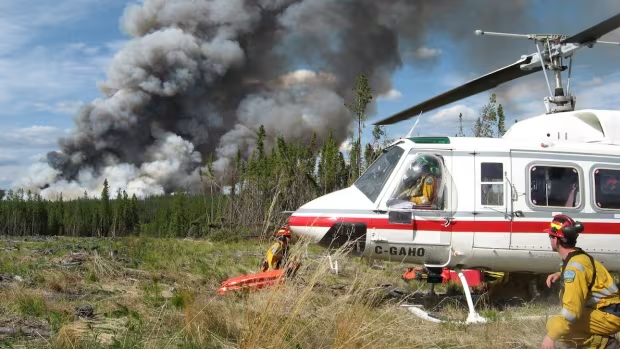
Alberta is ramping up its wildfire defence as dangerous spring conditions sweep across central and southern portions of the province, with risk levels now rated as very high to extreme.
Dry grass blanketing the landscape combined with fierce winds have created a tinderbox scenario that officials say demands immediate attention. The situation became starkly real this past weekend when a rapid wildfire tore through Sandy Beach, a summer village roughly 65 kilometres northwest of Edmonton, destroying three homes and severely damaging a fourth.
Government Mobilizes Enhanced Response
At a Monday news conference at Villeneuve Airport, Alberta's Forestry and Parks Minister Todd Loewen outlined an expanded arsenal of firefighting tools and personnel designed to combat what could be a brutal season ahead.
"We have a lot of dry grass on the landscape and there isn't a lot of forest that's greened up yet," Loewen said. "So it is a critical time right now."
The province is deploying more than 550 hired firefighters, with hundreds more available through contracts and mutual aid agreements. Alberta's aerial assets include 18 waterbombers and helicopters equipped with night-vision capability—critical tools for accessing remote, hard-to-reach terrain where ground crews cannot easily operate.
New this year, Alberta is piloting a mutual aid incentive program that will provide $125,000 per incident to help municipalities respond quickly and decisively without worrying about cost implications.
"We just want to make sure that when municipalities have a fire break out, they don't consider the cost. They consider the effectiveness of having as many boots on the ground as possible and having our air support," Loewen said.
Sandy Beach Residents Face Devastating Loss
The Sandy Beach evacuation highlighted both the speed and destructive force of spring wildfires. Mayor David Noyes described meeting with affected residents who were devastated by losses that included irreplaceable family heirlooms and decades of memories.
"It is a sad situation," Noyes told reporters Monday, reflecting on the shock that rippled through the village's roughly 300 full-time residents.
By Sunday evening, protective dozer guards—cleared firebreaks that create barriers against advancing flames—had been established, and mandatory evacuation orders were lifted as the fire moved under control.
Training and Preparedness Investments Continue
Alberta is investing $500,000 in grants to municipalities for fire services training, with 90 recipients benefiting in the current cycle. The province acknowledges that early-season preparation and community readiness are essential to minimizing loss when fires strike.
While northern Alberta remains relatively cool and calm, officials caution that it's far too early to predict how the overall season will unfold. Loewen emphasized the critical nature of the present moment—a window when dry conditions and dormant vegetation create maximum vulnerability before summer growth provides some natural firebreak benefits.
This article was adapted from reporting by CBC Edmonton's Chad Twair, Natasha Riebe, and Wallis Snowdon. Read the full original story at CBC News Edmonton.