


Alberta is poised to transform how residents access medical testing, with legislation that could allow self-referral to private diagnostic clinics as early as this year—a significant shift in the province's healthcare landscape.
Bill 29, currently before the legislature, would grant Albertans the power to book private diagnostic tests independently, bypassing the traditional requirement for a doctor's referral. If passed, the province would become the first in Canada to implement such a model.
Primary and Preventative Health Services Minister Adriana LaGrange outlined the vision at a news conference Monday, emphasizing patient autonomy and early detection benefits.
"It's about giving Albertans more control over their health while maintaining the strong public health-care system that we all rely on," LaGrange said, noting that early identification of medical conditions can save lives and reduce strain on the overtaxed public system.
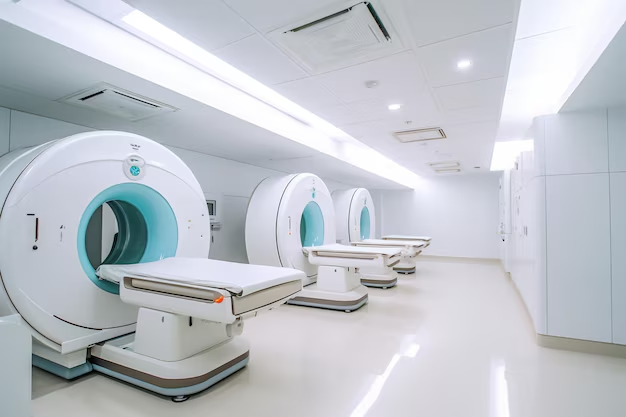
The government is considering a phased rollout, potentially starting with one or two test categories before expanding further. Advanced imaging options like MRIs, CT scans, and full-body screening could eventually be available through private clinics, along with lifestyle testing—preventative bloodwork measuring vitamin and hormone levels, similar to programs offered in Japan and South Korea.
LaGrange stressed that specific criteria and approved test types will be announced later in 2026.
Market Solutions or Healthcare Inequity?
The minister's argument centres on market dynamics: Albertans paying out of pocket for private testing will create commercial incentive for private clinics to expand capacity, theoretically relieving bottlenecks in the publicly funded system.
"People are paying for these tests themselves, there will be a market, a private market, that will step in to meet that capacity demand," LaGrange explained, positioning the change as a capacity-building measure rather than a diversion of resources."We're looking to make sure that the public system is protected first and foremost, that we are able to deal with those referral tests that are already in the system and make sure that those are prioritized."However, not everyone shares the optimism. NDP Health Critic Sharif Haji has raised concerns that self-referred private testing could deepen healthcare inequity and accelerate the development of a two-tiered system—where wealthier Albertans access faster diagnostics while lower-income residents remain dependent on increasingly strained public services.
Doctors' groups previously flagged another worry: a potential shortage of skilled medical technologists to staff the anticipated expansion of private clinics, though the government maintains such concerns can be addressed through workforce planning.
What's Next?
The legislation arrives on the heels of a 2025 government announcement promising Albertans access to diagnostic services of their choosing. Full details on implementation, including coverage criteria and pricing frameworks, are expected before year-end.
The move reflects broader conversations across Canada about public-private healthcare partnerships and the role of consumer choice in medical systems. Alberta's willingness to lead could set a precedent—or serve as a cautionary tale—for other provinces watching closely.
This article is based on reporting from CBC Health.